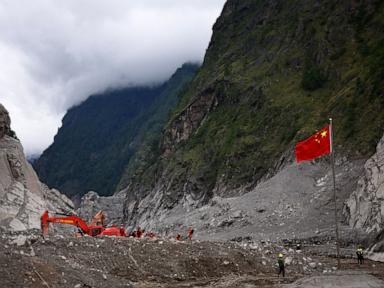
When flash floods tear through high-altitude river basins along contested or heavily regulated international borders, the physical devastation is immediately documented by satellite telemetry and local media. Yet the secondary catastrophe occurs entirely within administrative channels. One month after catastrophic environmental destruction along the Nepal-China border left more than fifty Ukrainian nationals unaccounted for, the families involved remain suspended in an information void. This protracted silence is not a random anomaly of remote geography. It is the predictable output of a broken transnational crisis management architecture. When sovereignty, fragmented bureaucratic jurisdictions, and asymmetric diplomatic leverage collide, search and rescue operations mutate into protracted diplomatic stalemates. Deconstructing this failure requires examining the structural mechanics that govern cross-border missing persons investigations, the cost function of bureaucratic latency, and the systemic reforms required to eliminate jurisdictional dead zones.
The Structural Anatomy of Border Zone Information Voids
The primary driver of investigative paralysis in remote disasters is jurisdictional friction. Geography does not respect sovereign boundaries, but legal mandates and emergency response protocols are strictly bound to them. When severe weather events—such as glacial lake outburst floods or monsoon-driven river surges—obliterate infrastructure in Himalayan borderlands, response authority is immediately partitioned between municipal emergency services, national disaster management agencies, and military border guards.
In the case of foreign nationals stranded or missing in these sectors, three distinct operational layers fracture the chain of custody for intelligence:
- The Local Response Layer: Local police and rescue units operate with limited communications infrastructure, inadequate high-altitude search assets, and zero pre-established channels for foreign consular liaison. Their primary mandate is immediate domestic casualty clearance, not long-term international tracing.
- The Bilateral Diplomatic Layer: Foreign embassies and consulates must route inquiries through national foreign ministries. This introduces rigid diplomatic protocol into what should be an agile, tactical information exchange.
- The Third-Party Sovereign Layer: When a disaster spans zones of dual-state control—such as the mountainous border between Nepal and the Tibet Autonomous Region of China—intelligence sharing between local authorities and foreign diplomats is throttled by differing security classifications, bureaucratic inertia, and bilateral sensitivities.
This structural fragmentation creates a classic principal-agent problem. The families of the missing are the principals seeking timely, verifiable data. The various sovereign entities and local agencies are the agents controlling access to the search theater. Because no single entity possesses both the operational mandate to conduct the search and the diplomatic obligation to brief foreign nationals continuously, accountability diffuses entirely. Information becomes a currency of bureaucratic self-protection rather than a humanitarian public good.
The Cost Function of Bureaucratic Latency
In crisis management, time is the ultimate variable governing outcome probability. Every twenty-four-hour delay in rescue and forensic recovery operations exponentially degrades the viability of locating survivors and identifying human remains. Bureaucratic latency—defined as the total elapsed time between disaster onset and the authorization of cross-border investigative access—imposes severe costs across three distinct dimensions.
First, physical evidence degrades rapidly in high-energy alpine environments. Raging rivers, shifting alluvial fans, and heavy silt deposition obliterate forensic footprints within days. When diplomatic channels take weeks merely to negotiate access for foreign consular or forensic specialists, physical trace evidence is permanently lost.
Second, psychological trauma among families compounds non-linearly. Ambiguous loss—the state of not knowing whether a relative is deceased or trapped—triggers chronic stress pathology. In traditional domestic disasters, structured family assistance centers provide daily operational updates, managing expectations and offering closure. In transnational disasters involving missing citizens, consular officers often lack the authority or the on-the-ground intelligence required to provide anything more than speculative reassurances. The absence of a single source of truth forces families to rely on unverified social media reports, local rumors, and fragmented media dispatches.
Third, administrative costs escalate. Diplomatic missions must divert scarce resources to repetitive, circular inquiries rather than executing structured investigative workflows. Bilateral friction increases as frustrated governments issue formal diplomatic notes demanding answers that local operational commanders are either unable or legally prohibited from providing without higher-level clearance.
Consular Capacity Limits in Remote Theaters
Foreign service officers are trained in diplomacy, trade negotiation, and consular protection within urban environments. They are fundamentally unequipped to manage mass casualty or missing persons operations in high-altitude, restricted-access mountain regions. When fifty nationals go missing in a remote trans-Himalayan disaster zone, the limits of consular capacity are exposed immediately.
Consular missions operating in capital cities like Kathmandu or Beijing face severe logistical bottlenecks. Traveling to the impact zone requires formal travel permits, military clearances, and specialized transport. Even upon arrival, consular staff possess no independent investigative authority. They cannot compel local police forces to share rescue logs, review unredacted survivor manifests, or grant access to temporary morgues. They are entirely dependent on host-government goodwill and administrative efficiency.
Furthermore, burden-sharing mechanisms between sending and receiving states are rarely codified in advance. When an emergency involves citizens traveling independently—such as trekkers, remote contractors, or uncoordinated groups—governments maintain no real-time registry of their precise movements. Consular officials must reconstruct travel itineraries retrospectively, interviewing tour operators, reviewing hotel registration logs, and tracking digital footprints across multiple jurisdictions. This retroactive reconstruction is agonizingly slow, prone to error, and entirely unsuited to emergency life-safety operations.
The Forensic Bottleneck of Cross Border Identification
Locating missing persons in catastrophic floods is only the first phase of crisis resolution. The subsequent phase—forensic identification—presents an even steeper barrier when victims are foreign nationals.
When disaster victims are recovered in remote regions without immediate access to advanced medico-legal facilities, bodies are often buried in mass graves or cremated locally under emergency health protocols before positive identification can be established. This practice destroys immutable biological evidence.
When forensic recovery is executed correctly, matching remains to foreign nationals requires a seamless bi-directional flow of sensitive biological data:
- Antemortem Data Collection: Consular authorities must collect DNA reference samples, dental records, and biometric markers from families in the home country.
- Secure Transmission: This sensitive personal data must be transmitted across secure diplomatic channels without violating international privacy laws or domestic data sovereignty statutes.
- Postmortem Profiling: Local forensic pathologists in the disaster zone must extract DNA profiles from recovered remains and cross-reference them against international databases.
In practice, this pipeline breaks down at every junction. Local forensic teams in developing frontier regions frequently lack the reagents, sequencers, and technical training required to process degraded high-altitude samples. Sending biological samples across international borders for analysis requires complex customs clearances, biohazard certifications, and diplomatic waivers. Without pre-negotiated fast-track protocols for forensic cooperation, months pass while DNA kits sit in customs warehouses in Kathmandu or Beijing.
Strategic Architecture Reform for Transnational Missing Persons Operations
Relying on ad-hoc diplomatic notes and emergency phone calls during a cross-border disaster guarantees institutional failure. Elevating crisis response requires a transition from reactive diplomacy to pre-engineered operational frameworks. Three structural changes are necessary to eliminate current vulnerabilities:
First, states must establish Bilateral Transnational Disaster Protocols before crises occur. These agreements must legally pre-authorize joint forensic teams, define rapid-response visa waiver mechanisms for consular and rescue specialists, and establish standardized protocols for sharing search manifests and biometric data.
Second, governments must implement Mandatory Dynamic Travel Registration for citizens operating in high-risk foreign zones. While voluntary registries fail due to low compliance, integration with commercial aviation booking systems, trekking permit databases, and border-crossing checkpoints can automatically establish real-time location tracking for nationals abroad.
Third, international organizations—specifically the International Criminal Organization and the United Nations Office for the Coordination of Humanitarian Affairs—must establish a Standby Forensic Rapid Deployment Unit dedicated exclusively to cross-border mass missing persons events. This neutral third-party body would bypass bilateral political friction by holding pre-authorized standing mandates to enter disaster zones, secure forensic evidence, and mediate data exchange between sending and receiving states.
Until these structural reforms replace the current era of bureaucratic latency and diplomatic stonewalling, families of victims in transnational disasters will continue to endure months of silence—not because the truth cannot be found, but because the systems designed to find it are fundamentally broken.