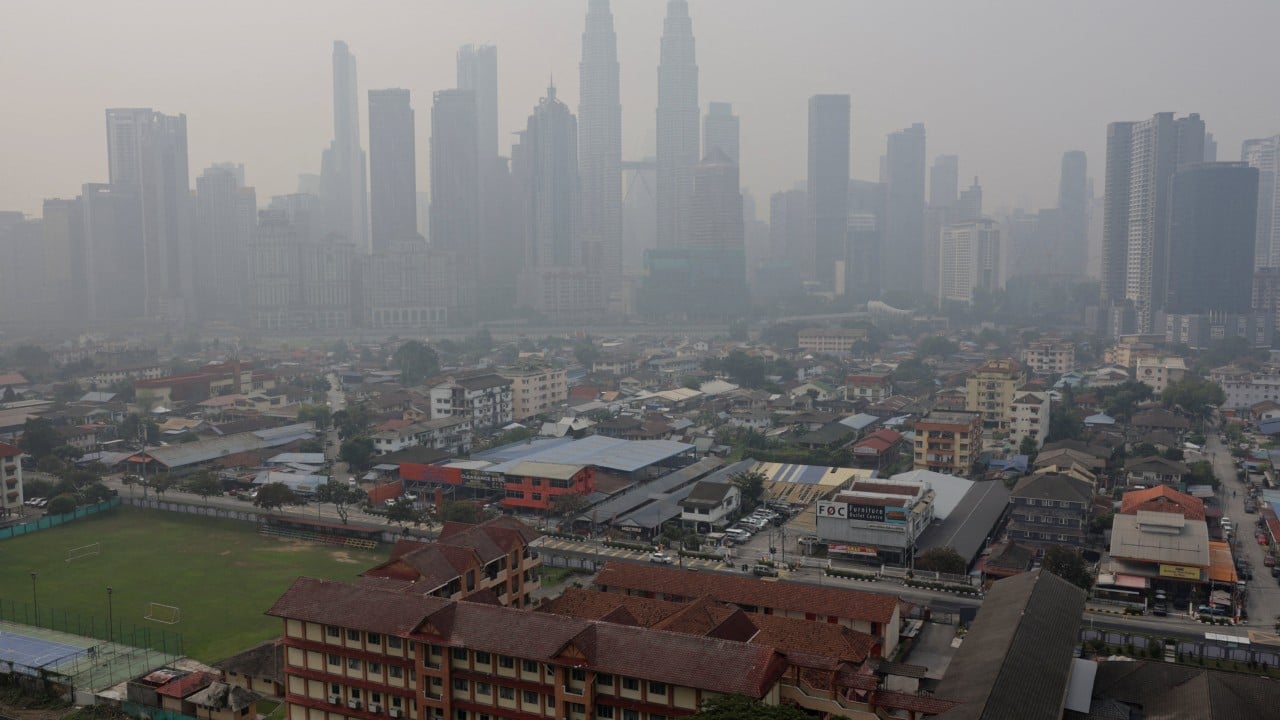
Transboundary externalities rarely respect sovereign boundaries. When agricultural clearing practices in Sumatra and Kalimantan generate particulate plumes that blanket urban centers across maritime Southeast Asia, the resulting crisis exposes a fundamental failure of transnational regulatory arbitrage. The diplomatic friction between affected states and the jurisdiction of corporate domicile highlights an unresolved structural defect in regional governance. Neighboring governments face immense pressure to compel corporations headquartered within their borders to internalize the negative environmental externalities produced by their overseas subsidiaries.
The Jurisdictional Bottleneck and Corporate Structures
Understanding why enforcement breaks down requires examining the legal separation between parent entities and operational subsidiaries. Corporations frequently maintain headquarters in stable financial centers while deploying capital into land-intensive agricultural operations across foreign jurisdictions. This corporate architecture creates a regulatory vacuum. You might also find this related coverage interesting: Why The Supreme Court Tariff Ruling Is A Blessing In Disguise For Trump.
The state of domicile often claims jurisdiction is restricted because the physical conversion of land, burning activities, and environmental infractions occur outside its sovereign territory. Conversely, the host state where the operational assets reside may lack the institutional capacity, political leverage, or enforcement incentives to penalize politically connected agribusiness conglomerates.
When schools close, healthcare systems experience acute respiratory surges, and economic productivity plummets in the affected urban centers, the economic loss is socialized across the importing state's population. The profits, meanwhile, remain privatized within the corporate structures of the holding entities. This structural asymmetry defines the modern transboundary externality problem. As highlighted in recent reports by The Economist, the results are widespread.
The Economic Mechanics of Land Clearing
Slash-and-burn clearing remains an economically rational strategy for land preparation under specific institutional constraints. Mechanical clearing requires heavy capital expenditure, complex logistics, and sustained maintenance operations. Fire functions as a low-cost substitute for capital equipment.
The private cost of deploying fire is near zero for the operator, while the social cost is catastrophically high. Economic theory classifies this as a classic negative externality. Without an internal pricing mechanism for carbon emissions and particulate pollution, rational actors will continuously select the lowest-cost clearing method, regardless of downwind consequences.
External pressures from regional neighbors typically manifest as diplomatic notes, public appeals, or voluntary codes of conduct. These mechanisms fail because they alter neither the capital constraints nor the cost function of the agrarian operators. Voluntary corporate social responsibility frameworks lack enforcement teeth. Unless the financial penalties associated with detected fires exceed the marginal cost savings of burning versus mechanical clearing, illegal burning practices will persist.
Extraterritorial Regulation and Legal Precedents
To alter corporate behavior, legal frameworks must pierce the veil of territorial sovereignty by targeting the financial arteries of transnational actors. Several institutional models exist for applying extraterritorial pressure, though each carries distinct friction points.
Supply Chain Traceability Mandates
Requiring publicly listed corporations to disclose the geographical origin of their agricultural inputs shifts the burden of proof onto the enterprise. If a holding company cannot verify that its regional supply chain is free from illegal land clearing, it faces restricted access to capital markets and institutional investors adhering to environmental criteria.
Extraterritorial Tort Liability
Enabling affected citizens or municipal governments to file civil suits in the corporate parent's domestic courts creates a direct financial deterrent. When legal liability transcends national borders, corporate risk management models must account for downwind damages, fundamentally altering the calculus of low-cost land preparation.
Conditional Access to Capital and Insurance
Financial institutions domiciled in the home country often underwrite regional agricultural expansion. Regulators can compel domestic banks and insurers to classify cross-border environmental degradation as a material financial risk, restricting credit lines and underwriting services for firms linked to recurring particulate crises.
Assessing Institutional Limitations
None of these interventions function as silver bullets. Extraterritorial enforcement mechanisms encounter severe sovereignty objections from host nations, which view unilateral home-state regulations as an infringement on their national autonomy.
Furthermore, complex ownership networks involving shell companies and opaque holding structures make tracing ultimate beneficial ownership difficult. Agribusiness entities frequently adapt by restructuring their capital to evade domestic oversight or by shifting financing sources toward less regulated capital markets.
Strategic Execution and Enforcement Architecture
Resolving chronic regional haze requires moving past moral appeals toward structural economic alignment. Affected states must coordinate regulatory frameworks that leverage stock exchange listing requirements, anti-money laundering mechanisms for illicit land-clearing profits, and mandatory supply chain disclosure laws.
The objective is to eliminate the arbitrage opportunity that allows firms to externalize environmental destruction. Until the cost of regulatory non-compliance in the home jurisdiction exceeds the operational savings of environmental degradation abroad, transboundary haze will remain an recurring systemic failure of regional integration.