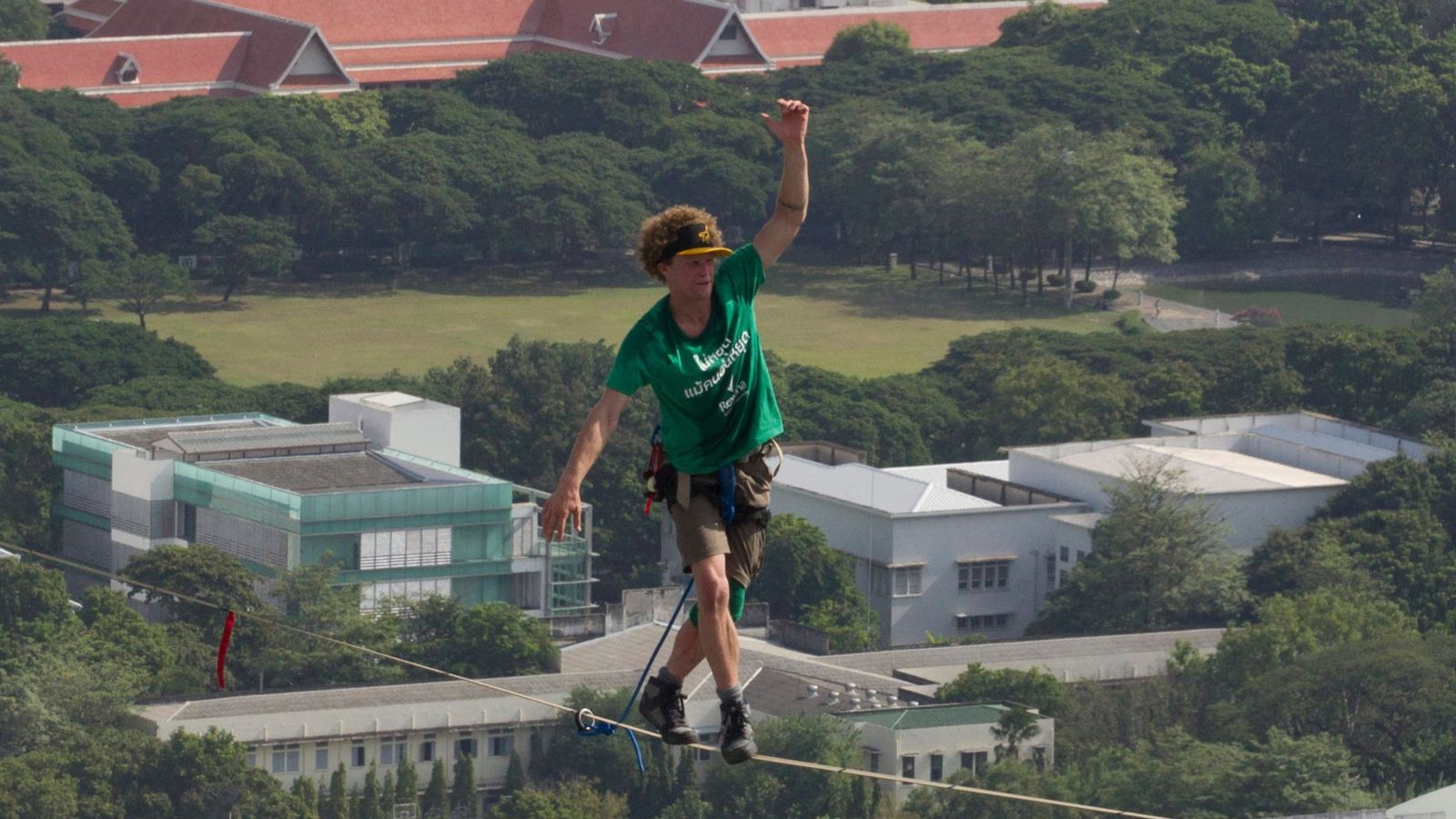
A single moment of miscalculation in the desert can change everything. On a recent Sunday at Mineral Bottom, a remote red-rock canyon area near the Utah-Colorado border, an extreme sports icon and a grandfather lost their lives in a tandem Utah BASE jump accident. The crash took Andy Lewis, a legendary 39-year-old pioneer who once bounced on a slackline in a toga during Madonna’s 2012 Super Bowl halftime show, and Danny Joe Kregle, a 68-year-old Arizona businessman.
They stepped off a towering desert cliff. They never came back.
This double fatality hits hard because Lewis wasn't a reckless amateur. He was a professional who spent decades mastering gravity. The tragedy opens a raw conversation about commercial tandem jumping, risk management, and the fine line between living on the edge and falling off it.
The Reality of the Mineral Bottom Tragedy
Emergency responders rushed to Grand County after reports of severe injuries at Mineral Bottom. The terrain is brutal. Massive sandstone cliffs drop straight down into canyon floors, offering breathtaking views but zero room for error. Both Lewis and Kregle died at the scene.
According to Aerial Arts Moab, a local company that called Lewis its co-owner and best friend, the duo was performing a tandem jump. In tandem operations, an amateur is strapped securely to an experienced guide who handles the deployment of a single large parachute.
Lewis ran BASE Jump Moab, a commercial operation built precisely around this concept. His website featured videos of everyday thrill-seekers stepping off massive canyon edges, experiencing brief freefalls before the canopy caught the air. While authorities haven't released the precise technical glitch or human error that caused this specific crash, the outcome remains unchangeable. Two families are broken.
Who Was Andy Lewis Outside the Madonna Spotlight
To the mainstream public, Andy Lewis was the guy who stole the show from Madonna for a few seconds during Super Bowl XLVI. He wore a Roman toga, bounced on an inch-wide piece of webbing like it was a trampoline, and flipped his way into late-night talk show couch spots with Conan O’Brien.
But within the outdoor community, Lewis was "Sketchy Andy"—a foundational figure who pushed slacklining, highlining, and tricklining from a beachside hobby into a world-class sport. He won four straight world slacklining championships from 2008 through 2011. He set a Guinness World Record by walking across a line high above China’s Diaoshuilou waterfall. In 2014, he rigged a line between two hot air balloons over 4,000 feet in the air.
He was brilliant. He was also incredibly comfortable with danger.
Fellow jumper and instructor John McEvoy noted that Lewis possessed an elite level of athletic skill built over thousands of hours of practice. Yet, Lewis always paired that skill with an immense appetite for risk. He leaped into tight spaces. He pulled his ripcord lower than almost anyone else dared.
Lewis knew the ledger he was playing with. In a documentary interview last year, he bluntly remarked how weird it felt that so many of his friends were dead, admitting that losing people had become normalized in his circle.
Remembering Danny Joe Kregle
The tragedy isn't just about an action sports celebrity. Danny Joe Kregle was a 68-year-old father, grandfather, and successful business owner from Mesa, Arizona. His family described him as a man with a sharp sense of humor who lived to make people laugh.
Kregle loved traveling, boxing, and performing magic tricks for his granddaughter. He wasn't a career adrenaline junkie; he was a man seeking a grand experience in the American West. His death highlights the core ethical debate currently dividing the extreme sports world.
The Controversy of Commercial Tandem Jumps
Skydiving is highly regulated by federal agencies, but BASE jumping occupies a legal grey area. It is inherently hostile to regulation because it happens fast, low, and often on public lands managed by different entities.
A 2007 Norwegian medical study revealed that jumping from fixed objects carries a risk of injury or death five to eight times higher than jumping from an airplane. When you jump from a plane, you have thousands of feet to diagnose a problem and deploy a backup chute. When you jump off a cliff, you have seconds. If your body position is wrong, or if the wind twists your canopy into the rock face, there is no time for a plan B.
Putting an inexperienced civilian into that equation splits opinion down the middle.
- The Pro-Tandem Argument: Proponents believe that with an elite guide, modern gear can mitigate the risks, offering ordinary people a life-changing perspective on human flight.
- The Anti-Tandem Argument: Critics argue that BASE jumping is too volatile for tourism. If a wind gust slams a jumper back into the cliff wall, a guide's experience cannot rewrite physics.
Actionable Safety Realities for Extreme Sports
If you are looking at the red rocks of Utah and feeling the pull of high-consequence sports, you need to strip away the glossy social media videos. You must evaluate the raw data before signing a waiver.
Know the Altitude Cushion
Aircraft skydiving gives you a massive safety net. BASE jumping removes it. Understand that when you jump from land, your margin for equipment malfunction is essentially zero.
Vet the Outfitter Beyond the Hype
Never select an adventure company based solely on viral videos. Look at their safety logs, gear maintenance schedules, and ground protocols. Ask how they read micro-climates and canyon winds before a launch.
Own Your Personal Risk
Accept that in extreme environments, even perfect execution by a guide cannot completely eliminate external variables like rockfall, sudden thermal shifts, or gear failure. If you cannot accept the absolute worst-case scenario, do not leave the ground.
The desert doesn't care about your resume, your world records, or your famous friends. It treats every single person exactly the same when they step into the air.