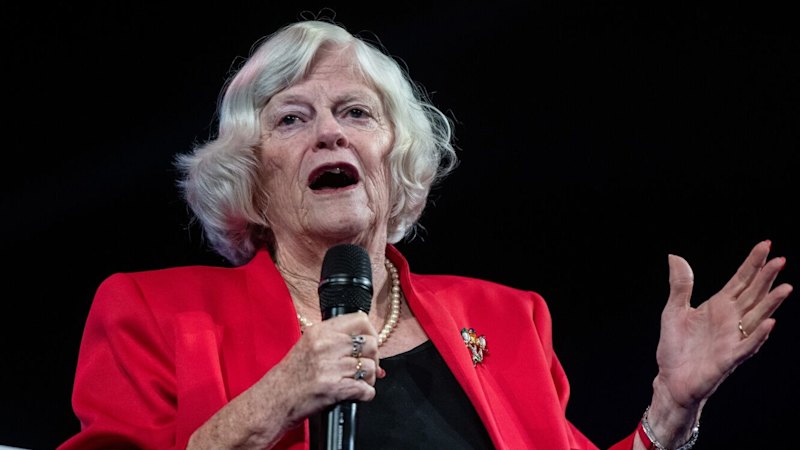
The brutal killing of a prominent public figure always leaves a country reeling. When that person is a larger-than-life character like Ann Widdecombe, the shockwaves are bound to be massive. On Thursday, July 9, 2026, the 78-year-old former government minister was found dead with serious injuries at her home in Dartmoor, Devon. By Friday afternoon, Devon and Cornwall Police confirmed they had arrested a 26-year-old white British national on suspicion of murder.
People are naturally searching for answers, trying to make sense of an act that feels terrifyingly familiar. Over the past decade, the UK has watched in horror as serving MPs Jo Cox and David Amess were assassinated. It is completely understandable that everyone's minds jumped straight to political violence. For now, though, the police say this case is not being treated as terrorism, and there is no evidence pointing toward a political motive.
Here is what we know about the investigation right now, the legacy Widdecombe leaves behind, and what this means for safety in British public life.
The Dartmoor Crime Scene and the Arrest in Newton Abbot
Ambulance workers arrived at Widdecombe's home, a 1970s bungalow called "Widdecombe's Rest" in the quiet village of Haytor Vale, at around 11:40 AM on Thursday. They found her with significant, severe injuries. She was pronounced dead at the scene, triggering an immediate, fast-moving investigation by the Force Major Crime Investigation Team.
Initially, police launched a manhunt for a white male suspect who Prime Minister Sir Keir Starmer described as "clearly dangerous." By Friday afternoon, Assistant Chief Constable Matt Longman announced a major breakthrough. Officers tracked down and arrested a 26-year-old man at an address in nearby Newton Abbot.
Detectives are keeping an open mind about why this happened. They haven't confirmed whether the suspect knew Widdecombe or if this was a tragic, random break-in. Forensics teams are still combing through the Dartmoor property to piece together the final hours of her life.
A Firebrand in Parliament and a Star on Television
You don't have to agree with Widdecombe's politics to acknowledge she was a force of nature. She served as the Conservative MP for Maidstone from 1987 until 2010. During John Major's government, she held high-profile roles, famously serving as a hardline prisons minister.
She made a career out of being unapologetically stubborn and intensely socially conservative. She staunchly opposed abortion rights, fought against expanding LGBTQ+ rights, and famously defended a controversial policy of shackling pregnant prisoners during childbirth to prevent escape. She was a devout Catholic convert who never married, frequently championing traditional family values with a blunt, fierce delivery that made her a favorite among the Tory grassroots. Former Prime Minister Boris Johnson noted her unique ability to move conservative audiences to absolute ecstasy.
When she walked away from Westminster in 2010, most people thought she would fade into quiet retirement. Instead, she became an entertainment icon. She threw herself into reality television, competing on the BBC's Strictly Come Dancing in late 2010. She couldn't dance to save her life. The judges tore her apart weekly, but the British public fell in love with her awkward, good-humored effort. She later won over even more fans by appearing on Celebrity Big Brother.
The Political Return with Brexit and Reform UK
Just when the UK thought she was done with politics, the 2016 Brexit referendum pulled her back in. As a lifelong Eurosceptic, she campaigned heavily for the Vote Leave movement. In 2019, she formally broke away from the Conservative Party to join Nigel Farage's Brexit Party, winning a seat as a Member of the European Parliament.
Most recently, she served as the immigration spokeswoman for Reform UK. Farage heavily praised her efforts, calling her the most recognizable female politician in Britain since Margaret Thatcher.
Because she was a polarizing figure who never shied away from intense public debate, political tensions naturally flared when the news broke. Keir Starmer reacted swiftly from his Chequers country retreat, reaching out to political leaders across the spectrum, including Conservative leader Kemi Badenoch and Farage. Starmer emphasized the need to rise above political differences and let the police do their jobs without constant public speculation. Badenoch expressed utter horror that anyone could commit such an act against a vulnerable 78-year-old woman.
The Reality of Public Life and Security
Even though the police stress that terror is not suspected here, this tragedy reopens deep wounds regarding the safety of public figures in the UK. Being a politician or a high-profile media commentator has become increasingly hazardous over the last ten years.
If you are a public figure, or if you manage security for community leaders, these ongoing tragedies highlight the critical importance of evaluating personal safety protocols. While waiting for the final details of this specific case to emerge, there are several immediate steps individuals in the public eye should take to secure themselves.
- Audit Home Security Systems Immediately: Ensure that all outdoor lighting, security cameras, and alarm systems are fully operational and cloud-connected. Remote properties, like rural bungalows, require extra layers of perimeter defense.
- Establish Direct Lines with Local Authorities: High-profile figures should ensure local police forces are aware of their residential addresses so response times can be minimized during emergencies.
- Manage Digital Footprints: Avoid broadcasting real-time locations on social media platforms. Pinpointing where a person lives or travels makes them an easy target for fixated individuals.
The coming days will bring more clarity as prosecutors interview the 26-year-old suspect in custody. For now, the UK is left mourning a fiercely independent woman who spent decades shaping the nation's political landscape, leaving behind a legacy that won't be forgotten anytime soon.