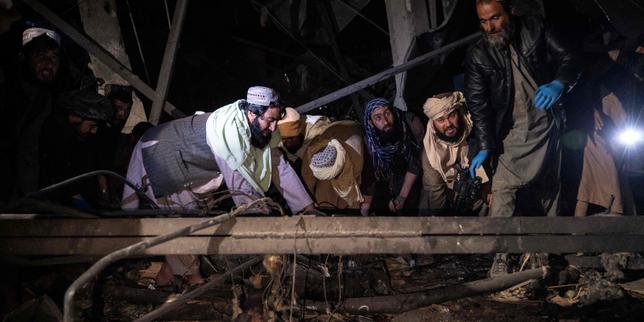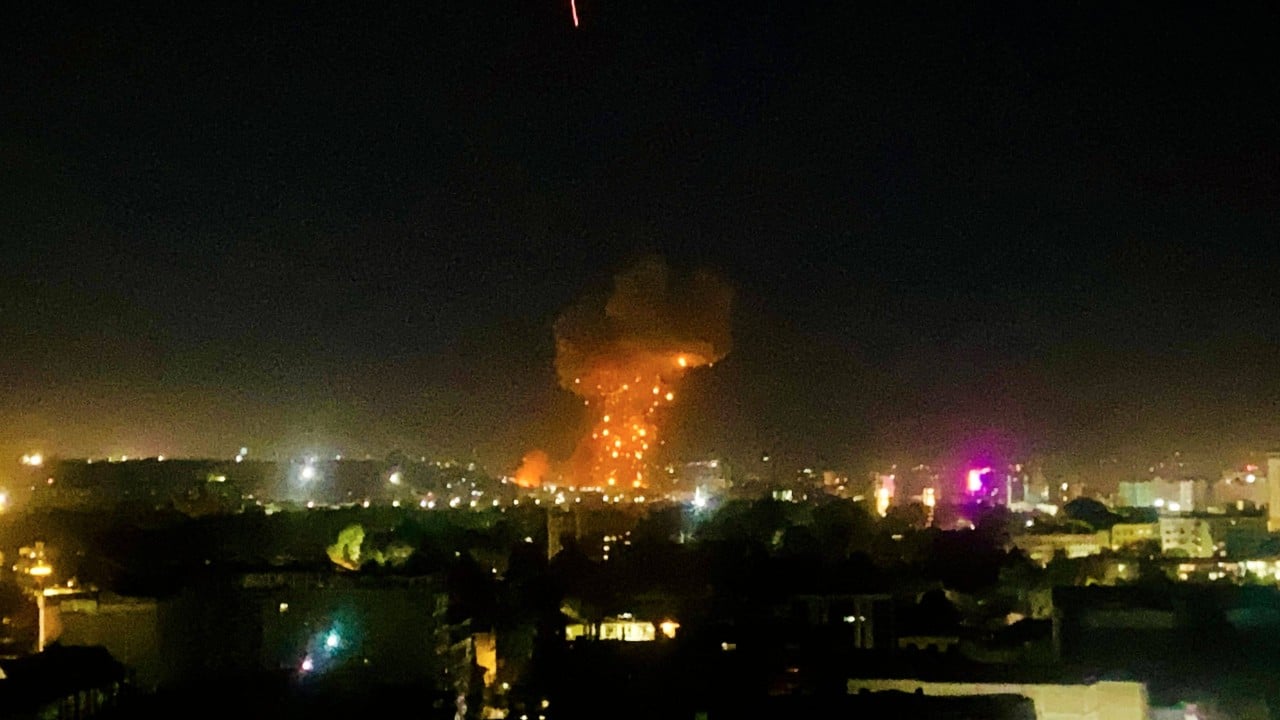
The images coming out of Kabul right now are gut-wrenching. When a missile hits a drug rehabilitation center, it's not just a building that collapses. It's the end of a fragile lifeline for people already living on the absolute edge of existence. The Taliban claims that 400 people died after Pakistan strikes hit a hospital in the Afghan capital. If those numbers hold up, we’re looking at one of the deadliest single incidents in the region's recent, blood-soaked history.
It’s a nightmare. Hospitals are supposed to be off-limits. They’re the last neutral ground. Yet, here we are, watching the aftermath of a strike that reportedly leveled a facility meant to treat some of the most vulnerable people in Afghan society. The political fallout is going to be massive. You don’t just hit a capital city and expect things to stay quiet. This changes the math for everyone involved.
Why the Kabul Hospital Strike Marks a Dangerous Turning Point
This isn’t just another border skirmish. For years, the friction between Islamabad and the Taliban-led government in Kabul has been simmering. Usually, it’s restricted to the rugged, mountainous Durand Line. But a direct hit on a rehabilitation center in the heart of Kabul? That’s an escalation of a different order.
The Taliban's Ministry of Interior has been vocal. They’re calling it a blatant violation of sovereignty. Pakistan hasn't traditionally targeted the capital with this kind of kinetic force, usually preferring localized operations against militant groups like the Tehrik-i-Taliban Pakistan (TTP). If Pakistan truly authorized a strike that resulted in 400 civilian deaths, the diplomatic—and literal—blowback will be scorched earth.
We have to look at the "why" behind the "what." Pakistan has grown increasingly frustrated with the Taliban’s refusal to rein in militants who cross the border to launch attacks on Pakistani soil. They feel betrayed. They expected the Taliban to be a partner in security. Instead, they see a neighbor that provides a safe haven for their enemies. But hitting a hospital? That’s a move that loses you the moral high ground instantly. It turns a security operation into a humanitarian catastrophe.
The Human Cost Inside the Wards
Let’s talk about who was actually in that building. Kabul’s drug rehabilitation centers aren't luxury clinics. They’re often crowded, underfunded spaces where thousands of men and women try to kick addictions fueled by decades of war and poverty. These are people the world has mostly forgotten.
When a strike hits a facility like this, the chaos is unimaginable. Reports suggest the 400 killed include patients, medical staff, and families who were there visiting. In a city like Kabul, where the healthcare system is already on life support, losing a major facility is a body blow. You can’t just rebuild this overnight. The specialized knowledge of the doctors and the trust of the patients are gone.
It’s worth noting that the Taliban has been aggressive in their "anti-drug" campaigns, often rounding up users and forcing them into these centers. Whether those people were there by choice or by force, they were under the protection of a medical roof. International law is pretty clear on this. You don't target hospitals. Period. The fact that this happened in a densely populated urban area only makes the high death toll more plausible and more horrific.
The Geopolitical Fallout Between Islamabad and Kabul
The relationship between these two "brotherly" nations is effectively in the trash. Pakistan is dealing with a massive economic crisis and a surge in domestic terrorism. They’re desperate. When countries get desperate, they make aggressive, sometimes reckless, military choices.
Afghanistan, on the other hand, is isolated. They have almost no friends on the international stage. But an event like this gives the Taliban a rare moment of victimhood that they can use to galvanize domestic support. Nothing unites a fractured population like a foreign strike on the capital.
If you’re watching the regional dynamics, keep an eye on the border crossings. We’ve already seen the Torkham and Chaman borders shut down repeatedly over the last year. Expect a total freeze. Trade will stop. Prices for basic goods in Kabul will skyrocket. The people who survived the strike will now have to survive the economic strangulation that follows.
What This Means for Regional Stability
This isn't a vacuum. China and Russia are watching. The United States is watching from a distance. Nobody wants a full-scale war between a nuclear-armed Pakistan and a battle-hardened Taliban. But the rhetoric is getting sharper.
The Taliban has already hinted at "consequences." That’s code for letting more militants slip across the border. If Pakistan thought they were solving a security problem with these strikes, they might have actually just invited a much larger one. It’s a classic case of a tactical "win" (hitting a target) becoming a strategic disaster.
The Verification Gap and What to Believe
Information in this part of the world is a weapon. We have to be careful with the 400 killed figure. The Taliban has an interest in making the tragedy look as large as possible to pressure the international community. Pakistan has an interest in downplaying any civilian casualties or even denying the strike occurred as described.
However, the physical evidence—the craters, the bodies, the destroyed ambulances—doesn't lie. Ground reports from journalists in Kabul confirm a massive explosion and a primary health facility in ruins. Whether the final count is 400 or 100, the result is the same. It is a mass casualty event that targets the civilian infrastructure of a city that has already seen enough.
If you’re trying to make sense of the conflicting reports, look at the satellite imagery that will inevitably emerge over the next 48 hours. That will show the true scale of the destruction. For now, the focus is on the recovery efforts. Rescue workers are digging through rubble with their bare hands. In Kabul, there are no high-tech search and rescue teams. There’s just grief and a lot of dust.
Moving Forward in a Broken Landscape
The immediate priority has to be humanitarian access. The survivors of this strike need urgent care that the remaining Kabul hospitals are likely unable to provide. International NGOs are in a tough spot. They have to work with a Taliban government they don't recognize to save lives that are being lost because of a Pakistani military action. It's a mess.
If you want to help, support the organizations that are still on the ground in Kabul despite the politics. Groups like Emergency NGO or the Red Cross often handle the heavy lifting in the wake of these strikes. They don't care about the border disputes. They just care about the person on the operating table.
Don't expect a quick apology from Islamabad or a sudden pivot to peace from Kabul. The lines have been crossed. The best we can hope for is a de-escalation before the entire border region goes up in flames. This strike didn't just hit a hospital. It hit the very idea that these two countries could find a way to coexist.
Check the updates from reliable news agencies like Al Jazeera or Reuters for the verified death toll as it matures. Avoid the sensationalist social media feeds that are already using this tragedy to spread unrelated propaganda. Stay focused on the facts of the ground.