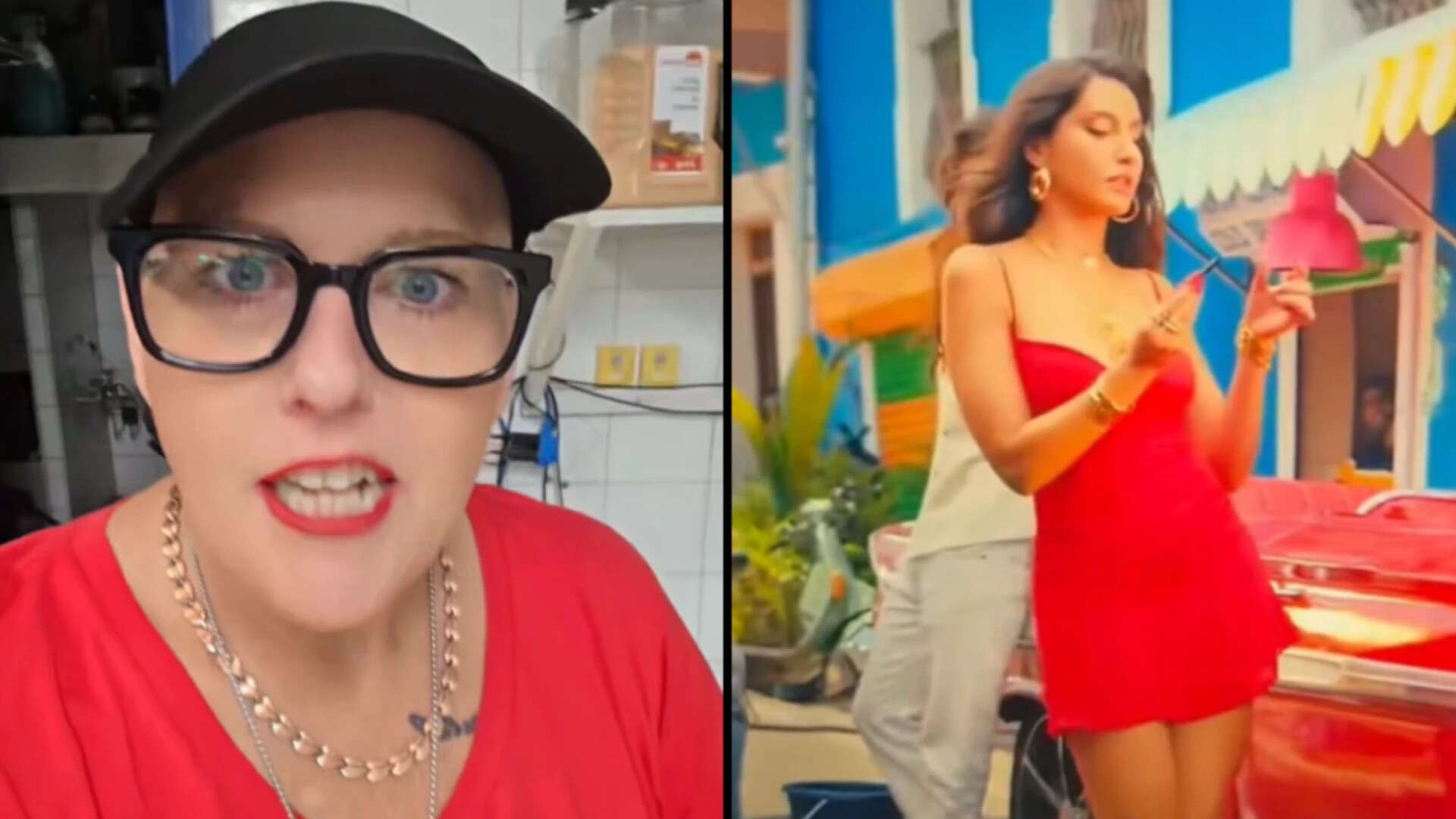
A viral video of a Canadian woman ranting about the 2026 FIFA World Cup opening ceremony at Toronto's BMO Field is blowing up online, exposing a deep misunderstanding of global entertainment and a cringeworthy mistake about identity.
Watching the multi-country broadcast in her red shirt and black baseball cap, she lost her temper over a performance by Bollywood mega-star Nora Fatehi. "Last time I checked, we're Canadian. We're not Indian. That's not English. We don't speak Punjabi," she rants in the clip.
It is a loud, furious critique. It is also completely wrong.
The Identity Mistake Viral Viewers Are Pointing Out
The biggest irony of the viral video is that the performer who triggered the "we are not Indian" rant is actually Canadian.
Nora Fatehi was born and raised right in Toronto, growing up in the Jane and Finch neighborhood. She is of Moroccan descent. While it's true she moved to Mumbai and built a massive career as an actress and dancer in India's Bollywood industry, her passport is Canadian.
During the June 12 opening celebrations in Toronto, Fatehi performed her track "SIIR SIIR" alongside DJ Sanjoy and French singer Vegedream. The performance wasn't Punjabi; it was a blend of global beats reflecting the exact kind of international success story Toronto usually celebrates.
Internet users didn't hold back in correcting the mistake. Commenters quickly pointed out that the angry fan managed to misidentify both the performer's nationality and her ethnicity in a single breath.
What the Toronto Ceremony Was Actually Trying to Do
FIFA designed the 2026 opening ceremonies to handle a massive challenge: a tournament split across three host nations. Instead of one giant show, events rolled out across Mexico City, Toronto, and Los Angeles.
The Toronto event at BMO Field was explicitly built around a "cultural mosaic" theme. Organizers wanted to showcase Canada's identity as a blended, multicultural society rather than a monolith. The lineup reflected this intent:
- William Prince: The Canadian Indigenous artist opened the afternoon with a spoken-word performance to anchor the event in the country's foundational history.
- Local and Global Stars: Performers included Canadian icons like Michael Bublé, Alanis Morissette (who sang the national anthem), and pop artist Alessia Cara, alongside Fatehi and international collaborators like Elyanna.
The mosaic theme used a redesigned FIFA World Cup Trophy made of multi-layered visual elements to drive the point home. For soccer fans expecting a traditional, singular national display, the fast-paced shifting between local roots and global pop styles felt jarring.
The Real Tension Behind the Viral Reaction
While the woman's factual errors made her an easy target for online mockery, the video's rapid spread highlights a deeper friction inside Canada right now. The country is in the middle of intense internal debates about immigration, national identity, and changing demographics.
Over the last several months, public spaces across Canadian cities have seen a rise in anti-South Asian sentiment. Social media platforms have been flooded with videos of public confrontations, verbal abuse against immigrant workers, and xenophobic rhetoric.
When a high-profile international sporting event highlights multiculturalism, it tends to act as a lightning rod. The viral rant isn't just an isolated sports fan getting confused by a halftime show; it reflects a growing segment of the population pushing back against modern definitions of Canadian culture.
How It Compares to the Rest of the World Cup Openings
If the Toronto ceremony felt messy to some, the other host cities faced their own distinct forms of drama and division. The tournament kicked off with plenty of noise off the pitch.
In Mexico City, President Claudia Sheinbaum bypassed traditional luxury by giving her opening match ticket at Estadio Azteca to Yolett Cervantes, a 21-year-old Indigenous soccer player who won a national skill contest. While supporters praised the symbolic gesture, critics called it a populist snub to the national team. Outside the Azteca stadium walls, thousands of striking teachers and missing persons activists used the global media spotlight to stage massive protest marches, clashing with the festive fan zones in Zocalo Square.
Meanwhile, in Los Angeles, SoFi Stadium leaned heavily into mainstream star power. Their ceremony featured Katy Perry, Lisa of BLACKPINK, Anitta, and Rema, treating the soccer kickoff more like the Super Bowl halftime show than a cultural exhibit.
What to Do Next If You Are Following the Tournament
If you are watching the matches roll out across North America, don't rely on short, out-of-context video clips on social media to understand what's happening at the venues.
Check official broadcasting schedules through networks like CTV or TSN in Canada and Fox Sports in the US to see the full context of pre-match ceremonies. If you are tracking the social commentary, verify the backgrounds of the artists involved before buying into viral outrage. The 2026 tournament is explicitly designed to be a cross-continental, multi-ethnic event, and the entertainment lineups are going to keep reflecting that global scale until the final whistle.