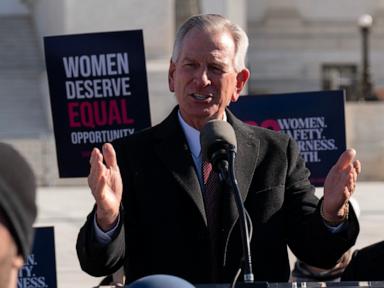
The political establishment is having another collective panic attack over where a man puts his head at night.
The Associated Press and a chorus of local GOP contrarians are hyperventilating because Senator Tommy Tuberville, fresh off crushing his gubernatorial primary opponent with 85% of the vote, is facing a closed-door Alabama Republican Party hearing over his legal residency. His detractors, led by primary runner-up Ken McFeeters, point to a $5.6 million beach mansion in Santa Rosa Beach, Florida, and shout that a 1,500-square-foot house in Auburn doesn't make him an Alabamian. They point to 2018 voting records in the Sunshine State and declare a constitutional crisis.
They are completely missing the point.
The lazy consensus among political commentators is that residency rules protect local representation and preserve the sacred bond between a politician and their physical community. That is a myth. In the modern American political arena, physical geography is completely dead. Tuberville isn't winning elections because of where he pays property taxes. He is winning because in 2026, culture, brand, and media presence completely override physical zip codes.
The False Idol of the Seven-Year Rule
The Alabama Constitution dictates that a governor must be a resident citizen of the state for at least seven consecutive years leading up to the election. It is an archaic rule built for an era when it took three days on horseback to cross county lines and politicians needed to literally touch the soil to understand their constituency.
Let's look at the mechanics of the challenge. The anti-Tuberville camp relies heavily on classic paper-trail gotchas:
- The Florida Vote: Records show Tuberville cast a ballot in Florida in November 2018, despite tax filings claiming Alabama residency started in August 2018.
- The Deed Shuffle: The Auburn property was originally purchased in 2017 under his wife and son's names; the senator wasn’t added until much later.
- The Expense Account: Roughly $27,000 from his Senate expense account traced directly to travel near his Florida panhandle property.
This is the standard procedural playbook. It assumes voters care about the legal definition of a domicile. I have spent decades watching political campaigns torch millions of dollars trying to weaponize "carpetbagger" status against populist figures. It fails almost every single time.
Why? Because the definition of a "resident" has fundamentally shifted from a physical reality to an emotional and ideological alignment.
The "Florida Man" Tax and Why it Fails
This isn't the first time an opponent tried to use the Florida card against the former coach. In the 2020 Senate primary, political heavyweight Jeff Sessions ran explicit television advertisements branding Tuberville as a "Florida Man" who was hiding out in a beach house and refusing to debate. Sessions represented the old guard—the idea that decades of physical presence in the state capital mattered.
Tuberville beat him by 22 points. He then went on to unseat an incumbent senator.
Imagine a scenario where a corporate CEO spends 80% of their time on a private island but perfectly manages a manufacturing empire in Ohio via digital systems. Does the workforce care where the CEO sleeps? No. They care about the stock price and their retirement accounts.
To the modern voter, Tuberville’s residency isn’t defined by a driver's license registry or a water bill in Auburn. It is defined by the decade he spent as the head football coach at Auburn University, commanding the highest cultural currency the state has to offer. In the South, leading a SEC football team grants you lifetime cultural residency. You can move to Mars afterward; when you come back, you are still "Coach."
The Hypocrisy of the Paper Trail
The absurdity of the legal challenge becomes glaringly obvious when you look at how modern governance actually works. United States Senators spend the vast majority of their working years in Washington D.C. or traveling the country for fundraising. By the logical extension of the residency purists, every single long-serving member of Congress is a resident of the DMV metro area, merely keeping a "ghost house" in their home state to satisfy a ballot clerk.
Tuberville's team countered the latest challenge by releasing heavily redacted state tax returns from 2018 to 2024 to prove he paid his dues to Montgomery. His legal counsel argued that traveling to a multi-million dollar beach home is a "vacation escape," not an abandonment of his Auburn residency.
+------------------------+------------------------------------+------------------------------------+
| Metric                 | The Accusation (McFeeters Cam)     | The Defense (Tuberville Cam)      |
+------------------------+------------------------------------+------------------------------------+
| Primary Domicile       | $5.6M Santa Rosa Beach, FL Mansion | 1,500 sq ft Auburn, AL House       |
+------------------------+------------------------------------+------------------------------------+
| Paper Trail Conflict   | Voted in FL (Nov 2018)             | Tax Returns filed in AL (2018-2024)|
+------------------------+------------------------------------+------------------------------------+
| Travel Record          | $27k in Senate travel to FL coast  | Routine vacation time from D.C.    |
+------------------------+------------------------------------+------------------------------------+
Is it a blatant loophole? Absolutely. Is it hypocritical for a co-sponsor of the SAVE America Act—which demands hyper-strict voter ID and registration verification—to have a messy, overlapping voting and driver's license timeline across state lines? Without a doubt.
But here is the hard truth that political purists refuse to admit: Voters do not care about procedural consistency. They care about tribal representation.
The Post-Geography Political Era
We are operating in a post-geography political era. The internet, nationalized cable news, and polarized social algorithms have turned local elections into proxy wars for national identity.
When an Alabama voter goes to the ballot box, they aren't looking for a governor who attends the local town hall meeting or checks the potholes on Cherry Street. They are looking for a national brand who will fight the culture wars on television. Tuberville understands this instinctively. His value proposition isn't "I live down the road." His value proposition is "I am a Donald Trump-endorsed conservative warrior who will trigger the national media."
By trying to disqualifying him on a technicality, the institutional GOP is fighting an analogue battle in a digital world. When the state party holds its closed-door hearing, they aren't weighing the legal definitions of domicile law. They are calculating the raw math of political survival. Purging a candidate who just won 85% of the primary vote over a property deed would be an act of absolute electoral suicide for the state party.
The residency challenge is dead on arrival because the constituency has already decided that cultural alignment trumps a physical address. Stop looking at the tax deeds. The electorate already moved out of the neighborhood years ago.
An investigative deep dive by journalists into this ongoing residency dispute highlights exactly how these property records intersect with state election laws.