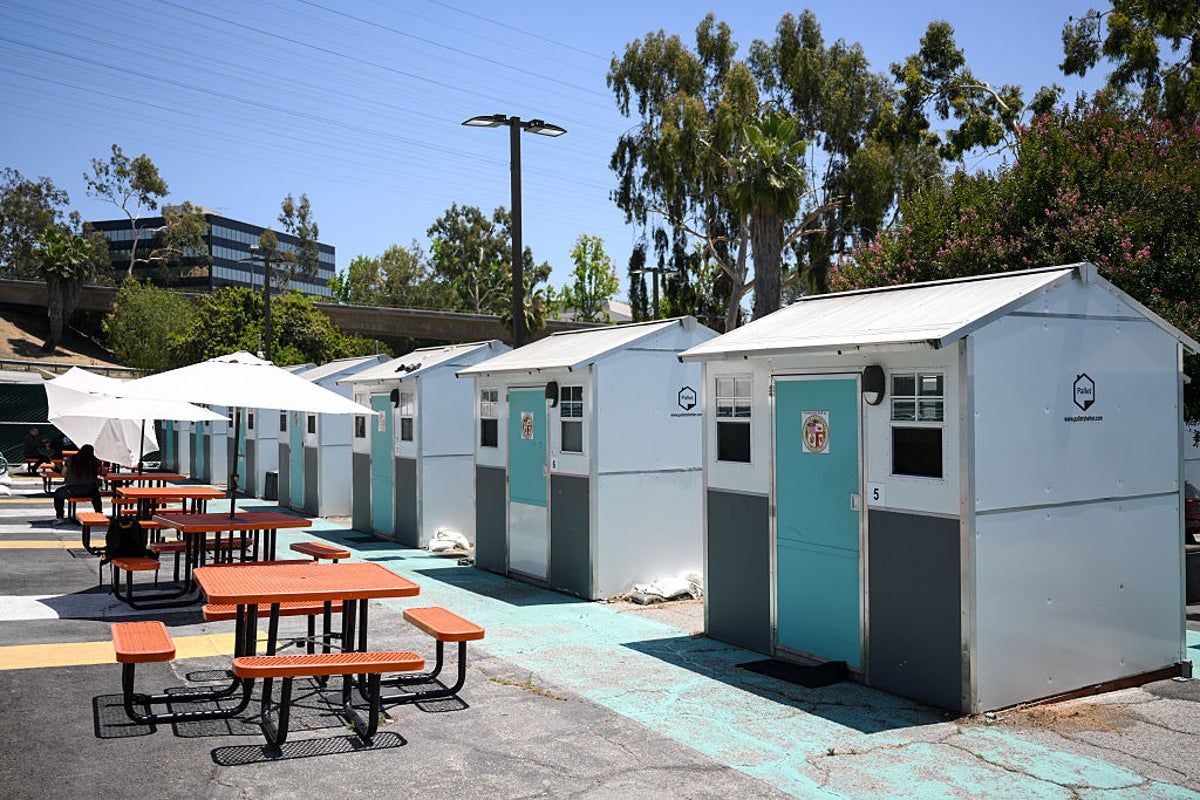
You cannot afford a home. I cannot afford a home. Millions of us are locked out of the housing market entirely, watching mortgage rates climb and rent payments swallow entire paychecks. Traditional suburban sprawl is dead, and the American dream of buying a white-picket-fence house with a two-car garage is financially out of reach for a massive portion of the population.
That single, harsh reality explains why tiny house villages are popping up across the country right now.
Municipalities, non-profits, and desperate renters are looking past conventional real estate. They are building clustered micro-communities of homes under four hundred square feet. This is not just a quirky lifestyle trend for minimalists on social media. It is an emergency response to a systemic shelter shortage. When regular apartments cost three thousand dollars a month, creative survival takes over.
The Economics Driving the Tiny House Village Boom
Let us look at the raw numbers. Median home prices in the United States have hovered near record highs for years, while average wages have flatlined relative to inflation. Traditional construction is slow, expensive, and heavily bogged down by zoning laws that outlaw multi-family units in single-family neighborhoods.
Tiny houses break those rules by design.
Building a standard single-family home easily costs hundreds of thousands of dollars before you even buy the land. A quality tiny house on wheels or a small foundation often costs between forty thousand and eighty thousand dollars. When you group these units together into a village, the math changes drastically.
- Infrastructure costs get shared across multiple lots.
- Shared community spaces reduce individual footprint needs.
- Municipalities save money on emergency shelter services by transitioning unhoused populations into permanent micro-units.
Cities like Austin, Texas, and Los Angeles have experimented with these clusters for years. Organizations like the Community First! Village in Austin have proven that housing people permanently in micro-homes costs a fraction of traditional shelter models. It works. The residents get stability, and the city gets a humane, scalable solution to chronic unhoused populations.
Zoning Laws Remain the Ultimate Obstacle
You would think cities would welcome any solution to an ongoing housing shortage. You would be wrong.
Bureaucracy moves at a glacial pace. Most local zoning ordinances are stuck in the 1950s, requiring minimum square footage mandates that explicitly outlaw houses under eight hundred or one thousand square feet. Neighbors show up to town hall meetings clutching their pearls, screaming about property values whenever someone mentions affordable density.
They worry about parking. They worry about aesthetics. They worry about the wrong people moving in next door.
Overcoming these hurdles requires political grit. Cities that successfully build tiny house villages usually bypass traditional zoning by declaring states of emergency or creating specialized overlay districts. If you want to see this happen in your own backyard, you have to fight local zoning boards. You have to push for accessory dwelling unit reform and changes to minimum lot sizes. Without regulatory updates, tiny house villages remain stuck in legal purgatory, forced onto cheap industrial land at the edges of town.
Designing a Community That Actually Works
Stacking tiny houses together like sardines fails. Human beings need privacy, green space, and dignity. The best tiny house villages borrow urban design principles from historic neighborhoods rather than modern trailer parks.
They feature pedestrian-only walking paths instead of wide asphalt roads. They include shared community kitchens, laundromats, and gardens that force casual social interaction. Isolation kills mental health, especially for people transitioning out of homelessness or severe financial trauma.
When you visit a successful micro-village, you notice the porches. They face inward toward a central courtyard. People sit outside. They wave to neighbors. They build a micro-economy of mutual aid.
This design layout changes the psychological atmosphere entirely. It transforms a desperate housing intervention into a vibrant neighborhood where people actually want to live.
What You Need to Know Before Living Small
Scaling down to two hundred square feet sounds romantic on a weekend television marathon. Reality hits differently when you live it.
Clutter becomes your enemy instantly. You cannot accumulate possessions. Every single item you own must serve a distinct purpose, or it gets thrown away or sold. Relationships face a severe stress test when two adults share a space smaller than a standard master bedroom.
Plumbing and utilities require constant mindfulness. Many tiny houses use composting toilets, tankless water heaters, and specialized greywater systems. You are intimately connected to your resource consumption. You notice every gallon of water used and every kilowatt drawn.
If you are eyeing a move into a tiny house village, rent a unit for a week first. Test the waters. Make sure you can handle the proximity and the logistics before you drop your life savings on a tiny foundation.
Actionable Steps to Bring Micro-Housing to Your Town
Waiting for the federal government to solve local housing problems is a waste of time. Change happens at the municipal level, driven by citizens who refuse to accept status-quo failure.
Look up your local city council zoning code. Find out what the minimum square footage requirement is for a single-family dwelling in your neighborhood. Start attending planning commission meetings. Speak up when affordable housing initiatives are on the agenda. Support local non-profits building transitional micro-communities with your time or your dollars.
The housing crisis is not going away on its own. We have to build our way out of it, one small roof at a time.