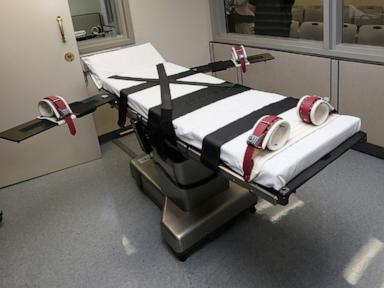
Capital punishment in America rarely runs on a quiet schedule. But a rare alignment of execution warrants set a grim milestone when three different states scheduled lethal injections for the exact same day, a logistical and legal convergence not seen since 2010.
Most people don't realize how much administrative machinery goes into ending a single human life. Scaling that up across three separate jurisdictions simultaneously stretches state departments of corrections, defense attorneys, and the federal court system to their absolute breaking points.
Why does this matter right now? Because it highlights a crumbling supply chain of execution drugs, a backlog of appeals, and an increasingly arbitrary state-by-state approach to federalism and criminal justice.
The Logistics Nightmare Behind Simultaneous Executions
Coordination between state correctional facilities is notoriously difficult. When Oklahoma, Texas, and Alabama schedule executions within a twenty-four-hour window, they aren't just picking dates out of a hat. They are fighting over the exact same pool of resources, legal experts, and judicial attention.
Think about the defense teams. Post-conviction attorneys handle multiple appeals at once. When states cluster execution dates, lawyers are forced to divide their time between emergency stays at the Supreme Court and final clemency petitions in different time zones.
"When you compress multiple executions into a single day, you create an emergency pipeline that reduces judicial review to a frantic midnight scramble."
The Eighth Amendment requires careful consideration of cruel and unusual punishment claims. Yet, when three lethal injections loom on the same calendar page, federal judges often have to issue rushed rulings without the deliberate pacing the law demands.
The Drug Supply Problem That Started It All
You can't execute prisoners without chemicals. That simple fact has driven the death penalty into chronic crisis mode for over a decade. Major pharmaceutical companies, many of them based in Europe, refuse to sell their products to state prisons for use in lethal injections.
This corporate boycott forced states into a corner. Some turned to compounding pharmacies with sketchy oversight. Others spent years litigating the constitutionality of experimental three-drug cocktails or single-drug protocols involving pentobarbital.
The 2010 milestone happened during a severe shortage of sodium thiopental. States scrambled, imported drugs illegally from overseas brokers, and triggered a decade of endless litigation over chemical purity and agonizing pain. Fast forward to the present day, and the drug acquisition pipeline remains shrouded in secrecy. States guard the names of their compounding pharmacies like state secrets, claiming that transparency would lead to harassment from activists.
When multiple states try to execute inmates on the same day, it suggests one of two things: either they have secured a fresh batch of restricted chemicals, or they are burning through a dwindling stockpile before expiration dates hit.
The Geographic Lottery of American Justice
Where you commit a crime in America dictates whether you face a jury that hands down a death sentence, and eventually, whether you actually die on a gurney.
Texas leads the nation by a massive margin. Since the reinstatement of capital punishment in 1976, Texas has executed well over five hundred people. Oklahoma sits high on that list too, maintaining a per capita execution rate that outpaces almost everyone else. Alabama, meanwhile, has pioneered controversial methods like nitrogen hypoxia, pushing the boundaries of what courts will accept when lethal injection drugs become impossible to source.
When these three particular states synchronize their calendars, it exposes the deeply fractured nature of American penal policy.
- State A relies on traditional lethal injection with secrecy laws protecting the drug source.
- State B navigates severe medical board pushback over doctors participating in executions.
- State C introduces untried or secondary methods due to judicial roadblocks.
There is no national standard. There is only a patchwork of regional practices driven by local politics, elected judges, and varying degrees of political will.
The Mental Toll on Witnesses and Prison Staff
Nobody talks enough about the people who have to pull the triggers or watch the monitors. Corrections officers, wardens, spiritual advisors, and victim family members bear an immense psychological burden when an execution takes place.
Multiplying that by three in a single day creates a secondary crisis inside the walls of these maximum-security prisons. Staff members are pulled away from normal operations to manage media encampments, protester zones, and security protocols.
Mental health professionals who study trauma point out that execution team members suffer from high rates of post-traumatic stress disorder. When states rush to clear death row backlogs by clustering dates, they treat the executioners and prison personnel as interchangeable cogs in a machine.
What the Data Actually Shows About Modern Death Rows
Public support for the death penalty has steadily declined over the last thirty years. Pew Research Center polls consistently show that while a majority of Americans might support capital punishment in the abstract, that support plummets when given the alternative of life imprisonment without parole.
Furthermore, the error rate remains staggering. Since 1973, more than one hundred and ninety death row inmates have been exonerated after being proven innocent. That is roughly one exoneration for every nine executions carried out.
When three states decide to move forward on the exact same day, they do so against a backdrop of shrinking public enthusiasm and mounting evidence of systemic error.
Where the Legal Battles Go Next
The federal courts are growing weary of emergency midnight appeals. Supreme Court justices have repeatedly expressed frustration with eleventh-hour stays filed by defense attorneys arguing new evidence or intellectual disability claims.
Yet, the clustering of execution dates guarantees that these frantic legal battles will continue. As long as states view capital punishment as a viable policy tool, and as long as drug supplies remain volatile, correctional departments will squeeze their schedules whenever they catch a legal window.
Pay attention to how these cases resolve. They set the legal precedent for whether states can fast-track executions simply because they managed to acquire a controversial drug or survive a brief procedural challenge. The system isn't running smoother. It is just running faster, fueled by administrative urgency rather than careful justice.