The notification light on your smartphone is a pulse. It blinks with a frantic, artificial urgency, demanding a slice of your dopamine before you’ve even brushed your teeth. We live in the era of the "instant"—instant messaging, instant gratification, instant burnout. We trade hundred-word thoughts for three-second emojis. We are more "connected" than any generation in human history, yet we are starving for presence.
Then, there is the mail.
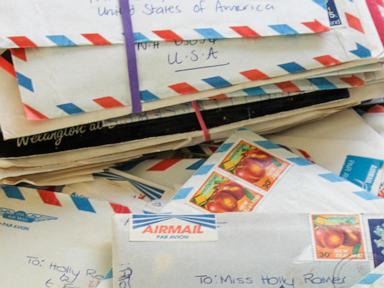
Not the bills. Not the glossy flyers for a pizza place three towns over or the aggressive envelopes from a collection agency. I mean a real envelope. It has a slight weight to it. The paper is perhaps a bit textured, or maybe it’s just a cheap 10-cent greeting card, but the ink is indented into the fibers. You can see where the writer pressed down too hard on a "p" or where they paused, leaving a tiny, bleeding blot of blue ink while they searched for the right word.
That pause is everything. In that pause, the pen pal was reborn.
While the world was busy optimizing every microsecond of digital communication, a quiet rebellion started brewing in the back of desk drawers. People began to realize that an email is a data transfer, but a letter is a gift.
The Slow Death of the Digital Mirage
Consider a hypothetical person named Elias. Elias is twenty-four, works in software sales, and spends roughly eleven hours a day staring at various glowing rectangles. His social life exists in "threads." He knows his best friend is eating sushi because of an Instagram story, and he knows his sister is stressed because she sent a "skull" emoji in the family group chat.
Elias feels like he is shouting into a void that only shouts back in algorithms.
One Tuesday, Elias finds a crinkled envelope in his physical mailbox. It’s from his grandfather, a man who views a smartphone as a complicated brick. Inside is a single sheet of lined paper detailing the specific way the light hit the oak tree in the backyard that morning. It mentions a book he read. It asks Elias how his soul is doing—not his job, not his "status," but his soul.
Elias reads it three times. He smells the faint scent of old tobacco and cedar. For five minutes, Elias isn't in a high-rise apartment; he is sitting on a porch in Ohio.
This isn't just nostalgia. It is neurobiology.
When we type on a keyboard, the physical movement is repetitive and detached from the linguistic output. Every key feels the same. But handwriting requires complex fine motor skills that engage the brain’s reticular activating system. You are physically carving your thoughts into the physical world. This is why we remember things better when we write them down by hand. It’s why a "thank you" text feels like a chore to read, but a handwritten note feels like an heirloom.
The Evolution of the Long-Distance Stranger
The concept of the pen pal used to be a classroom staple. In the 1980s and 90s, teachers would pair students with "friends" in distant lands to practice geography or a second language. It was a slow-motion educational tool.
Then the internet arrived and seemingly murdered the practice. Why wait six weeks for a letter from Tokyo when you can FaceTime a stranger in seconds? For a decade, we thought speed was the goal. We were wrong.
The new wave of pen pal programs—platforms like Slowly, Postcrossing, or the analog-focused communities on Reddit—aren't trying to beat the internet. They are trying to cure the damage the internet did.
The modern pen pal isn't always a child in a classroom. Often, it’s a tired professional seeking the "slow life." These programs have evolved from simple address swaps into sophisticated networks that prioritize intentionality. Some apps simulate the delay of a physical letter, making your digital message take eighteen hours to "travel" across the ocean based on real-world geography.
It sounds counterintuitive. Why would anyone want to wait?
Because the wait creates value. When you know your message won't arrive for two days, you don't send "lol." You write about your fears. You describe the specific shade of gray the sky turns before a thunderstorm. You invest.
The Invisible Stakes of a Stamp
We are currently facing what many psychologists call a "loneliness epidemic." It’s a strange term, considering we carry three thousand "friends" in our pockets. But digital connection is "thin." It lacks the friction required to build true intimacy.
Friction is the enemy of tech companies. They want everything to be frictionless. Swipe, buy, send, forget.
Letter writing is pure friction. You have to find a pen that works. You have to find a stamp. You have to walk to a blue box on a street corner. This friction acts as a filter. It ensures that the person on the other end knows they were worth the effort.
In a world of infinite, cheap digital noise, effort is the only currency that still holds its value.
Take the "Postcrossing" phenomenon. It’s a simple premise: you send a postcard to a random person in the world, and for every card you send, you receive one back from someone else. It has resulted in over 70 million postcards traveling the globe.
Think about the logistical absurdity of that. A person in Portugal spends money on a card, writes a message to a stranger in Singapore, pays for international postage, and drops it in the mail. There is no "like" button. There is no public-facing metric to show how popular the card was. It is a private transaction of humanity.
It proves a vital point: we are desperate to be seen by someone who isn't trying to sell us something.
The Anatomy of the Page
When you sit down to write a letter, your internal monologue changes.
On a computer, the backspace key is our most-used tool. We edit as we go. We sanitize our thoughts before they are even finished. We perform.
On paper, mistakes are permanent. If you cross out a word, the recipient sees the scratch-out. They see your hesitation. They see your humanity. There is a profound vulnerability in sending someone a document that contains your literal DNA in the form of skin cells and perhaps a smudge of coffee.
I remember a woman named Clara who began writing to an inmate through a prison pen pal program. She started the project out of a sense of civic duty, a way to "give back." What she didn't expect was how the medium would change her own mental health.
In her letters, she couldn't use hashtags. She couldn't send links. She had to describe her world using only her vocabulary.
"I realized I had forgotten how to describe a smell," she told me once. "I had forgotten how to tell a story without a photo to do the heavy lifting."
The inmate’s letters were masterpieces of observation. When you are stripped of the distractions of the digital world, the physical world becomes hyper-vivid. Their correspondence wasn't just a lifeline for him; it was a sensory awakening for her. It reminded her that the world is made of textures, not pixels.
Why the Old Way is the New Way
This isn't a "back in my day" grumble. This is a strategic retreat to a technology that actually works for our brains.
We see this pattern everywhere. Sales of vinyl records are outstripping CDs. Film photography is having a massive resurgence among Gen Z. We are reaching back for things that have "heft."
The return of the pen pal is part of this Great Tangible Reaching.
We are tired of our memories being stored in a "cloud" that we can't touch. We want things we can put in a shoebox. We want things that will yellow at the edges. We want evidence that we were here, and that we were known by another person.
The "evolution" of pen pal programs isn't about better software. It’s about using technology as a bridge back to the physical. It’s about using a website to find a person, and then closing the laptop to pick up a Pen.
There is a specific kind of silence that happens when you write a letter. It is a focused, meditative quiet. The world narrows down to the tip of the pen and the white space of the page. Your heart rate slows. You aren't multitasking. You are simply... being.
Tomorrow morning, millions of people will wake up and check their phones. They will feel that familiar, hollow thrum of anxiety as they scroll through a thousand things that don't matter.
But a few of them will walk to the end of their driveway. They will pull down a metal door. And there, nestled among the junk mail and the bills, will be a hand-addressed envelope.
They will hold it for a moment, feeling the weight. They will see their name written in someone else’s hand—the loops of the 'L', the sharp cross of the 'T'. They will know, with absolute certainty, that somewhere across the city or across the ocean, someone sat in a chair, thought of them, and took the time to move a pen across a page.
In that moment, the digital noise goes silent. The pulse stops racing.
The connection is finally real.