The brickwork of a Victorian terrace house is designed to do many things. It holds up floors, keeps out the driving winter rain of the British Isles, and retains the precious warmth of a coal fire or a modern boiler. But by mid-afternoon on a Tuesday in late June, those red bricks stop acting as a shelter. They become an oven.
Elena stands by the kitchen window in Brixton, watching the tarmac on the street below. It looks heavy, almost liquid under the glare. There is no breeze. The air does not move; it occupies the room like a physical weight. On the counter, a small digital thermometer reads 34°C. Outside, across London and the rolling counties of Southern England, the mercury is climbing toward 38°C. Meanwhile, you can find similar stories here: The King of the North Steps into the Smog.
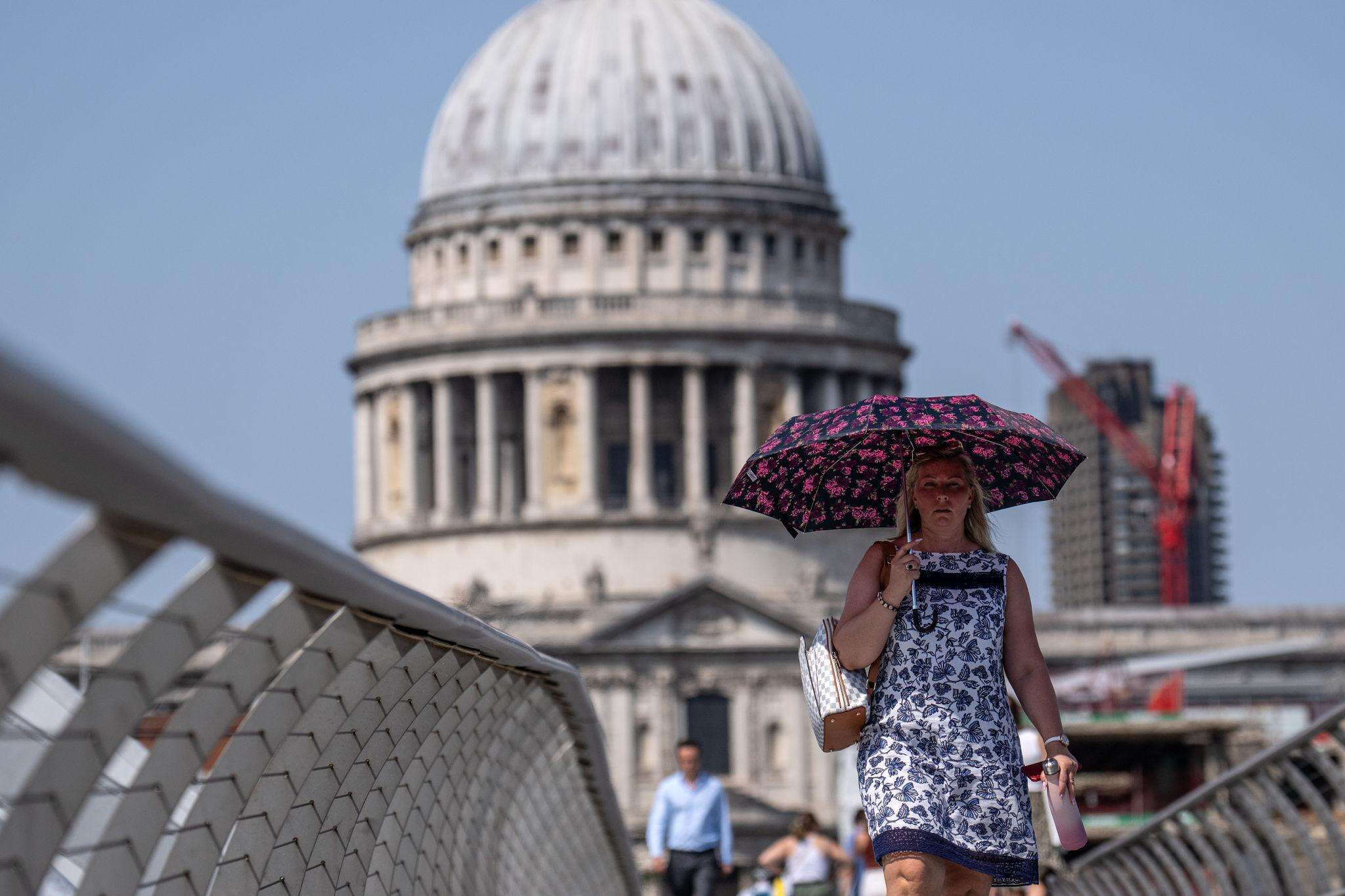
To anyone living in Madrid, Melbourne, or Phoenix, 38°C is a standard summer afternoon. It is the cue to turn up the air conditioning, pull down the blinds, and carry on. But Britain was not built for this. The infrastructure of the United Kingdom is an historical document written in brick, mortar, and slate, completely dedicated to the capture and preservation of heat. When the climate shifts, these buildings do not protect their inhabitants. They trap them.
The upcoming days are not just a period of uncomfortable sweating or an excuse to buy an ice lolly in St James's Park. They represent a fundamental mismatch between a nation’s built environment and a changing atmosphere. The stakes are quiet, invisible, and largely hidden behind residential front doors. To see the full picture, we recommend the recent report by USA Today.
The Architecture of Inversion
Consider how a standard British home functions. For centuries, the primary architectural challenge in northern Europe was surviving dark, damp winters. Insulation was maximized. Windows were designed to let in the low winter sun but not necessarily to create cross-ventilation. Cavity walls were stuffed with materials meant to keep warmth from escaping.
When ambient outdoor temperatures surpass the normal human baseline, this entire system runs in reverse.
During a severe heatwave, a house acts like a greenhouse. Sunlight enters through glass windows, striking floors and furniture. This energy is absorbed and re-radiated as long-wave infrared radiation, which cannot easily pass back through the glass. The insulated walls, so efficient at keeping out the January chill, now refuse to let the daytime heat escape during the night.
By midnight, while the outside air might drop to a relatively cool 22°C, the bedroom inside a mid-terrace house can easily remain locked at 30°C. Sleep becomes impossible. The human body requires a drop in core temperature to initiate deep, restorative sleep cycles. Without it, the cardiovascular system remains under continuous stress, pumping blood closer to the skin in a desperate, exhausting attempt to radiate heat into an environment that is already too warm.
This is the reality for millions of people across the capital and the south coast. It is a slow, cumulative fatigue that builds over seventy-two hours, transforming a weather event into a public health crisis.
The Melting Network
The strain is not confined to bedrooms. Beneath the streets, the literal connective tissue of the city begins to alter its physical state.
British railway lines are laid with a specific stress tolerance. Steel rails are welded together in long continuous sections, pre-tensioned to withstand an average temperature range. In the UK, that standard neutral temperature is typically set around 27°C. When rail temperatures hit 50°C—which happens easily when the air temperature is 38°C and the dark steel sits in direct sunlight—the metal expands beyond its physical limits.
The rail buckles. It twists out of alignment like a ribbon.
To prevent catastrophic derailments, network operators have no choice but to introduce speed restrictions. Trains that usually sprint between Waterloo and Southampton at ninety miles per hour are forced to crawl at twenty. Platforms fill with stranded, overheating commuters. The transport system, the literal lifeblood of the southern economy, begins to seize up.
Simultaneously, the electrical grid experiences a unique, modern inversion. Historically, the UK’s peak energy demand occurred on the coldest evening of the year, usually in January or February, as millions turned on heaters and ovens simultaneously. Now, summer peaks are emerging. While central air conditioning remains rare in British homes, the proliferation of portable cooling units, industrial chillers, and office cooling systems strains a grid that is simultaneously dealing with reduced efficiency. Transformers, which require ambient air to cool down, operate less efficiently when that air is thick and hot.
The city becomes a machine running at maximum capacity with a cooling system that is failing.
The Biological Threshold
We often treat weather as a spectator sport, a series of numbers on a screen or a colorful map on the evening news. But temperature is an active participant in human biology.
The human body is an exquisite engine designed to maintain an internal core of roughly 37°C. When external temperatures match or exceed this threshold, the primary mechanism for heat loss—radiation—stops working. The body can no longer simply dump heat into the air. It must rely entirely on evaporation.
Evaporation requires sweat. Sweating requires water, salt, and an immense amount of cardiac output. To pump blood to the sweat glands beneath the skin, the heart must beat faster and contract harder. For a young, healthy individual, this is an uncomfortable inconvenience. For an elderly resident living alone in a top-floor flat in Croydon, it is a dangerous physical ordeal.
The statistics from previous spikes are clear, though they rarely make the front pages until weeks after the event. The true toll of a heatwave is found in the excess mortality data compiled by the Office for National Statistics. It is not a sudden spike in dramatic accidents; it is a quiet surge in strokes, heart attacks, and renal failure. The heat does not usually enter the room as an active killer; it acts as an amplifier of existing vulnerabilities.
The Illusion of the Great British Summer
There is a cultural inertia that complicates how the UK handles extreme heat. For generations, summer was something to be chased. A sunny day was a rare, triumphant breakout from the grey monotony of the shoulder seasons. The natural response to sunshine was to head outdoors, sit in a pub garden, or travel to the coast.
This deeply ingrained cultural habit makes it difficult to communicate risk. A weather warning for snow or wind is intuitive. People understand ice; they understand falling trees. But a warning for 38°C heat feels, to many, like a bonus.
This creates a dangerous disconnect. People who would never dream of walking through a blizzard without a coat will willingly sit in direct noon sunlight during a major heat alert without adequate hydration or shade. The concept of the sun as a hazard is foreign to a national psyche raised on rain.
The transition from a temperate climate to one capable of producing Mediterranean extremes requires more than just changing behavior; it requires redefining our relationship with our surroundings. It means understanding that the noon sun is something to be avoided, that heavy manual labor should shift to the early morning hours, and that hydration is a medical necessity rather than a casual choice.
A City Under Seige
Back in Brixton, the evening brings no relief. The sun drops below the chimney line, leaving behind a bruised, purple sky that holds the heat like a wool blanket. The pavement radiates warmth upward, cooking the soles of shoes long after the light has faded.
Elena closes the curtains, an old trick learned from relatives abroad, trying to keep the stale air from getting any hotter before tomorrow's peak. The radio in the corner murmurs updates about melted runways at suburban airports and emergency water restrictions in the home counties.
The city is quiet, but it is not peaceful. It is the silence of an environment under profound tension, a landscape built for a world that is gradually slipping away, waiting for a breeze that will not come tonight.