There is a specific kind of silence that settles over a bunker when the men inside stop checking their watches. I have known that silence. It is not peaceful. It is the heavy, suffocating quiet of a room where every possible option has been exhausted, leaving only the arithmetic of destruction.
Out in the wider world, the headlines scream about red buttons and nuclear armageddons, framing modern geopolitics like a Hollywood script. But reality is far more tedious and infinitely more terrifying. It moves not with cinematic explosions, but with the bureaucratic click of a leather briefcase closing and the slow, grinding realization that rhetoric has crossed a threshold where it can no longer be unsaid.
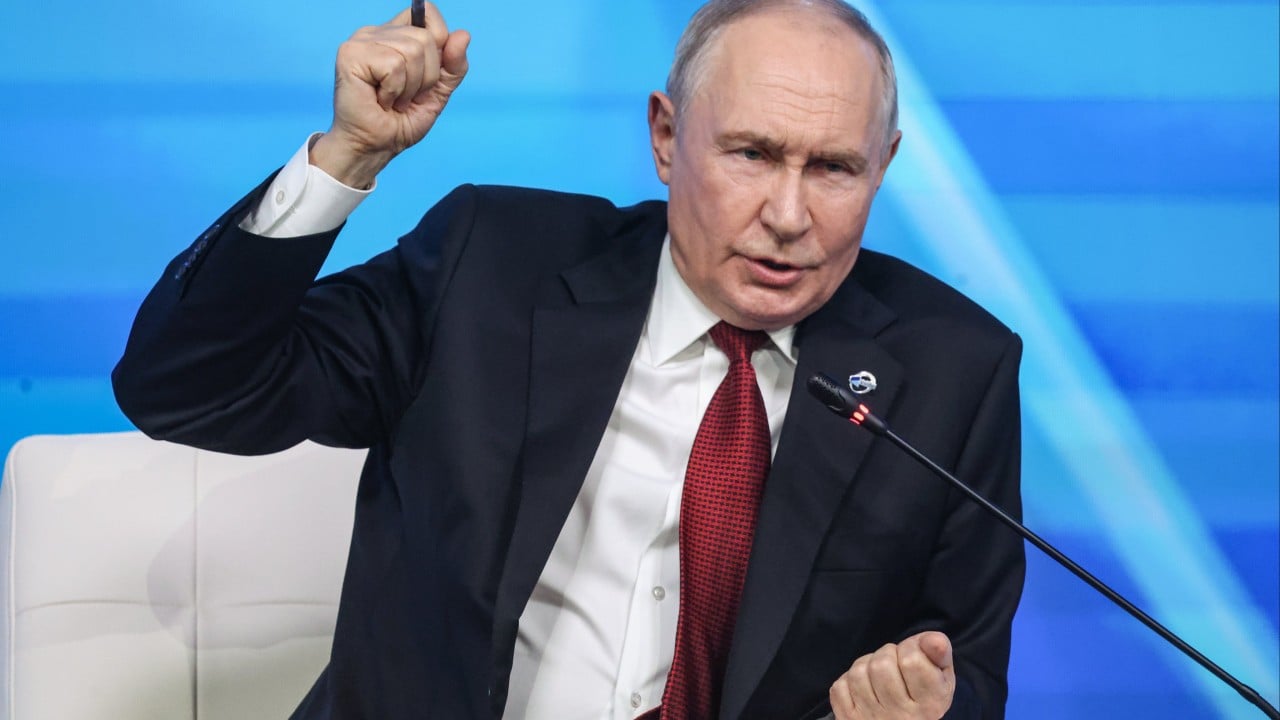
Consider the recent statements echoing from Moscow. When leadership invokes the terrifying imagery of erasing all life, the casual observer hears mere bluster. We have grown numb to the threats. We scroll past them on our phones while waiting for our morning coffee, treating the end of the world as another pop-culture franchise with too many sequels.
That indifference is a luxury born of distance.
On the ground, the mechanics are different. The loaded gun on the mantelpiece of international diplomacy was placed there decades ago, polished by successive crises and kept gleaming through mutual assured destruction. Yet a fundamental rule of dramatic writing—and of lethal human history—states that if a gun appears in the first act, it must go off by the third.
Anton Chekhov never imagined his literary device would be scaled to incinerate continents.
Walk through the cold, subterranean corridors where strategic defense decisions are filtered through banks of humming servers and sleepless officers. The language spoken there is chillingly sterile. They talk of launch windows, throw-weights, and retaliatory response times. To these analysts, escalation is not an emotional outburst; it is a mathematical inevitability once certain tripwires are crossed.
When a head of state warns that the weapon must fire sooner or later, they are revealing a fatalistic philosophy. This is the logic of the cornered gambler who believes the house is rigged, and therefore decides to flip the table entirely. It discards deterrence. It abandons strategy. It embraces pure, unadulterated nihilism.
We must confront what this means for the average person sitting thousands of miles away from the silos and command centers.
The danger is not that a leader wakes up one morning and decides to end civilization on a whim. History rarely works that way. Instead, the danger lies in the gradual erosion of guardrails. Each diplomatic insult, each broken treaty, each forward deployment of strategic assets acts as a corrosive acid on the machinery of peace. Eventually, the metal thins. Eventually, a miscalculated radar blip or a panicked misinterpretation fills the void.
Imagine a radar operator on a graveyard shift in a northern outpost.
The screens flicker. A cluster of inbound signatures registers on the display. In that single, frozen fraction of a second, the operator has no time for geopolitical theory. They have only protocols, adrenaline, and a ticking clock. The automated systems whisper urgency. The chain of command demands immediacy.
That is how the gun goes off. Not with a grand, cinematic speech, but in the dim, humming glow of a console room, driven by the sheer momentum of systems designed solely to react faster than human thought.
We have built a global architecture that relies entirely on the premise that rational actors will always pull back at the edge of the abyss. But rationality is a fragile construct. Under the crushing weight of paranoia, historical grievance, and domestic political survival, rational actors begin to see destruction not as a failure, but as a twisted form of validation.
When threats escalate to the point of promising total annihilation, the threat itself becomes a weapon of psychological attrition. The goal is to exhaust the collective will of opposing populations until they beg their governments to surrender whatever territory or principle is currently in dispute. It is terror weaponized as foreign policy.
Yet, acknowledging this reality does not mean surrendering to despair.
Throughout the Cold War, humanity stared into the same abyssal mirror and blinked. Diplomats found backchannels. Leaders recognized the absolute symmetry of ruin. The gun remained on the mantelpiece, yes, but it stayed holstered because enough people recognized that once the smoke clears, there is nothing left to govern, nothing left to conquer, and nobody left to remember who won.
The challenge of our current moment is remembering that history is not a predetermined script. The gun does not have to fire. The fatalism embedded in warnings of inevitable doom is a psychological trap designed to paralyze resistance and normalize the unthinkable.
We dismantle that fatalism by refusing to look away. We dismantle it by demanding precision from our leaders, transparency from our institutions, and an absolute rejection of the normalization of nuclear threats.
The silence in the bunker is heavy, but it is not absolute. As long as there are voices willing to name the madness for what it is, and as long as human agency retains the power to hesitate, the trigger remains unpulled.
The hour is late, and the shadows are long, but the morning has not yet been cancelled.