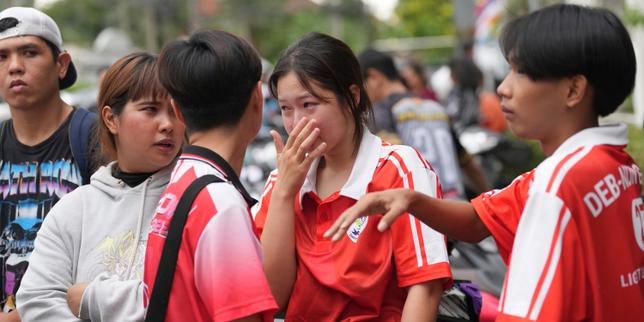
Seven people are dead after a fourteen-year-old opened fire in a Nonthaburi school, leaving a nation grappling with an impossible question. How does a teenager walk into a classroom armed with a handgun in a country where strict laws theoretically ban civilian firearm ownership?
The tragedy started at home. Before heading to his high school near Bangkok, the young shooter killed his grandparents using a pistol belonging to his grandfather. He then moved to the school grounds, executing a planned attack that claimed five more lives—including teachers and staff members—before dying at the scene. Dozens more suffered injuries, some trampled in the frantic rush for survival.
Prime Minister Anutin Charnvirakul stepped in front of cameras to condemn the violence, pointing directly to national restrictions. Yet, the reality on the ground tells a much messier story.
The Illusion of Strict Regulation
People assume laws automatically equal safety. They do not.
Thailand officially maintains a tight grip on gun ownership. You cannot just walk into a retail shop and buy a pistol off the shelf. But numbers paint a terrifying contradiction. Experts estimate roughly ten million firearms are currently floating around the country. That breaks down to about one gun for every seven residents.
Black markets thrive. Stolen weapons pass quietly between generations inside family homes, completely bypassing state oversight. When a fourteen-year-old can easily access his grandfather's firearm, legislative bans on paper fail completely in the physical world.
A Disturbing Pattern of School Violence
This isn't an isolated shock. It’s part of a brutal trend that keeps repeating across the region.
Think back to 2022. A former police officer used a firearm and a blade to slaughter dozens of children and adults at a northern daycare center. Just a few months ago in February, another student opened fire inside a school in the south.
Each time, politicians promise immediate reforms. Each time, public outrage peaks, fades, and resets until the next body count hits the news.
Classmates described the latest shooter as troubled and deeply isolated. Peers noted an obsession with weapons and online violence, warning signs that institutional safety nets completely missed. When warning flags go ignored, tragedy becomes inevitable.
Fixing Institutional Blind Spots
Schools need more than locked gates. They need functional mental health infrastructure.
Teachers are educators, not tactical security personnel or licensed therapists. Expecting them to spot every volatile adolescent while managing overcrowded classrooms is a recipe for failure. Governments must fund professional psychological intervention teams inside educational hubs.
If you're tracking security trends globally, the takeaway is stark. Restricting supply helps, but ignoring the cultural and domestic availability of weapons leaves a gaping backdoor. Until households secure their firearms and communities catch mental health crises early, these horrific headlines will keep writing themselves.