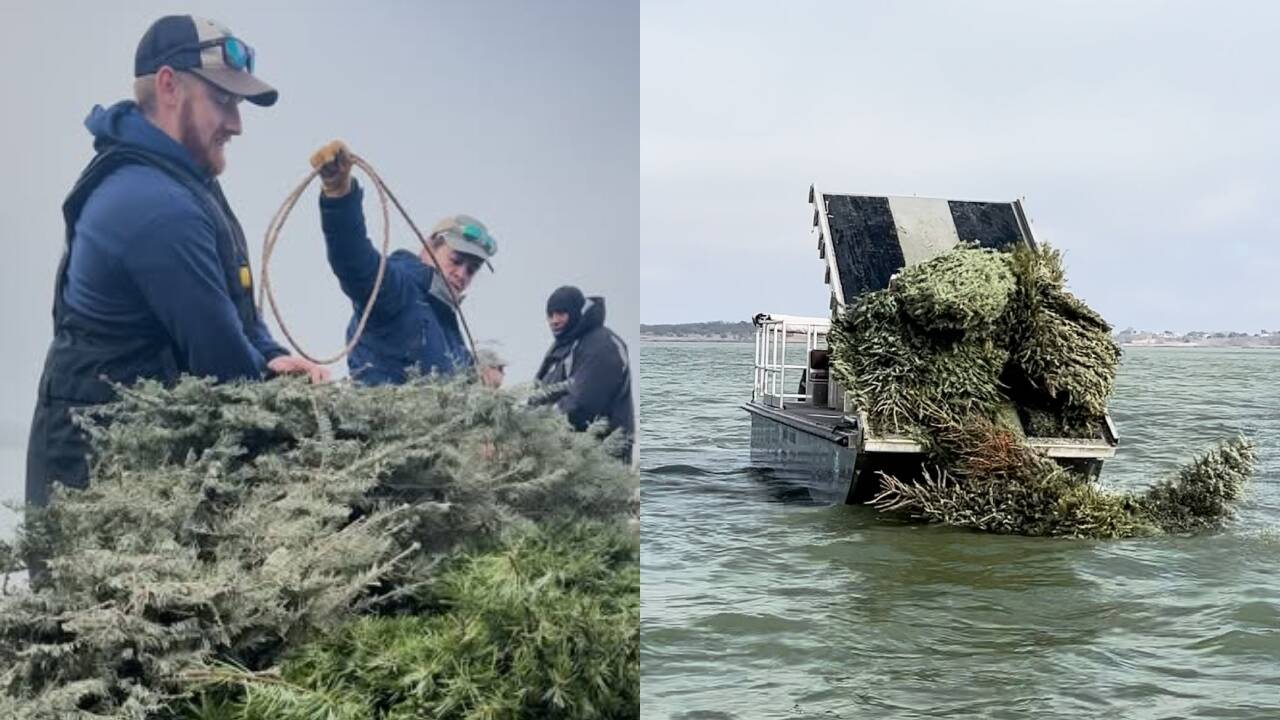
Every January, municipal curbsides across Texas overflow with the dry, needle-shedding ghosts of the holiday season. While most homeowners view discarded evergreens as municipal waste destined for a landfill grind, state wildlife biologists and reservoir managers recognize an entirely different utility. They see structural foundations. Texas parks and wildlife departments routinely pull hundreds of donated firs and pines from curb piles to sink them into inland reservoirs, transforming residential holiday decorations into complex freshwater fish habitats.
This annual recycling ritual addresses a silent ecological crisis playing out beneath the murky surface of man-made lakes across the Lone Star State. Flood control reservoirs, originally excavated by the Army Corps of Engineers or utility districts, lack the structural diversity required to sustain thriving sportfish populations. Without submerged timber, aquatic vegetation, or rocky outcrops, juvenile bass, crappie, and catfish become easy pickings for apex predators. Mortality rates skyrocket. Survival drops. Sinking repurposed holiday trees provides an engineered solution to a biological vacuum, giving vulnerable fry the micro-shelter they need to reach maturity.
The logistics of turning a living room centerpiece into an underwater nursery demand methodical execution. You cannot simply drag a pine tree to the shoreline and toss it into the drink. State agencies and conservation groups follow strict protocols to prevent environmental degradation and protect water quality.
Tree collection points require careful vetting. Municipalities strip away all tinsel, metallic hooks, plastic ornaments, and artificial flocking material before the evergreens ever reach a staging area. Flocked snow and synthetic dyes introduce harmful chemicals and microplastics into aquatic ecosystems. Natural resins and pine needles are safe, but processed decorations poison the water column. Once municipal crews accumulate a viable batch of bare conifers, volunteers and wildlife technicians step in to rig the timber for deployment.
Weight distribution dictates success or failure. A dry pine tree is remarkably buoyant. If you drop an unweighted fir into a reservoir, it floats lazily on the surface or drifts into navigational hazards, creating a headache for boaters and game wardens alike. Technicians drill heavy concrete blocks or cinder bricks to the base trunks using galvanized wire or heavy-duty nylon rope.
Placement requires local ecological knowledge rather than random dumping. Fisheries biologists consult bathymetric maps to locate drop zones that maximize biological impact. They target submerged points, creek channel ledges, and offshore humps in water depths ranging from fifteen to thirty feet. Drop these brush piles too shallow, and water level fluctuations expose them during summer droughts. Sink them too deep, and the oxygen-depleted hypolimnion during stratification renders the habitat useless for breathing fish.
The structural transformation happens with surprising speed once the trees settle on the lakebed. Within weeks, periphyton—a complex mix of algae, fungi, and bacteria—colonizes the submerged pine needles and bare branches. This slimy biological film serves as the primary food source for microscopic zooplankton and aquatic macroinvertebrates.
Insects and crustaceans arrive next, turning the sunken pine branches into an underwater grazing pasture. Bluegill and other panfish follow the food chain, swarming the branches to feed on the microscopic buffet. Largemouth bass and crappie quickly establish ambush points on the periphery of the brush pile, treating the dense network of needles as a covered hunting ground.
Anglers often criticize these localized fish aggregations as cheating, arguing that marking a sunken tree on a GPS unit guarantees an easy catch. Fisheries science tells a different story. These artificial structures do not magically increase the total fish population of an entire reservoir. Instead, they concentrate scattered fish, making them easier to target. More importantly, they protect juvenile cohorts from predation, increasing overall recruitment rates in reservoirs starved of natural standing timber.
Many aging Texas reservoirs suffer from a severe lack of structural diversity. When the state originally flooded river valleys decades ago to create municipal water supplies, timber clearing crews bulldozed and burned the standing forests to facilitate boat navigation and reduce rotting organic matter. While clearing the basins made boating safer initially, it stripped the new aquatic environment of essential fish habitat.
Decades of wave action, shoreline erosion, and siltation further degraded these artificial basins. Silt blankets the lake bottom, suffocating native aquatic vegetation and burying natural stumps under feet of mud. Reservoirs like Lake Livingston, Lake Conroe, and Lake Fork face constant habitat degradation. Without proactive intervention by wildlife agencies, these fisheries would experience drastic biological declines, hurting both the ecosystem and the regional economies driven by recreational fishing tournaments.
Logistical hurdles complicate the holiday tree recycling pipeline every winter. Labor shortages, tight municipal budgets, and strict environmental regulations limit the scale of these operations. State wildlife departments rely heavily on volunteer organizations, local bass clubs, and scout troops to handle the grueling physical labor of loading, weighting, and sinking hundreds of trees in freezing winter conditions.
Liability issues also loom large over public-private conservation efforts. Private landowners with waterfront property often want to sink discarded Christmas trees near their private docks to improve local fishing. Unregulated dumping by private citizens violates state water pollution laws, as abandoned debris can clog spillways, damage boat motors, or leach unauthorized materials into public drinking water supplies. State-managed drops remain the only legal avenue for converting holiday evergreens into fish habitat.
Alternative disposal methods compete directly for these organic resources. Commercial composting operations and municipal mulch-grinding programs absorb the vast majority of discarded Christmas trees across Texas. Wood chippers reduce millions of pines into landscaping mulch distributed to public parks and residential yards. While mulching serves a valid municipal purpose, conservationists argue that sinking a fraction of those trees into aquatic ecosystems yields a significantly higher ecological return on investment.
The lifespan of a submerged pine tree is remarkably short compared to hardwoods like oak or cedar. Conifers rot relatively quickly in water. Within three to five years, the fine needles decompose completely, and the smaller branches rot away, leaving behind only the bare trunk and major limbs. This ephemeral nature means reservoir managers must continuously replenish aging brush piles with new material every winter to maintain permanent habitat availability.
Successful reservoir management requires looking past the immediate utility of a recycled holiday decoration and recognizing the broader framework of aquatic restoration. When a Texan drags a drying pine tree to a curb collection site in January, they are participating in a quiet act of ecological engineering. That tree will soon anchor a complex micro-habitat beneath the surface of a murky lake, sheltering the next generation of sportfish in waters stripped of their natural timber.