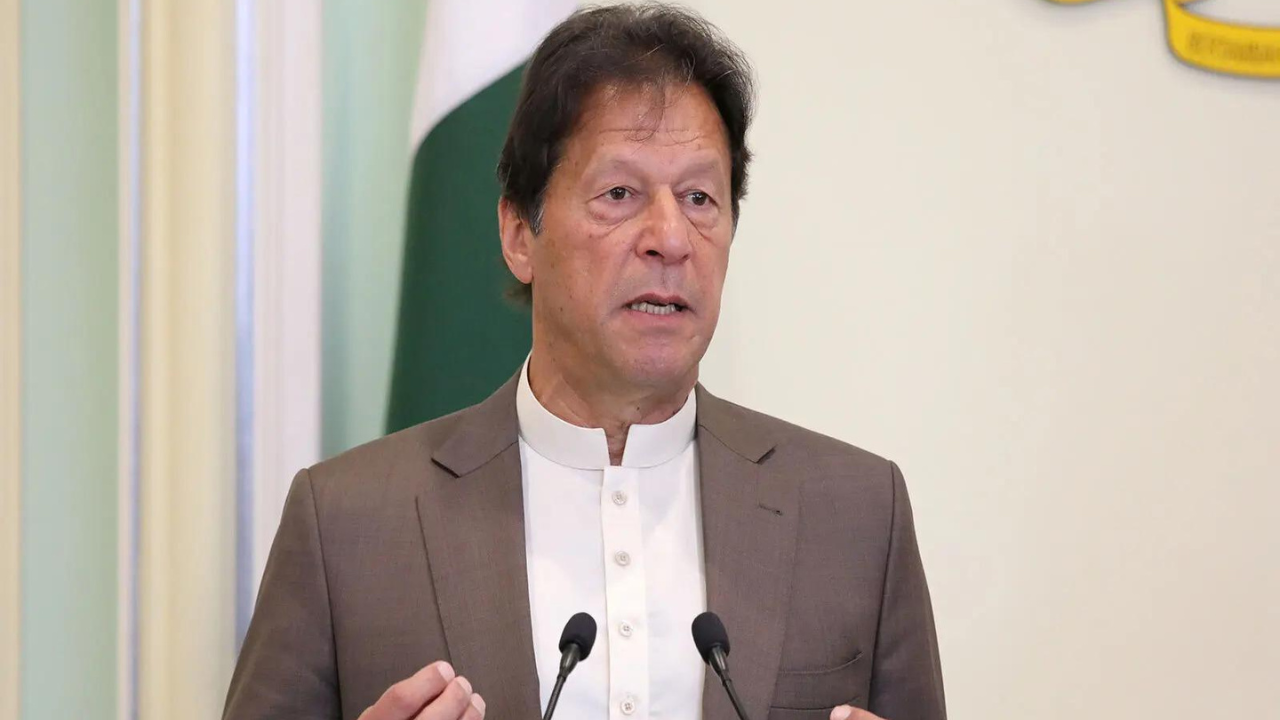
The courtroom in Rawalpindi does not care about the sweltering heat outside, nor does it care about the families waiting behind the steel barriers, pressing their foreheads against the cold metal. Inside, the air is thick with the smell of old paper, floor polish, and the quiet, crushing weight of state machinery. When the judge speaks, his voice is flat. It is the tone of a man reading a grocery list, not a man dismantling human lives.
Ten years.
For four high-ranking leaders of Imran Khan’s Pakistan Tehreek-e-Insaf (PTI) party, that number hung in the air like a sudden executioner's axe. A decade of a man's life swallowed by the gray concrete of a maximum-security prison. Yet, in the very same breath, the gavel fell differently for another. The former Foreign Minister walked away acquitted, stepping out into the blinding Pakistani sun while his colleagues were led down the back corridor toward the transport vans.
This is the reality of politics when it enters the theater of the judiciary. To the outside world, reading the headlines on a smartphone screen thousands of miles away, it looks like a standard legal update. It looks like a data point. But if you stand in that courtyard, if you watch the hands of a daughter trembling as she adjusts her shawl, you realize that these dry verdicts are actually earthquakes.
The Anatomy of an Iron Room
To understand how a person ends up facing a ten-year sentence in a political trials system, you have to look past the legal briefs. You have to look at the geometry of dissent.
Imagine a room where every word you spoke over the last five years is weighed not by its intent, but by its utility to your rivals. In Pakistan’s turbulent political history, the courtroom has rarely been a sanctuary of pure law; it is often the ultimate arena where power struggles are finalized. When a political party falls out of favor with the traditional centers of power, the shift is not gradual. It is an ice storm.
The charges often sound clinical. Violation of public order. State secrets infractions. Incitement. But the enforcement of these charges feels entirely visceral. For the four jailed leaders, the reality of the verdict means the immediate cessation of their normal existence. No more rallies. No more microphones. No more late-night strategy sessions over green tea in Islamabad. Instead, it is the immediate reality of a cell, the routine of the morning roll call, and the sudden, terrifying realization that the world outside will move on without them.
The contrast within the same verdict is what leaves observers breathless. The acquittal of the former Foreign Minister highlights the opaque, unpredictable nature of these proceedings. Why did the legal guillotine fall on four necks but spare the fifth? In the high-stakes theater of Islamabad’s power corridors, an acquittal is rarely just a sign of innocence; it is a message. It suggests a fracture in the strategy of the prosecution, or perhaps a deliberate calibration of mercy designed to keep the opposition guessing.
The Ripples in the Dust
When a prominent political figure is locked away, the sentence does not stop at the prison gates. It travels downward, fracturing families and reshaping communities.
Consider the campaign worker who spent months plastering posters across Lahore, believing that a change in government would mean lower electricity bills or a better school for his children. When the leadership is dismantled by a judicial decree, that worker does not just lose a political representative. He loses a sense of certainty. The message sent down the ladder is clear: compliance is safe; ambition is dangerous.
The state argues that these sentences are necessary to preserve order, to ensure that no individual or party considers themselves above the law. It is an argument based on the preservation of institutions. But for the millions who rallied under the PTI banner, the view looks entirely different. They see a system that uses the legal code as a set of handcuffs reserved exclusively for those who challenge the status quo.
This deep cynicism is the hidden cost of political trials. When people lose faith that a courtroom can be fair, they stop looking to courtrooms for justice. They begin to view the law not as a shield to protect the citizen, but as a club used by the powerful to maintain their grip. Once that belief takes root in a society, the glue that holds a nation together begins to dry out and turn to dust.
The Long Journey to the Gavel
History repeats itself in this region with the fidelity of a broken record. Decades ago, it was the leaders of the Pakistan Peoples Party who filled the jail cells. A generation later, the Pakistan Muslim League faced the exact same pressure, their leaders exiled or imprisoned under the watchful eye of accountability courts. Today, the wheel has turned again, and it is Imran Khan’s loyalists who find themselves in the crosshairs.
Every side cries foul when they are down. Every side defends the system when they are up.
The tragedy of this cycle is that the underlying issues of governance, poverty, and inflation are left to fester in the background while the elite engage in a perpetual war of judicial elimination. The four leaders now starting their ten-year terms are merely the latest casualties in a conflict that has no final victory condition. They will look out through the bars of their cells, knowing that the men who put them there will likely occupy those very same cells a decade from now when the political wind shifts once more.
The transport vans start their engines, the exhaust mixing with the humid air of Rawalpindi. The families begin the long, silent walk back to their cars. The former Foreign Minister prepares his press statement, adjusting his tie, acutely aware of the thin line that separated his freedom from his colleagues' imprisonment. The courtroom is cleaned, the papers are filed away, and the heavy wooden doors are locked until tomorrow. The state has spoken, but the silence that follows the verdict is louder than any chant.