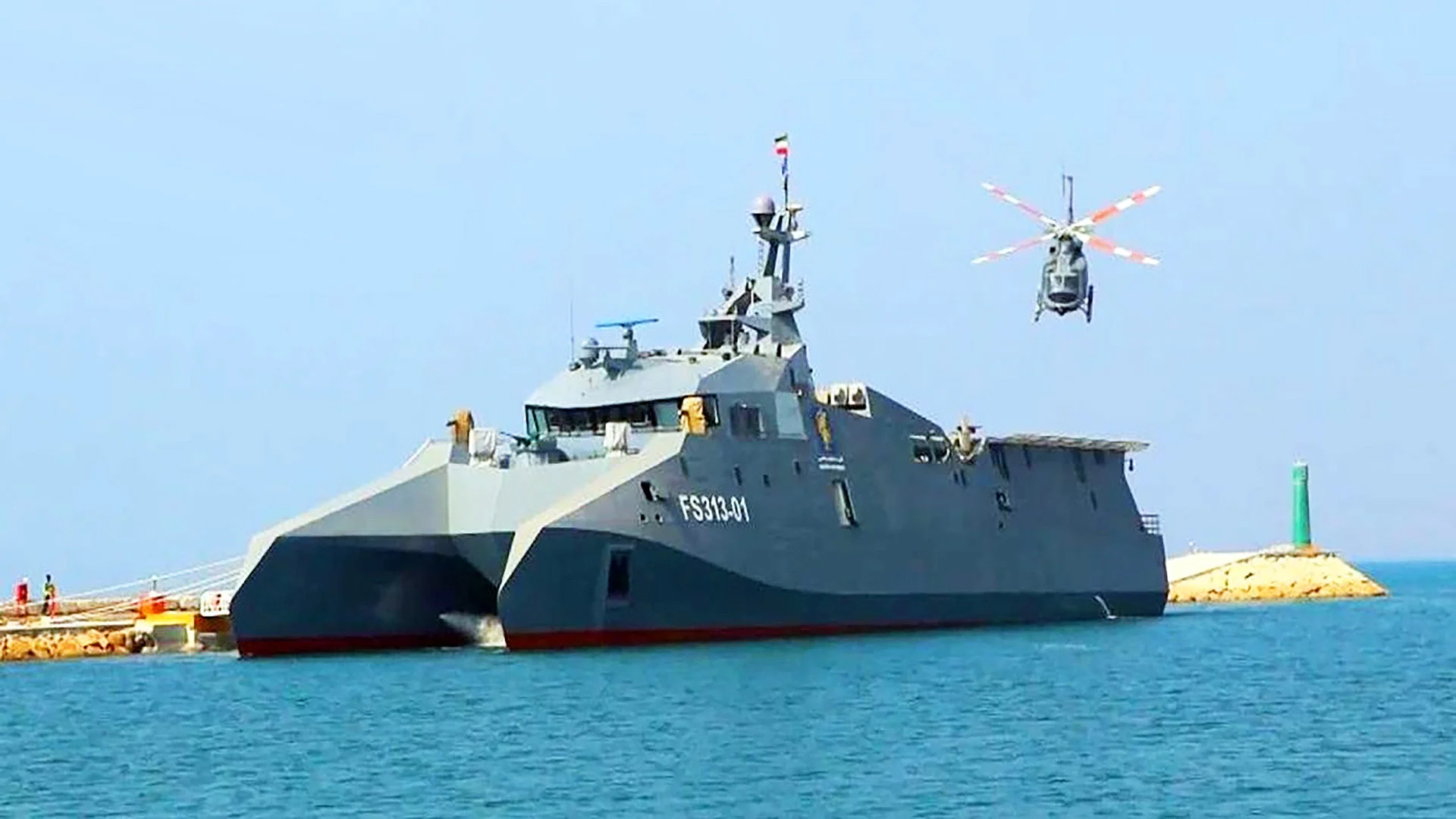
The maritime strategy governing the Strait of Hormuz is undergoing a transformation. Supreme Leader Ali Khamenei recently declared that a fresh epoch is surfacing for the Persian Gulf, framing the situation as a direct consequence of what he characterized as a failed Western presence in the theater. This is not mere rhetoric. It signals a shift in how Iran intends to exert influence over one of the world's most critical energy transit corridors, moving beyond standard posturing to a more proactive, localized security arrangement.
For decades, the Strait of Hormuz served as a choke point managed by the silent understanding of Western naval dominance. Roughly one-fifth of the world’s daily oil consumption passes through this narrow passage. The presence of the United States Fifth Fleet has historically provided the structural framework that kept these waters open. However, Tehran now views that framework as brittle and increasingly unsustainable. By dismissing past US involvement as a failure, the Supreme Leader is justifying a transition where regional actors, led by Iran, take primary responsibility for maritime traffic.
The Calculus of Regional Security
The assertion of a new chapter implies that the previous era of reliance on international oversight has concluded. Iran is positioning its naval capabilities, specifically the Islamic Revolutionary Guard Corps (IRGC) Navy, to act as the primary arbiter of order. This approach emphasizes speed, swarm tactics, and asymmetric threats rather than traditional blue-water dominance.
The strategic shift hinges on the reality that regional nations have grown tired of being the primary theater for superpower friction. Tehran is actively courting its neighbors, arguing that stability is better achieved through local cooperation than through foreign alliances that frequently result in escalation. If Iran successfully convinces Gulf Cooperation Council (GCC) members that it is a safer partner than the United States, the dynamics of energy transport could change overnight.
Historically, regional security relied on the protection of extra-regional powers. That model is now under extreme pressure. The increased frequency of patrols by local navies, combined with sophisticated drone capabilities, allows Iran to monitor and interdict vessel traffic with far higher precision than in years past.
Understanding Asymmetric Maritime Control
To comprehend the change, one must look at how control is actually exerted in a narrow body of water. Large surface combatants have clear limitations in the confined, shallow environment of the Persian Gulf. They are vulnerable to fast-attack craft and coastal missile batteries.
Iran has mastered this geography. They utilize a decentralized command structure that focuses on:
- Sea Denial Capabilities: Utilizing shore-based anti-ship cruise missiles that make it perilous for large naval groups to operate near the coast.
- Persistent Surveillance: Integrating long-range, low-cost unmanned aerial systems to track vessel movements in real-time.
- Swarm Tactics: Relying on hundreds of small, maneuverable speedboats that can overwhelm traditional defenses through sheer numbers.
These factors make the cost of conflict prohibitively high for any external actor. It is a classic strategy of making the battlefield too expensive to manage for an opponent who is operating thousands of miles from their home ports.
The Economic Implications for Global Markets
The energy markets remain in a state of nervous transition. When Tehran talks about a new chapter, the traders in London and Singapore hear uncertainty. The predictability that once defined the Strait of Hormuz is evaporating.
Insurance premiums for tankers operating in the region are linked to perceived volatility. If the regional security model shifts away from Western protection, insurers will likely increase rates based on the unpredictable nature of local disputes. This translates into higher costs for crude oil and liquefied natural gas reaching global markets, an effect that ripples far beyond the Middle East.
Consider a hypothetical scenario where regional negotiations fail and local skirmishes erupt. In such a case, the immediate consequence would be a massive surge in war risk surcharges. Even a brief closure or a string of targeted seizures could trigger a supply chain shock. Markets are currently pricing in a moderate level of risk, but the current political rhetoric suggests that the baseline for instability is shifting upward.
Shifting Alliances and Local Power Dynamics
The United States faces a difficult choice in this changing environment. Relying on a traditional, confrontational naval presence may no longer yield the intended results. The countries that once looked to Washington for absolute security are now diversifying their diplomatic and security portfolios.
We are observing a phenomenon where regional powers prioritize economic connectivity over ideological alignment. Saudi Arabia and the United Arab Emirates, while still maintaining ties to the West, have engaged in direct, high-level diplomatic outreach to Tehran. This is not a complete pivot, but it is a fundamental hedging strategy. These nations are aware that their geography dictates a permanent relationship with Iran. They prefer to negotiate that relationship directly rather than through an intermediary who may eventually exit the region.
The Reality of Persistent Engagement
The transition described by the Supreme Leader is not a sudden event, but a gradual displacement of influence. It is a long game played through minor incidents, diplomatic maneuvers, and the quiet expansion of local naval infrastructure.
When a government declares a new chapter, it is usually because it has already secured the foundations to write the next few pages. Iran has spent years hardening its coastal defenses and building a domestic military industrial base that is no longer as susceptible to external sanctions as it once was. Their current confidence is rooted in the practical reality that they have become the permanent, indigenous power in the Strait.
The outcome of this shift will define the energy landscape for the next decade. Whoever controls the transit of oil in the Persian Gulf essentially holds a lever over the global economy. As the current administration in Washington grapples with shifting priorities and domestic political cycles, the regional actors in the Persian Gulf are settling into a reality that excludes the old, familiar templates of control. The stability of the world's most vital energy artery now relies on a delicate balance of regional interests, and the era of easy, undisputed maritime dominance has definitively ended.


