The hospital room always smells of the same things. Antiseptic soap, warm plastic, and the faint, metallic tang of fear lingering behind the drawn curtains.
Most people walk into that room and see only the tragedy. They see the IV poles ticking like metronomes counting down an unknown rhythm. They see the exhausted parents trying to smile through eyes red from sleepless nights. They look at the disease as a monolith, an ancient and nameless monster that arrives uninvited, tearing lives apart with cold, indifferent efficiency. If you found value in this article, you should read: this related article.
We have been fighting this monster for generations with blunt instruments. We flood bodies with poison, hoping the cure kills the invader before it finishes off the host. We burn. We cut. We wait.
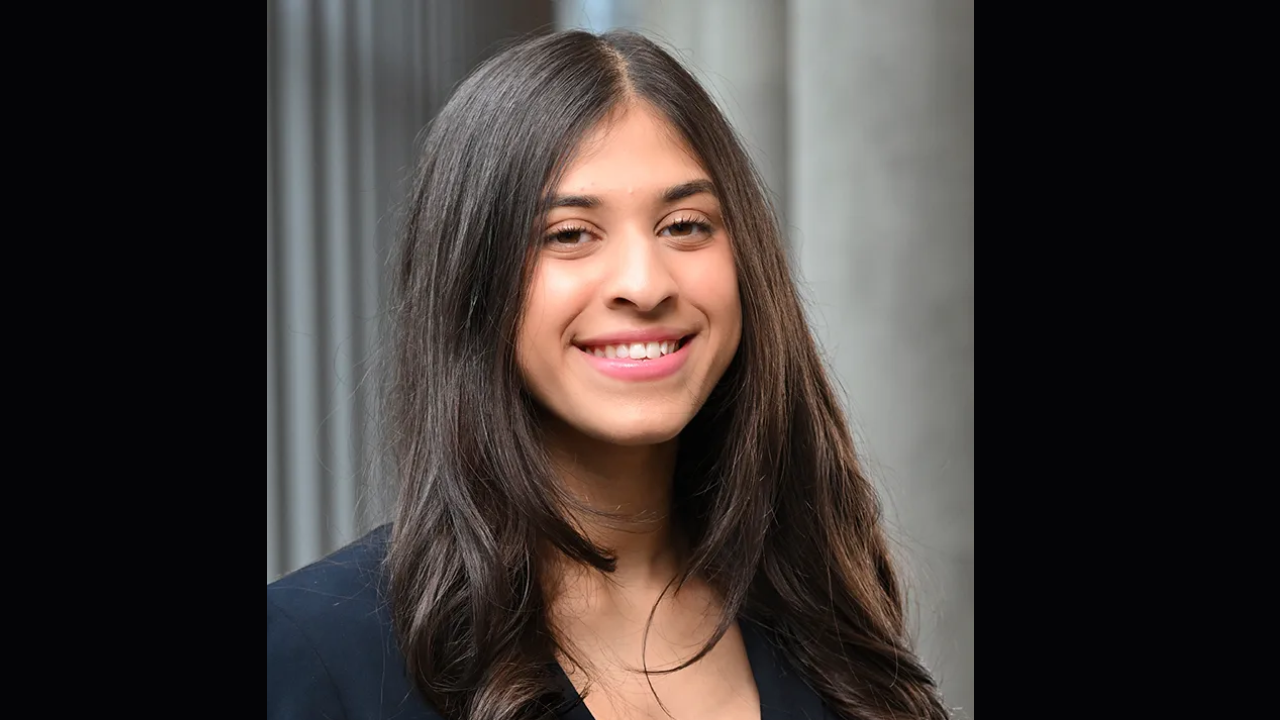
Yet, tucked away in a quiet New York bedroom, a seventeen-year-old girl named Ashka Shah looked at that same monster and saw something entirely different. She did not see a wall. She saw code. For another perspective on this development, check out the recent coverage from Psychology Today.
The Shape of the Enemy
To understand what Ashka did, you have to forget everything you think you know about biology textbooks. Cells are not static little pink circles drawn with colored pencils. They are hyper-dense, chaotic cities bustling with millions of workers every second.
Inside this microscopic metropolis, proteins act as the machinery. Most of them are dutiful citizens. They build walls, carry messages, and clean up waste. But sometimes, a single instruction in the genetic blueprint flips. A typo occurs.
Enter the cancer-driving protein.
Imagine a cellular switch that is supposed to flip on only when a repair crew is needed, then snap immediately back to off. Now, imagine that switch breaking off in the on position. It screams for the cell to multiply. Over and over. Faster and faster. No brakes. No hesitation. That runaway signal forms a tumor.
For decades, scientists have tried to build molecular wrenches to jam into these broken switches. But the human body is vast, and these proteins are microscopic shadows shifting shapes faster than we can track. Traditional research takes decades, consuming millions of dollars and countless laboratory mice, moving at the glacial pace of human bureaucracy.
Ashka Shah did not have a multi-million-dollar laboratory. She had a laptop, an internet connection, and a mind that refused to accept that age dictates capability.
Decoding the Invisible
While her peers spent their afternoons scrolling through social media feeds or worrying about college applications, Ashka was diving deep into computational biology. She wanted to understand how a specific cancer-driving protein operates at the atomic level.
Think of it like studying the lock on a vault door, except the lock is thousands of times smaller than the wavelength of visible light. You cannot simply look at it. You have to simulate it. You have to feed massive datasets into computational models and watch how amino acids fold, twist, and interact.
Ashka analyzed the structural biology of these proteins. She studied how mutations alter their physical geometry, turning a normal cellular component into a rogue agent. Using bioinformatics tools, she mapped out vulnerabilities that older researchers had walked right past.
This is where the magic of modern science intersects with relentless human curiosity. It is not just about writing code. It is about empathy translated into mathematics. Every protein structure she analyzed represented a real person sitting in a hospital room, waiting for a miracle that science was taking too long to deliver.
By running advanced simulations, Ashka identified potential inhibitory pathways—essentially finding the precise geometric flaw in the protein's armor where a future drug could bind and shut it down permanently.
The Weight of a Breakthrough
When her findings were recognized, headlines inevitably focused on the novelty. Seventeen years old. New York student. Prodigy.
Those words miss the point entirely.
Talent is cheap. Focus is rare. What Ashka demonstrated was not a parlor trick of youthful genius, but a shift in how discovery happens. The ivory tower of medical research is crumbling. The tools to decode the universe are no longer locked behind university gates guarded by tenured professors. They are sitting on open-source platforms, waiting for anyone stubborn enough to learn them.
Consider what happens next in the arc of human health. When high school students begin doing computational oncology in their bedrooms, the timeline of discovery accelerates exponentially. We move from a world where breakthroughs happen by accident after forty years of bench research to a world where millions of bright minds can test hypotheses simultaneously.
We are shifting from fighting cancer with a hammer to fixing it with a scalpel made of pure logic.
The room with the antiseptic smell and the ticking IV pole will always exist for now. The fear will not vanish overnight. But the shadows are shrinking.
Somewhere in New York right now, the screen of a laptop is glowing in a dark room. The fan is humming softly, working through terabytes of genetic data. A young mind is squinting at a simulation of a broken protein, looking for the single flaw that will bring it down.