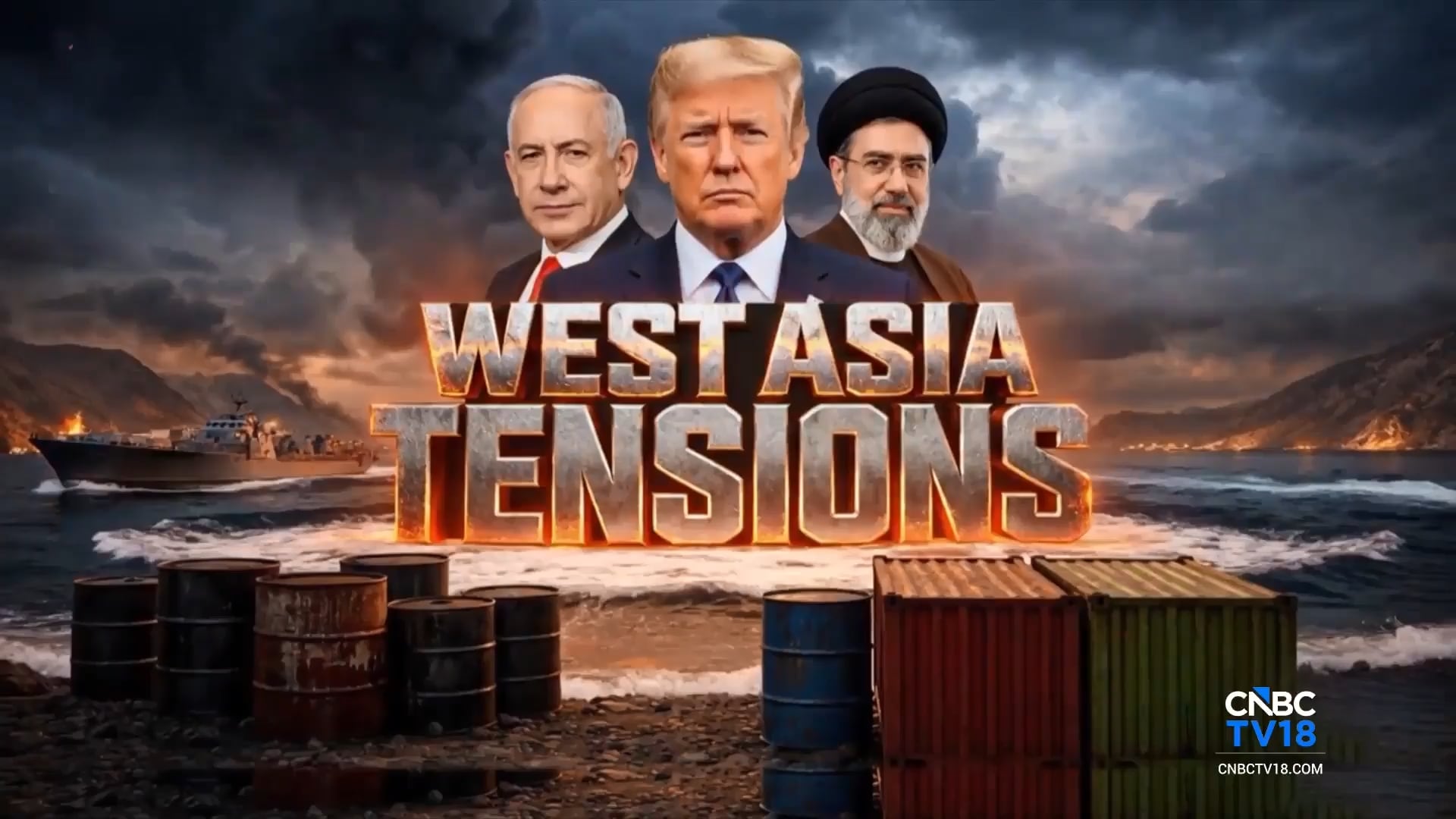
A ceramic cup of black tea sits on a mahogany table in a room where the air conditioning hums with a clinical, aggressive chill. Across from it, thousands of miles away, a technician in a white lab coat watches a digital readout as a rotor spins at speeds that defy the intuition of the human eye. These two objects—the teacup and the centrifuge—are the twin poles of a world held in a breathless, static tension.
We often speak of geopolitics as a game of chess, but that implies a logic where pieces are sacrificed for a clear victory. This is not chess. This is a siege where both sides are trapped inside the same fortress.
When news breaks of another round of "back-channel" talks or "proximity discussions" between Washington and Tehran, the headlines read like a weather report. Dry. Predictable. Overcast with a high chance of failure. They speak of enrichment percentages, frozen assets, and regional proxies. They measure the conflict in numbers. But the numbers are a mask for a much deeper, more primal exhaustion that has begun to seep into the bones of every player involved.
The Ghost at the Table
Consider a hypothetical diplomat named Elias. He has spent twenty years in windowless rooms, breathing recycled air, trying to find a linguistic bridge between "strategic patience" and "revolutionary dignity." He is tired. His counterparts are tired.
The struggle is no longer just about a nuclear footprint or the lifting of sanctions. It is about the terrifying weight of the status quo. In Washington, the political cost of a handshake is higher than the cost of a conflict. In Tehran, the ideology that sustains the state is woven into the very defiance that keeps its people isolated.
To move forward is to risk everything at home. To stay still is to watch the floor slowly rot beneath your feet.
The US-Iran relationship is a ghost story where the haunting is self-inflicted. The "pressure" the experts talk about isn't just a matter of economic data points. It is the sound of a currency losing its value in a Tehran bazaar while a mother wonders if she can afford imported medicine. It is the quiet anxiety in a Pentagon briefing room where officers realize that "maximum pressure" didn't lead to a collapse, but to a more sophisticated, more dangerous resilience.
The Math of Misery
The core facts are stubborn. Iran has pushed its uranium enrichment to 60%, a hair’s breadth from the 90% required for a weapon. This isn't just a technical milestone; it is a ticking clock audible in every capital from Tel Aviv to Riyadh. The US responds with a ledger of sanctions that have become so dense they function as a parallel legal system.
But here is the truth we rarely admit: sanctions are a blunt instrument used by people who have run out of scalpels.
When you freeze $6 billion in oil revenue, you aren't just squeezing a government. You are shifting the chemistry of a society. You are creating a "resistance economy" where the black market becomes the only market, and the hardliners—the ones you intended to weaken—become the only ones with the keys to the warehouse.
Pressure doesn't always create a diamond. Sometimes, it just creates an explosion.
The experts tell us there is no easy breakthrough because the "ask" on both sides is existential. Washington wants a return to a box that Iran has already outgrown. Tehran wants a guarantee of permanence that a four-year American election cycle can never provide. How do you sign a contract with a country that might change its mind, its mood, and its entire legal framework by the next inauguration?
The Invisible Stakes
Walk through a park in Isfahan. The scent of dried roses and exhaust hangs in the air. A student sits on a bench, scrolling through a filtered internet, dreaming of a life where "the West" is a destination for a vacation rather than a source of atmospheric dread.
Now shift to a suburb in Virginia. A father who works for a defense contractor watches the news and wonders if his son will be deployed to the Persian Gulf, a body of water that has swallowed trillions of dollars and thousands of lives without ever feeling "settled."
These are the invisible stakes. The policy papers call them "human capital" or "domestic variables." In reality, they are the heartbeat of the conflict.
The standoff has lasted so long it has become an ecosystem. There are entire industries built on this enmity. Think-tankers, arms dealers, lobbyists, and professional agitators on both sides of the Atlantic and the Zagros Mountains. If peace were to break out tomorrow, it would be a catastrophe for the people who profit from the threat of war.
The tragedy of the "no easy breakthrough" narrative is that it treats the stalemate as a natural phenomenon, like a mountain range. It isn't. It is a choice made every morning by men who are more afraid of their own base than they are of their common enemy.
The Language of the Unspoken
If you listen closely to the rhetoric coming out of the UN or the various European intermediaries, you notice a strange phenomenon. Both sides have started using the same words to mean opposite things.
When the US speaks of "stability," Iran hears "hegemony." When Iran speaks of "security," the US hears "expansionism." They are using the same dictionary but reading from different bibles.
The real pressure isn't the lack of a deal. It is the realization that they might have forgotten how to talk to each other without a threat attached. We have replaced diplomacy with signaling. A drone strike is a signal. A seized tanker is a signal. A new round of sanctions is a signal.
But signals are easily misinterpreted.
One night, a radar operator sees a blip that isn't there, or a local commander decides to be a hero, and the "managed tension" evaporates. The cold tea on the table is knocked over. The centrifuge shatters.
The experts are right: there is no easy way out. But they are wrong about why. It’s not because the technical hurdles are too high. It’s because neither side knows how to survive the peace.
To make a deal, you have to trust that the person across from you is a human being with a family, a history, and a fear of the dark. You have to believe that the teacup is more important than the centrifuge.
The mahogany table remains cold. The tea has long since lost its steam. Outside, the world moves on, indifferent to the two men in the room who are staring at each other, waiting for the other to blink, while the floor continues to rot.
We are not waiting for a breakthrough. We are waiting for the courage to admit that the siege has failed, and that the only thing left to do is open the gates and see who is left standing in the light.