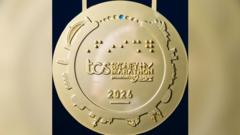
The internet spent the weekend having a collective aneurysm over a piece of metal.
When the Sydney Marathon proudly unveiled its finisher's medal ahead of race day, eagle-eyed sleuths spotted a glaring geography fail. Etched onto the design wasn't Sydney’s local Moore Park venue, but the unmistakable bubble-like facade of Munich’s Allianz Arena. Organisers slapped their collective forehead, mumbled about an unfortunate mix-up, and tried to brush it off with a cheerful corporate shrug: we are not going to run from it.
Cue the pearl-clutching from running purists. Social media pundits called it amateurish, embarrassing, and proof of declining standards in event management.
They are missing the entire point.
This administrative screw-up is not a PR disaster. It is a masterclass in modern attention economics. In an era where thousands of races globally fight for the exact same pool of exhausted, registration-happy endurance junkies, the Sydney Marathon just secured millions of dollars in free, organic, borderless media coverage that money cannot buy.
Stop crying over a graphic design glitch. Start treating it for what it is: the best marketing stunt the Abbott World Marathon Majors circuit has ever accidentally pulled.
The Myth Of The Pristine Event
We live in an age of sanitised perfection. Every brand wants to project an aura of immaculate, algorithmic execution. When a flaw slips through—a typo on a poster, a wrong stadium on a heavy hunk of zinc—we treat it like a moral failure of the executive team.
This is corporate fragility at its finest.
I have watched companies burn millions of dollars on hyper-vetted, focus-grouped marketing campaigns that achieved absolute zero because they were too boring to notice. Perfection is invisible. People do not share competence; they share catastrophe, irony, and human error.
By accidentally importing a German football cathedral onto an Australian running medal, the design team achieved maximum market penetration. The BBC covered it. Global running blogs picked it up. Reddit threads exploded with thousands of upvotes and debate. Bayern Munich’s social media team even jumped into the comments to joke about it.
Imagine a scenario where the medal was printed correctly. It would have featured a local stadium, runners would have glanced at it for three seconds after crossing the finish line, tossed it into a shoebox of forgotten race memorabilia, and moved on with their lives. Instead, this medal is now an instant collector's item. Every runner crossing that finish line next week is not getting a standard piece of hardware; they are receiving a piece of viral internet history.
The Economics Of The Memento
Let us talk about the real anatomy of a race souvenir. The lazy consensus states that a medal must be an accurate cartographical representation of local landmarks to hold value.
That is complete nonsense.
Value in consumer goods is derived from scarcity, narrative, and emotional resonance. A pristine medal from a generic half-marathon is worth its weight in scrap metal. A flawed medal with a hilarious backstory? That has cult status.
Consider the error-ridden stamps and misprinted coins of the past that now fetch small fortunes at auction. Mistakes transform mass-produced items into anomalies. By owning the mistake with a grin rather than issuing a groveling, lawyer-approved recall, Sydney Marathon organisers protected their brand equity. They weaponised self-awareness.
When you scale an event to tens of thousands of participants across international borders, complexity spikes exponentially. Outsourced design teams, multi-layered approval chains, and tight printing deadlines create a breeding ground for human oversight. Pretending this never happens is corporate delusion. Expecting perfection from a global logistical marathon is a fool's errand.
Why You Should Stop Chasing Flawless Execution
The obsession with zero-defect operations often paralyzes creative risk-taking. Organisations spend so internalizing compliance and risk mitigation that they strip all personality out of their product.
Sydney did not intentionally place a German arena on an Australian course. But their reaction is what matters. They did not launch a multi-week crisis management PR blitz. They leaned into the absurdity. They understood a fundamental rule of public engagement: if you laugh at yourself before the internet can cancel you, you strip the mob of its power.
Runners are flying to Sydney from over 120 countries. They are coming for the Harbour Bridge, the Opera House, and the prestige of a major marathon designation. Not a single participant is going to drop out because a stylized graphic engraving resembles the wrong concrete bowl. In fact, registration buzz has likely spiked among fence-sitters who now want to own the infamous Munich medal.
The next time your team makes a glaring, public-facing mistake, resist the urge to hide it under a rug or issue a sterile, corporate apology. Expose it. Own it. Make it funny.
Perfection keeps you anonymous. Mistakes make you famous.