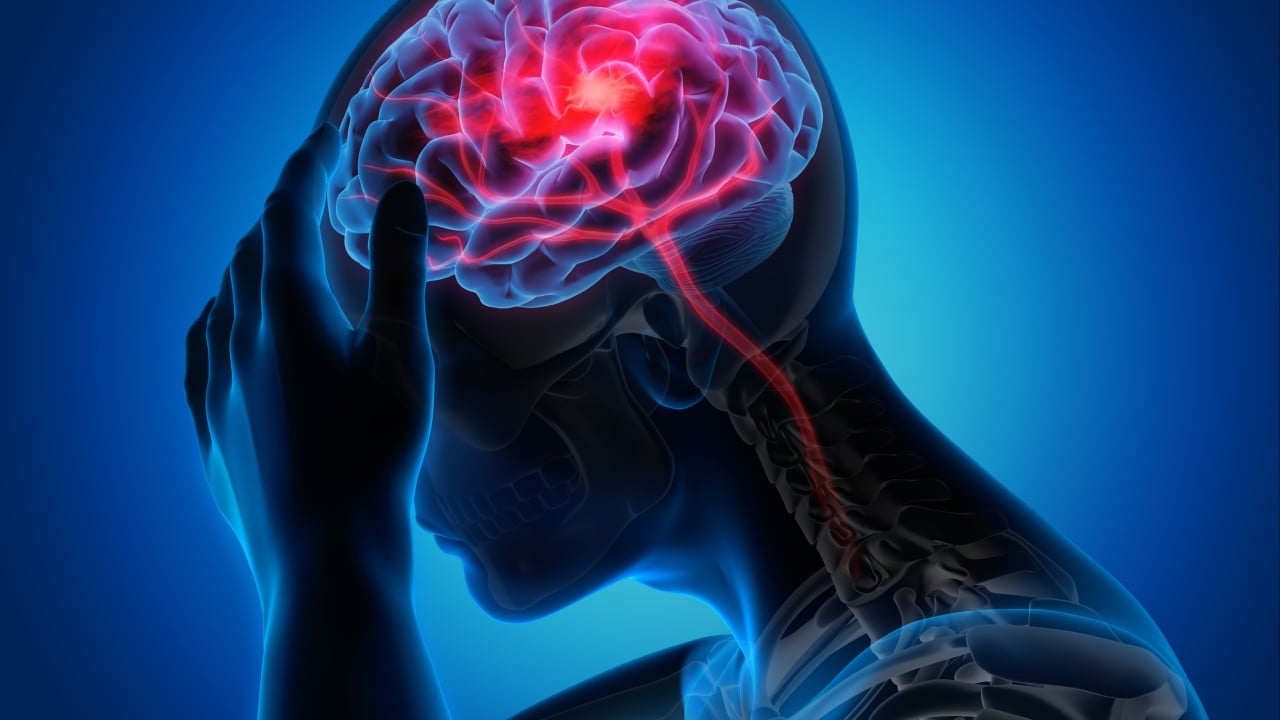
Waiting for neurodegenerative and mood disorders to show their faces through obvious behavioral symptoms is a massive flaw in modern medicine. By the time a Parkinson’s patient develops a noticeable hand tremor, or someone suffering from deep depression experiences a complete emotional crash, major damage has already happened under the hood. Neurons have degenerated, and chemical pathways are misfiring.
What if your body could wave a red flag years before those symptoms hit?
A research team led by Zhang Qiang at the Changchun Institute of Applied Chemistry, under the Chinese Academy of Sciences, has built something that does exactly that. They developed a wearable sweat-sensing patch that tracks multiple Parkinson's-related biomarkers in real time. It is the size of a standard bandage, fits right on the skin, and monitors crucial chemical signals like L-Dopa, ascorbic acid, and glucose without requiring a single drop of blood.
By tracking these biomarkers dynamically, the patch opens up a critical window for early intervention. It changes how we think about diagnosing and treating brain-related conditions from the outside in.
Tracking Neurochemistry Through Sweat
Most people think of sweat as just water and salt. In reality, your sweat is a complex biofluid packed with molecular information that mirrors what is happening inside your bloodstream and your brain. The trouble has always been catching those molecules cleanly and translating them without bulky laboratory gear.
The Chinese research team spent nearly three years tackling this exact engineering bottleneck. Their patch integrates a biomimetic microfluidic module designed specifically for sedentary sweat collection. This means you do not have to run on a treadmill to produce enough liquid for a reading; the patch channels tiny, resting amounts of skin moisture directly across an advanced electrochemical sensing platform.
The system relies on a unique design using copper-oxidase hybrid nanoflowers. This structure stabilizes the fragile oxidase enzymes on the sensor, keeping them active and accurate for extended wear without losing signal strength. Once the sensors detect the target molecules, an on-site processing circuit handles the data and sends it directly to custom software for real-time visualization.
Instead of waiting weeks for laboratory blood panels, patients and doctors get an immediate look at shifting chemical baselines.
Breaking the Peaks and Troughs of Medication
Managing a condition like Parkinson's is famously a game of whack-a-mole. The standard treatment relies heavily on oral medications like levodopa to replace missing dopamine in the brain. But anyone who has managed this routine knows the underlying frustration. Pills create a harsh cycle of peaks and troughs.
Right after taking a pill, chemical levels spike, sometimes causing involuntary movements known as dyskinesia. As the drug wears off, levels plummet. The patient hits an "off" period where stiffness, tremors, and anxiety roar back before the next dose can kick in.
Continuous tracking changes this dynamic completely. By monitoring how biomarkers fluctuate throughout the day, clinicians can move away from rigid, speculative dosing schedules. They can see exactly when a patient’s levels begin to dip and adjust therapies to match actual biological demand.
While this specific patch functions as a non-invasive diagnostic tracker, sister research from the Chinese Academy of Sciences published in ACS Nano shows how fast this field is moving. Researchers have also successfully tested intranasal patches loaded with L-dopa and copper oxide nanoparticles in animal models. That patch delivered steady medication directly to the brain while simultaneously scavenging reactive oxygen species—the harmful molecules that cause oxidative stress and destroy neurons.
Whether worn on the skin to monitor or used nasally to treat, the shift toward continuous, steady-state neurochemical management is officially underway.
The Connection to Depression and Mental Health
The applications for this kind of wearable tech go far beyond motor disorders. The same biochemical pathways linked to Parkinson's play a massive role in clinical depression.
Diagnosing major depressive disorder has historically been a subjective process. Doctors rely on self-reported questionnaires, patient journals, and behavioral observations. It is an imperfect system. Patients often struggle to articulate their mental state, and clinical visits only capture a single snapshot in time.
Because depression involves deep-seated neuroendocrine abnormalities and shifts in metabolic indicators like glucose and ascorbic acid, a continuous biochemical tracker provides an objective layer of data. It removes the guesswork. If a patient's metabolic and chemical baselines begin a slow, downward trend over a two-week period, a physician can intervene before a severe depressive episode takes hold. It moves psychiatry out of the realm of reactive tracking and into proactive management.
What Needs to Happen Next
The technology works in laboratory settings and has already been tested on dozens of healthy volunteers and Parkinson's patients at various stages of the disease. However, taking a device from a successful academic study to a consumer pharmacy requires a few deliberate steps.
First, you need to track your own clinical data priorities. If you are a patient or a caregiver dealing with a neurodegenerative condition, start logging your daily symptom fluctuations alongside your medication times manually. Having a clear baseline of your "on" and "off" periods makes it much easier for your neurologist to optimize your treatment right now, while these wearable sensors undergo scaled manufacturing and regulatory approvals.
Second, medical device developers must focus on long-term wearability. While the hybrid nanoflower design solves enzyme stability, the patch adhesives must withstand daily friction, showers, and varying skin types without irritating the user or corrupting the electrochemical reading.
The era of guessing what is happening inside our brains based on outward behavior is ending. Non-invasive, continuous molecular tracking is proving that the skin can tell us everything we need to know about our minds.