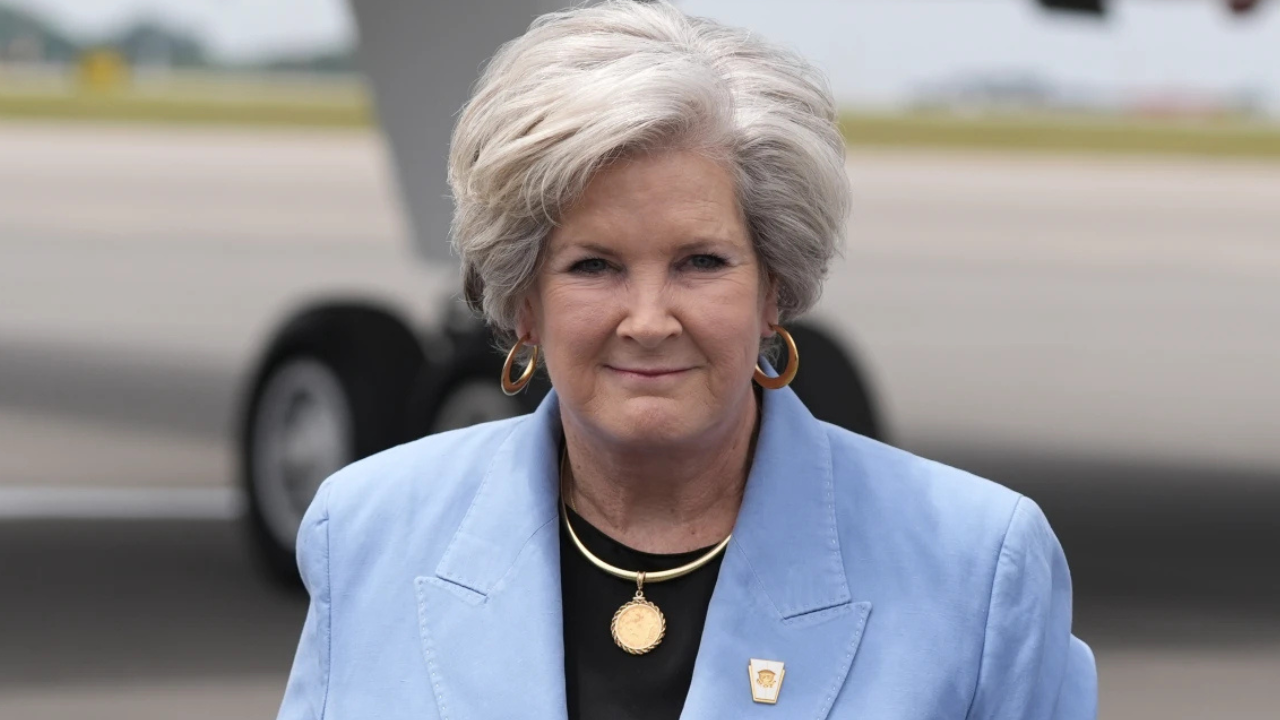
When Natalie Harp walked into President Donald Trump's orbit with printed copies of stories speculating that Susie Wiles might be on her way out, she didn't just hand over newsprint. She lit a fuse inside a West Wing that was already running hot.
Reports from mid-October 2026 captured a classic Washington pressure cooker: Trump reportedly blowing up after seeing printed reports about his chief of staff's shaky standing, furiously working the phones with friends and allies, and triggering a full-blown White House freakout. Most quick-hit coverage treated the episode like a punchline about a "human printer" stoking palace drama. Honestly, that misses the bigger story. Printed clips don't create a crisis out of thin air. They expose fault lines that were already cracking.
And looking back from mid-November 2026, we know how the act ended. On November 6, 2026—right on the heels of bruising midterm elections—Wiles exited as White House chief of staff, with Trump naming Stephen Miller to succeed her as the 33rd chief of staff. What looked like mere October speculation turned out to be an early warning sign of a major West Wing shakeup.
Why Susie Wiles and Natalie Harp Clashed Inside the West Wing
To understand why printed ouster rumors hit so hard, you have to look at how power actually works in Trump's orbit. Title and hierarchy matter on paper, sure. Proximity and constant access often matter just as much in real time.
Susie Wiles entered the second term in January 2025 as the first woman to serve as White House chief of staff, earning wide credit for bringing relative discipline, fewer leaks, and steadier operations compared with the four-chief-of-staff churn of Trump's first term—Reince Priebus, John Kelly, Mick Mulvaney, and Mark Meadows. That reputation made her indispensable for months.
Natalie Harp occupies a very different lane. Serving as a special assistant and executive assistant to the president, Harp became known for staying close to Trump's daily media diet, managing social posts, and printing out material for him to read—earning the "human printer" label in reporting. Even setting aside rumors about who leaked what to whom, having a loyalist feed raw media narratives straight to a president while the chief of staff is trying to manage message discipline creates instant friction.
In any White House, a chief of staff's job is to filter noise so the president isn't reacting to every cable hit or blog rumor. When a close aide puts printed speculation about the chief of staff's job security right in front of the boss, it flips the dynamic. Suddenly, the chief of staff isn't managing the room. She's defending her turf.
The Katie Zacharia Flashpoint
Nothing shows that tension more clearly than what happened around the press secretary's office in mid-October 2026. After former press secretary Karoline Leavitt departed in August, Trump tapped Katie Zacharia for the role—without consulting Wiles, who had reportedly been pushing a different candidate.
That bypass alone signaled trouble for Wiles's gatekeeping authority. Then came the fallout. Zacharia's tenure lasted just five days—from October 12 to October 16, 2026—making it the shortest press secretary run in U.S. history and eclipsing Anthony Scaramucci's 11-day stint as communications director in 2017. Her brief briefing drew sharp criticism, reporters scrutinized her claims about being an attorney after she hadn't passed a bar exam, and Trump publicly told reporters he had urged her to reconsider staying in the job.
When a high-profile hire goes sideways in five days after the chief of staff was cut out of the decision, everyone in Washington starts asking who really has the president's ear. That's the exact environment where printed ouster talk stops looking like idle gossip and starts looking like a test balloon.
What October's Panic Got Right—and What It Missed
Having watched dozens of White House rumor cycles play out over the years, I'm always skeptical of the phrase "freakout." Washington loves melodrama, and anonymous sources often exaggerate a bad afternoon into an existential meltdown. Still, dismissing the October reporting completely would be a mistake, because the underlying dynamics were real.
Reports at the time noted that Trump was calling around to gauge views on Wiles while allies described Wiles's team as looking over its shoulder. At the same time, White House officials publicly pushed back with unity messaging, insisting the team remained focused on the agenda. Both things can be true at once: public discipline can hold for a few weeks while private frustration simmers underneath.
Here is where the broader picture gets tricky, and where a careful reader should stay grounded:
- Leak attribution is notoriously murky. Speculation swirled over whether Wiles's camp, rival aides, or outside actors fed stories about her standing and the Zacharia misstep. In West Wing warfare, almost nobody admits to planting a story that makes their own side look vulnerable.
- Correlation isn't proof of a single trigger. Wiles stepped down in early November after the midterm elections, not on the exact day Harp handed over printed articles. Post-midterm resets are common in modern presidencies, especially when a party absorbs losses.
- Motives behind "human printer" habits vary. Feeding a boss printed coverage isn't unique to one aide or one administration; presidents have relied on physical printouts for decades because paper is easier to mark up, carry, and wave around than a phone screen.
Still, when you connect the dots from October to November, the pattern is hard to ignore. Wiles had long been praised for keeping a lid on chaos compared with Trump's first term. Once cracks showed around staffing decisions, press operations, and inner-circle dynamics, her cushion shrank fast.
The Bigger Shift in Trump's Inner Circle
Wiles's exit didn't happen in a vacuum. By mid-November 2026, observers and outlets from The Guardian to The Washington Post pointed out how heavily male Trump's senior circle had become following a string of high-profile departures by women, including Cabinet officials and top aides.
Replacing Wiles with Stephen Miller—a longtime hardline adviser and deputy chief of staff—signals a very different management style going forward. Where Wiles was widely viewed as a seasoned political operative and stabilizer, Miller brings ideological intensity and long-standing loyalty to Trump's core agenda. Whether that shift brings tighter control or sharper clashes with Congress and the courts after the midterms is one of the biggest questions facing the administration.
If you're following White House power dynamics closely, don't get hypnotized by single-day palace anecdotes like printed articles or heated phone calls. Watch three concrete things instead: who gets sign-off on senior personnel before announcements go public, how quickly key vacancies like press secretary get filled with durable picks, and who travels or sits in the room during major policy rollouts. Those day-to-day habits tell you far more about who holds real leverage than any leaked rumor ever will.