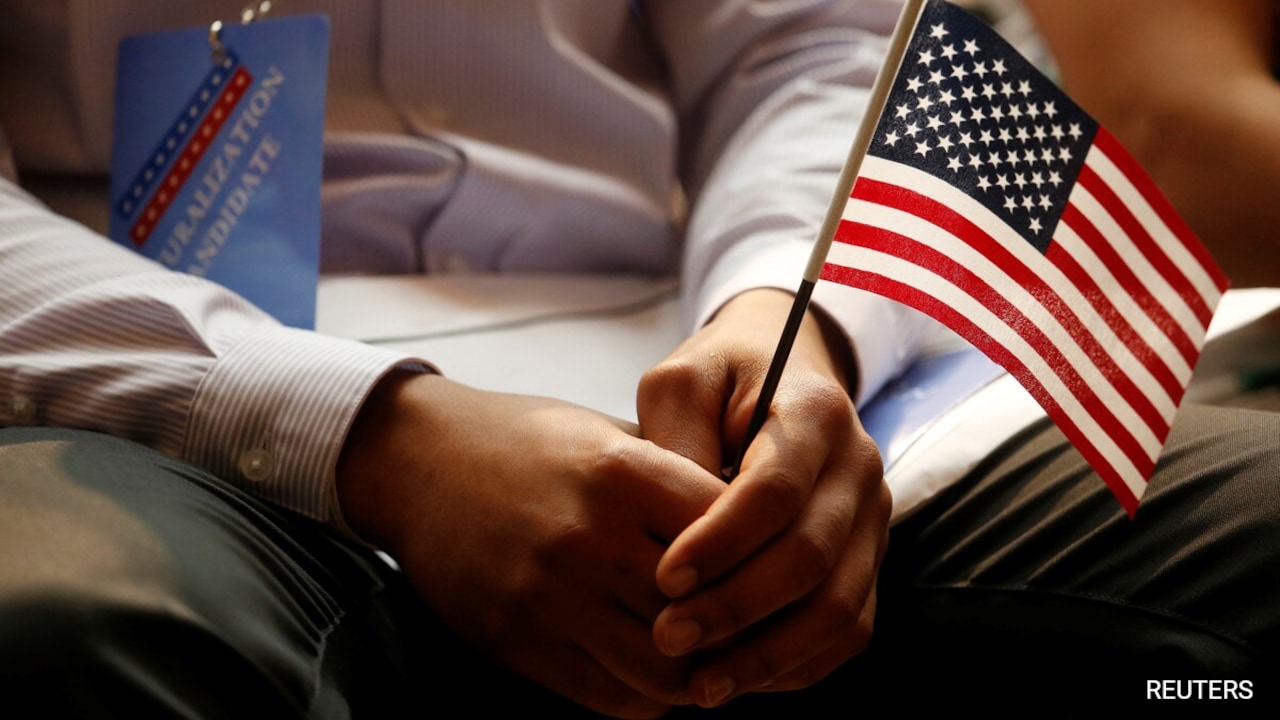
The corporate media is running its standard playbook. Following the Supreme Court's twin 6-3 decisions handed down on June 25, 2026, the headlines read like an obituary for human rights. Outraged advocacy groups are screaming about a conservative bench acting as an executive rubber stamp. The boilerplate consensus is lazy, predictable, and entirely misses the point. Critics claim the High Court just destroyed "lawful pathways" for asylum seekers and stripped away the safety net for Temporary Protected Status (TPS) holders from Haiti and Syria.
Here is the truth nobody wants to say out loud: the Court didn't destroy lawful immigration pathways. It merely exposed the fact that they never existed in the first place. For a more detailed analysis into this area, we recommend: this related article.
For decades, the immigration debate has been built on a bipartisan lie. We are told that there is a right way and a wrong way to enter the country—that if you just wait in line, follow the rules, and use the designated institutional channels, the system works. The Supreme Court didn't break the system; it simply read the fine print of the Immigration and Nationality Act (INA) and reminded everyone that under U.S. law, legal status is not a right. It is a temporary executive privilege that can be revoked on a whim.
If you are an immigration attorney or an executive managing an international workforce, you cannot afford to look at this through a sentimental lens. You have to look at the cold, hard mechanics of executive power. To get more background on the matter, extensive reporting can also be found at The New York Times.
The Doorbell Doctrine: Why "Metering" Is Legally Bulletproof
The first decision cleared the path for the administration to revive "metering"—the practice of limiting how many migrants can apply for asylum at a port of entry each day. The narrative from groups like Democracy Forward is that turning people back at the border violates federal law, which states that any migrant who arrives in the U.S. can apply for asylum.
Writing for the majority, Justice Samuel Alito dismantled this argument with a piece of logic that is as brutal as it is legally sound: "A guest does not arrive in a house when he knocks on the front door."
From a statutory standpoint, the administration's position is unassailable. To claim a right under U.S. asylum law, you must be physically present on U.S. soil. If border agents keep you on the international bridge in Mexico, you haven't arrived. You are still outside.
I have seen corporate legal departments blow millions of dollars trying to litigate immigration cases based on what they think the law should mean, rather than what it actually says. The text of the INA gives the executive branch massive, unilateral authority to manage border operations. Expecting a conservative judiciary committed to textualism to invent a right to entry where none exists in the text is a fool's errand.
The immediate corporate fallout of this ruling is obvious but completely ignored by mainstream analysts. By validating the "doorbell doctrine," the Court has guaranteed a permanent humanitarian logjam at the southern border. For businesses relying on cross-border logistics and manufacturing supply chains in Northern Mexico, this means structural delays, increased security costs, and a complete destabilization of the local labor markets where their factories operate. It is not just a human tragedy; it is an operational tax on nearshoring.
The TPS Mirage: The De Facto Amnesty Lie
The second ruling is even more disruptive. The Court allowed the Department of Homeland Security to terminate TPS for roughly 350,000 Haitians and 6,000 Syrians. The dissenting justices and civil rights organizations are calling this a racially motivated betrayal. They point to the administration's derogatory rhetoric as proof of unlawful prejudice.
But the Court's conservative majority looked past the political theater and focused on the literal definition of the word temporary.
TPS was created by Congress in 1990 as a short-term humanitarian fix for individuals whose home nations were destabilized by earthquakes, civil war, or temporary disasters. It was never intended to be a rolling, multi-decade residency program. Yet, administrations of both parties have continually extended these designations because Congress lacked the political courage to pass comprehensive immigration reform.
DHS General Counsel James Percival called the legacy program a "de facto amnesty." From a purely legal perspective, he is right. When a temporary program lasts for fifteen years, it ceases to be an emergency measure and becomes an unauthorized permanent fixture.
The hard truth is that TPS holders were trapped in a legal mirage. They were issued social security numbers, granted work permits, and invited to buy homes and build careers. But their status was built on sand. By ruling that federal courts cannot question the process the executive branch uses to revoke these protections, the Supreme Court has declared that 1.3 million TPS holders nationwide are entirely subject to the political winds of whoever occupies the White House.
The Real Cost to American Enterprise
Let's look at the economic reality. Mainstream coverage focuses entirely on the border, but the real impact of the TPS ruling will be felt in corporate balance sheets across America.
TPS holders are not a drain on public resources; they are deeply integrated into the domestic economy, contributing an estimated $29 billion annually. They are the backbone of essential industries that are already facing severe labor shortages:
- Commercial construction and infrastructure development
- Industrial agriculture and food processing
- Regional logistics and supply chain distribution
- Healthcare assistance and hospitality services
Imagine a scenario where a mid-sized construction firm in Florida or Texas suddenly loses 15% of its specialized workforce overnight because their TPS status evaporates. The project deadlines don't move. The supply costs don't drop. The labor just vanishes.
This is the structural flaw in the contrarian immigration crackdowns. The administration celebrates these rulings as wins for the rule of law, but they are simultaneously shooting the American economy in the foot. You cannot run a high-growth economy while maintaining an immigration policy that treats hundreds of thousands of tax-paying, legally employed workers as disposable economic units.
The Dangerous Fallacy of the "Right Way"
The most dangerous misconception perpetuated by the competitor's coverage is that this ruling will incentivize people to use "legal channels."
Let's look at the actual incentives created by this legal framework. If you wait at a designated port of entry to apply for asylum legally, you will be metered, turned back into a lawless border town, and forced to wait indefinitely in a makeshift camp. However, if you bypass the port of entry, cross the river illegally, and successfully evade detection, you bypass the metering system entirely.
The Court's ruling does not secure the border; it formalizes a system that punishes compliance and rewards evasion.
The underlying premise of the entire judicial battle is flawed. Activists are wasting time and resources trying to get the courts to save a broken system through creative statutory interpretation. The courts will not save you. The text of the law is explicitly designed to give the president maximum authority to shut the gates.
If the business community and humanitarian advocates want actual predictability, they need to stop looking to the Supreme Court for salvation. The only way to build a stable, legally defensible immigration framework is through direct, statutory action in Congress. Until that happens, the "legal pathway" will remain exactly what the Supreme Court just proved it to be: an administrative illusion that can be wiped away with a single executive signature.