Altitude does strange things to human judgment. At two thousand meters above sea level, the air thins, the chest works harder, and a strange, singular tunnel vision often takes hold of the mind. The peak becomes an idol. Everything else—common sense, familial duty, the quiet safety of a child—shrinks into insignificance against the gravitational pull of the summit.
Consider what happens when ambition overrides basic survival instincts on a mountain slope.
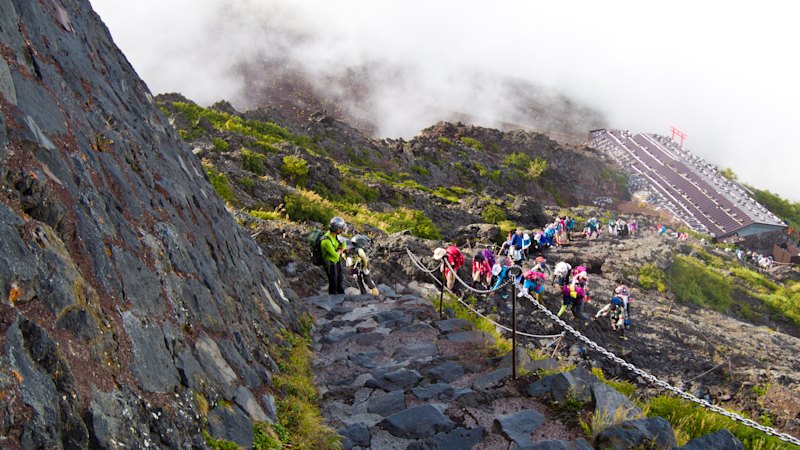
On a steep stretch of the Fujinomiya trail on Mount Fuji, a seven-year-old boy stopped walking. His legs, small and unaccustomed to the punishing grade of volcanic rock and gravel, simply gave out. The air was cold, damp, and heavy with the promise of shifting weather. His older brother had already forged ahead with their father, swallowed up by the gray mist winding around the mountain's flanks.
The father, hailing from Nagoya, turned back to look at his youngest. The boy was exhausted, crying out from the sheer physical toll of the ascent. A reasonable parent would have looked at the falling fog, felt the dropping temperature, and turned around. The mountain would still be there tomorrow. A child's sense of security, once shattered on an isolated slope, is much harder to repair.
Instead, the father handed the first-grader a few snacks, a soft drink, and a set of instructions.
Wait here.
With those three words, the man turned his back on his son and continued his upward march toward the peak alongside his older child. He left a seven-year-old completely unattended at the sixth station, an altitude of roughly 2,490 meters, exposing him to the unpredictable microclimate of Japan's highest peak.
Mist descended. Rain began to slick the volcanic stones.
Hours bled past. To conceptualize the sheer scale of the abandonment, consider the geography: the journey the father intended to complete before returning meant the boy would have been left waiting for roughly eight hours, entirely alone, with no money and no shelter other than a wooden bench. Hypothermia on Mount Fuji is a silent, rapid predator, even during the warmer months, dropping core body temperatures before a stranded hiker even realizes the danger.
Rescue came not from parental reflection, but from a vigilant mountain hut worker. Spotting the shivering child sitting completely by himself as the rain intensified, the worker pulled him inside for safety and immediately alerted the authorities.
Police officers mobilized quickly, tracking the father's ascent up the mountain. By the time they managed to contact him, he had climbed all the way to the eighth station—a grueling three-hour trek away from where he had abandoned his younger son. The instructions delivered over the radio were unambiguous: turn around immediately.
When the father finally returned down the trail, he was met not with the triumph of conquering a summit, but with a severe reprimand from Shizuoka Prefecture law enforcement. Officers delivered a stern reality check to the man, making it clear that abandoning a child is entirely unacceptable, regardless of how close a climbing party is to the peak.
The father offered a remorseful apology, admitting that his rash decision was driven entirely by a clouded desire to reach the top. The boy was physically unharmed, wrapped in warmth, and handed back into his custody after local authorities intervened.
The peak remains untouched by human possession. It does not care who reaches the top, and it yields no prize for those who sacrifice their humanity to stand upon its crest. The true measure of any journey is never found in the altitude reached, but in who walks beside you when you finally come back down.