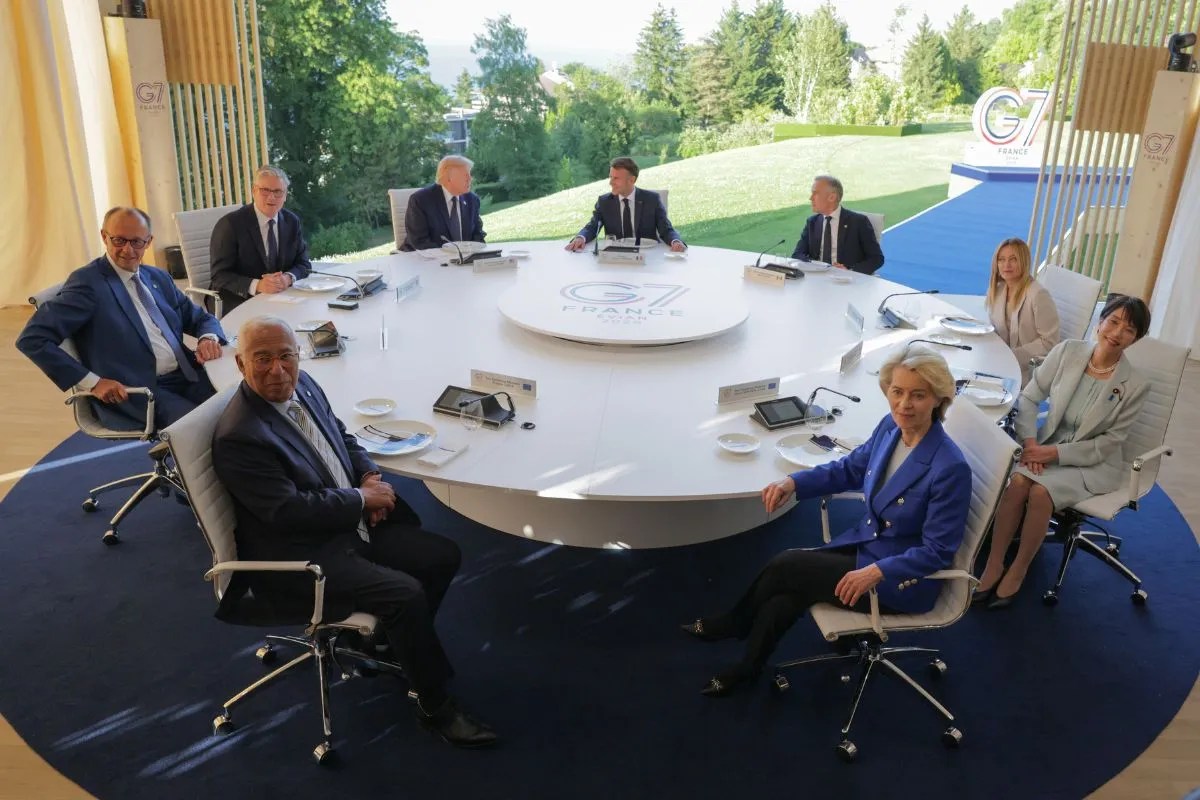
The launch of the Partners for Multilateralism initiative under European Council President António Costa represents an institutional response to structural paralysis within global governance. Traditional international frameworks face systemic gridlock, driven by geopolitical polarization and the erosion of binding normative agreements. Rather than viewing this friction as a temporary diplomatic impasse, middle powers must analyze the initiative through the lens of network theory, economic resilience, and coalition mechanics.
The Structural Deficit of Traditional Frameworks
Global governance architectures designed in the mid-twentieth century exhibit severe path dependency. The Security Council format and legacy economic institutions reflect a distribution of sovereign power that no longer matches contemporary economic output or demographic weight.
When dominant actors utilize veto mechanisms or bilateral economic coercion to bypass multilateral consensus, secondary and tertiary powers absorb disproportionate systemic shocks. Supply chain weaponization, energy volatility, and financial fragmentation impose heavy transaction costs on economies that rely on predictable rules-based commerce.
The Partners for Multilateralism platform attempts to address this vulnerability by establishing an open-source network of cross-regional states. The core objective is not the immediate rewriting of legacy charters, but the creation of functional sub-networks capable of standard-setting, trade diversification, and crisis coordination outside traditional gridlocked hubs.
The Three Operational Vectors
The initiative operates across three distinct functional domains, each requiring specific coordination mechanisms to avoid bureaucratic inertia.
Economic Resilience and Supply Chain Diversification
The first vector targets structural dependency. Traditional trade networks often rely on single-point-of-failure logistics or dominant currency clearing houses that expose participants to extraterritorial sanctions and trade shocks. The initiative prioritizes joint frameworks for critical mineral supply chains, technology governance, and predictable trade corridors. By pooling market access and standardizing regulatory frameworks among like-minded jurisdictions, participants reduce the leverage asymmetric actors hold over individual national economies.
Institutional Reform and Financial Architecture
The second vector focuses on multilateral financial institutions. Developing and emerging economies face capital constraints compounded by outdated lending criteria and governance weights within international financial institutions. Coordinated middle-power advocacy targets the rechanneling of special drawing rights, reform of sovereign debt restructuring protocols, and the expansion of multilateral development bank lending capacity. The strategic logic here is catalytic: utilizing collective balance sheets to unlock domestic capital rather than relying purely on traditional bilateral lending models.
Normative Defense of International Law
The third vector addresses the enforcement deficit in international jurisprudence. Normative frameworks degrade when enforcement mechanisms exhibit systemic double standards. The initiative seeks to build permanent coalitions for legal accountability, environmental protection, and artificial intelligence governance. Establishing transparent benchmarks for technological safety and human rights compliance creates a high-cost environment for unilateral norm violators.
The Collective Action Problem
Coalitions of disparate geographic and economic actors face inherent friction. The primary vulnerability of broad multilateral initiatives is the divergence of immediate national interests among members. While states may agree on the abstract value of a rules-based order, their exposure to regional security threats and economic dependencies varies drastically.
To prevent the platform from devolving into a mere forum for declarative diplomacy, governance structures must enforce functional modularity. Participating states should not attempt to reach universal consensus on every geopolitical friction point. Instead, variable geometry must govern operations: subsets of willing and capable states should advance specific regulatory or economic integrations independently, leaving the broader network open for accession as alignment matures.
Strategic Execution
The viability of the Partners for Multilateralism initiative depends on shifting from multilateral rhetoric to verifiable institutional output. Middle powers and regional blocs must prioritize binding sectoral agreements over broad joint declarations. Institutionalize joint regulatory sandboxes for digital trade, establish pre-negotiated bilateral credit lines for supply chain shock absorption, and institutionalize voting blocs within UN specialized agencies to counter administrative paralysis. The measure of success will not be the volume of states that sign initial frameworks, but the quantifiable reduction of systemic vulnerability when the next major geopolitical shock occurs.