History unfolds through systemic shocks and compounding resource shifts rather than isolated episodes. The second week of September concentrates a disproportionate density of structural inflection points, ranging from the mechanical logistics of total war mobilization to the reallocation of global security architectures and the expansion of human operational limits in aerospace environments. Analyzing this specific temporal window demands examining how historical constraints shape outcomes, moving past narrative chronology to evaluate underlying operational vectors, resource bottlenecks, and systemic vulnerabilities.
The Logistics of Attrition and Air Superiority
The initiation of the London Blitz on September 7, 1940, represents a fundamental strategic pivot in modern industrial warfare. Strategic bombing doctrines of the interwar period predicted that mass aerial bombardment of urban centers would induce immediate systemic collapse through civilian panic and industrial paralysis. Empirical outcomes demonstrated the opposite. Instead of breaking state capacity, the Blitz exposed the limits of aircraft payload capabilities, navigational technology, and fighter escort ranges during that technological epoch.
Evaluating the Luftwaffe campaign requires analyzing three distinct constraints:
- Payload-to-Range Ratios: Medium bombers operating across the English Channel carried insufficient ordnance weight to permanently destroy heavily reinforced industrial output nodes.
- Fighter Escort Deficits: Operating at the outer limit of single-engine fighter combat radiuses left bombers vulnerable to concentrated interceptor opposition.
- Industrial Resilience: Dispersed manufacturing networks and redundant urban infrastructure absorbed high blast yields without catastrophic throughput failure.
The failure of the offensive forced a strategic reallocation of German air assets toward the Eastern Front, altering the geopolitical balance of power. The outcome validates a core principle of military economics: tactical disruption without sustained logistics dominance yields diminishing returns, shifting the cost function entirely in favor of the defending industrial base.
Security Architecture Redesign Following Asymmetric Shocks
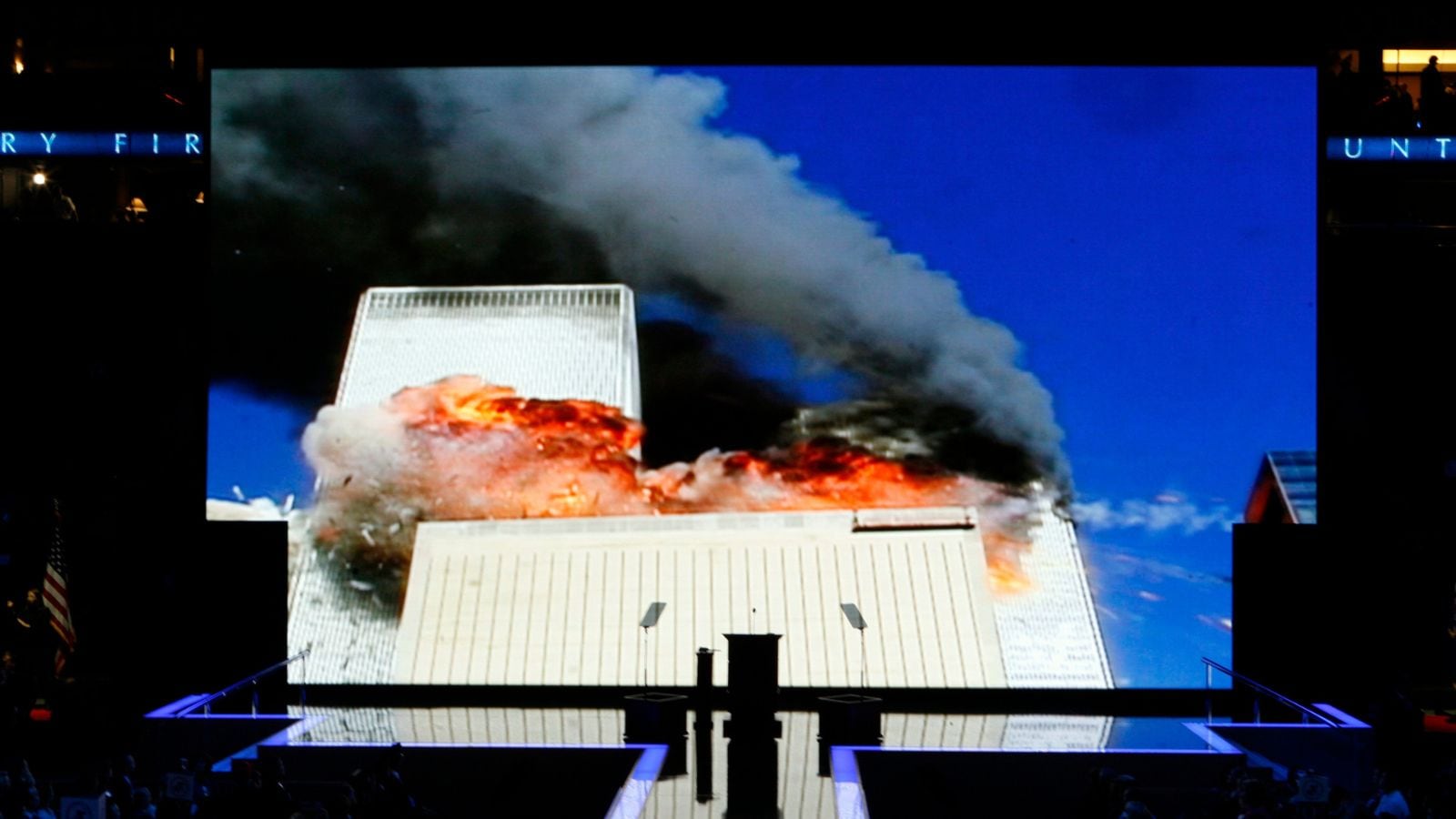
The events of September 11, 2001, triggered a systemic restructuring of global intelligence, aviation security, and international border control protocols. Traditional national security frameworks relied on deterrence models designed for state actors with identifiable territorial assets, verifiable force structures, and predictable retaliatory thresholds.
The introduction of decentralized, non-state asymmetric actors bypassed traditional threat-matrix calculations. To understand the resulting policy transformations, one must examine the friction between civil liberties and threat mitigation. The post-2001 environment forced states to transition from reactive defense models to predictive, data-intensive surveillance architectures.
This shift created distinct operational challenges:
- False Positive Overload: Aggressive screening and data collection generated high volumes of noise, reducing analytical signal efficiency within intelligence agencies.
- Institutional Friction: Sharing threat intelligence across disparate bureaucratic entities introduced severe structural delays.
- Cost-Benefit Asymmetry: Low-cost, highly decentralized operational models employed by adversaries forced defensive states to invest disproportionate capital into hardening every potential vulnerability point.
The long-term economic consequence was the institutionalization of permanent security overhead across global supply chains, international trade networks, and commercial aviation operations, permanently altering the baseline operating costs of globalization.
Human Capital Allocation and Aerospace Engineering Constraints
On September 12, 1992, Mae Jemison became the first African American woman in space aboard the Space Shuttle Endeavour, representing a milestone in the institutional maturation of human spaceflight programs. Beyond its cultural significance, this event marks a critical phase in the diversification of high-reliability organization staffing and the optimization of specialized human capital within extreme operational environments.
Human spaceflight missions operate under unforgiving parameters where equipment reliability, mission readiness, and cross-functional team competence dictate survival. Integrating diverse talent pools into high-consequence technical fields requires rigorous standardization of training protocols, competency validation, and performance metrics.
The expansion of astronaut corps demographics mirrored broader shifts in technical labor markets. As aerospace engineering evolved from closed military test-pilot pipelines to broader academic and scientific recruitment pools, mission profiles shifted from exploratory stunts to multi-disciplinary orbital science operations. This transition highlights a fundamental operational rule: mission success in complex technical environments scales directly with the diversity of cognitive problem-solving frameworks applied to anomalous situations.
Compounding Historical Vectors
Examining these disparate historical markers reveals a shared mechanism: a single localized event cascades into systemic re-engineering across global domains. Whether evaluating the industrial capacity limits of aerial warfare, the macroeconomic toll of counter-terrorism security overhead, or the structural inclusion of specialized human capital in deep-tech sectors, the underlying variables remain constant. Resource allocation, risk mitigation efficiency, and institutional adaptability determine whether a system breaks under shock or reconfigures to absorb future volatility.
Deploy capital and strategic planning resources toward systemic resilience rather than static defensive postures. Map operational vulnerabilities across supply chains, information networks, and human capital pipelines before external shocks force reactive restructuring. The historical record demonstrates that organizations failing to internalize structural shifts proactively will have adaptation costs imposed upon them by external crises.