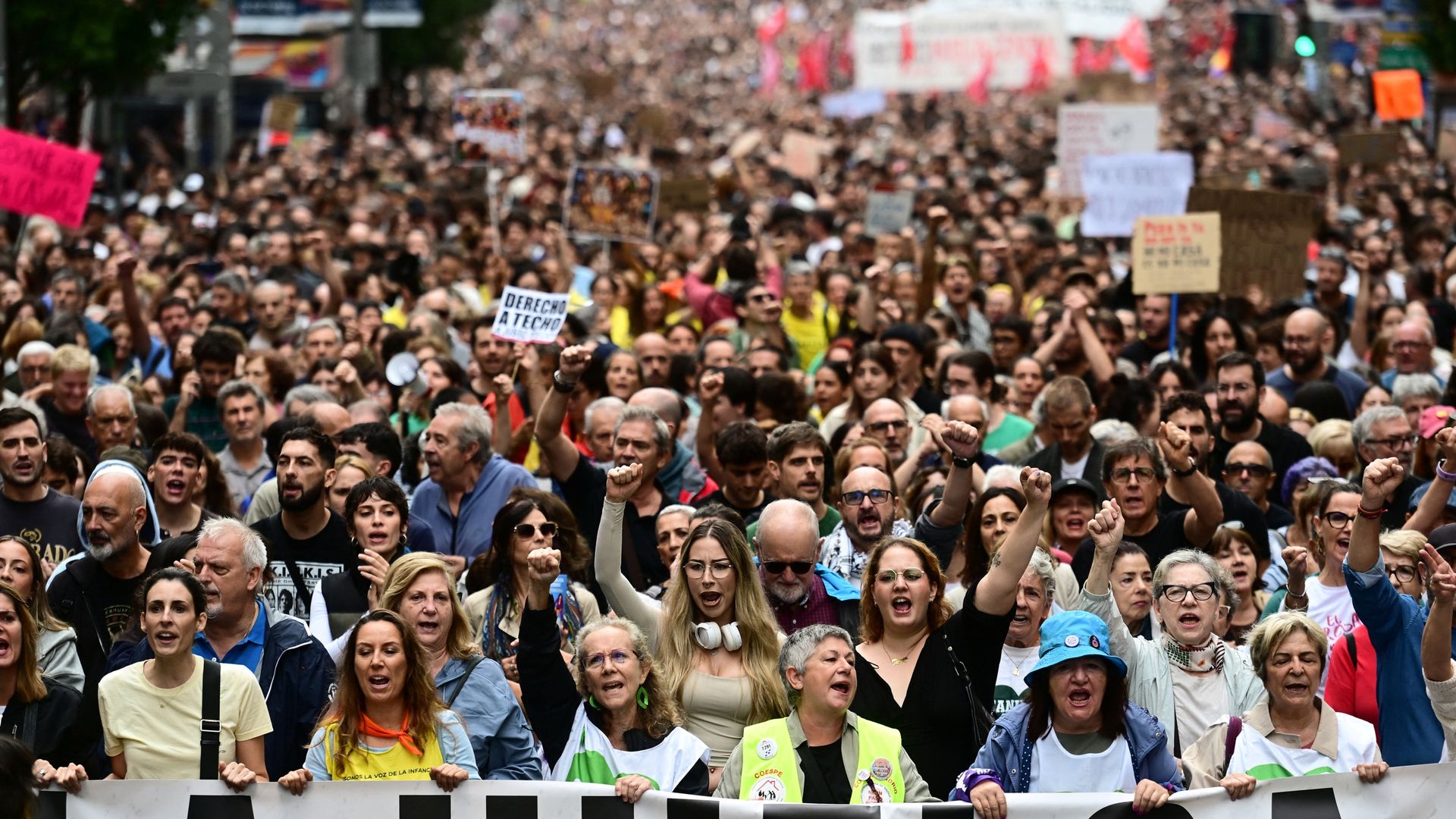
Urban real estate pricing in Southern Europe has ceased to function as a clearing mechanism between supply and demand, mutating instead into an extractive asset class. When tens of thousands of citizens occupy civic plazas and millions participate in general labor strikes across Madrid, Barcelona, and Valencia, the phenomenon represents a systemic failure of social reproduction. The spark—exemplified by the forced eviction and subsequent death of 87-year-old Maricarmen Abascal following a 230 percent rent increase demanded by an institutional investment vehicle—exposed the extreme vulnerability of households caught within rentier capitalism.
To understand why traditional policy levers fail to correct this disequilibrium, we must deconstruct the structural mechanics driving the crisis, evaluate the economic incentives of market participants, and analyze the systemic friction between legislative intent and institutional execution.
The Cost Function of Urban Rental Inflation
The primary driver of modern metropolitan housing crises is the decoupling of residential asset pricing from local median wages. Over the past decade, urban centers like Madrid and Barcelona experienced aggregate rent increases exceeding 80 percent, while entry-level compensation packages stagnated. For citizens under the age of 30, average monthly rent consumption frequently breaches 90 to 98 percent of total net income, rendering independent household formation mathematically impossible.
This divergence is governed by three underlying variables:
- Financialization of Residential Stock: Private equity and institutional real estate investment trusts acquire multi-family properties to capture yield spreads, treating residential units as financial instruments rather than consumer goods.
- Tourism Distortion and Short-Term Letting: The unchecked expansion of platform-based short-term holiday rentals removes permanent residential inventory from the long-term pool, contracting supply elasticity.
- Elasticity Asymmetry: Housing supply cannot scale rapidly due to municipal zoning bottlenecks, bureaucratic delays, and construction cost inflation, meaning demand shocks translate directly into price spikes rather than volume increases.
The Legislative Impasse and Political Mechanics
The political friction in Spain illustrates a deep ideological split regarding price discovery and resource allocation. The executive coalition attempted to stabilize the market through emergency decree-laws. These instruments sought to enforce structural interventions:
- Eviction Moratoriums: Imposing freezes on judicial evictions for vulnerable demographics.
- Lease Restructuring: Mandating the regulation of temporary leases and room-by-room rentals to close loopholes that bypass standard rental contracts.
- Taxation Penalties: Increasing property taxes and applying targeted VAT adjustments to tourist apartments to disincentivize speculative warehousing.
Conversely, the parliamentary opposition—anchored by the conservative People's Party and Vox—successfully voted down these packages on the premise that supply-side deregulation and private construction incentives represent the sole viable remedy. Their theoretical framework posits that rent controls artificially depress yields, causing institutional and private landlords to withdraw properties from the market entirely, thereby compounding supply shortages and driving clearing prices even higher.
This policy conflict creates a paralysis loop. Regulation without enforcement mechanisms incentivizes the gray market, while deregulation without immediate supply additions accelerates the displacement of legacy tenants by institutional capital.
The Convergence of Labor and Tenant Movements
The escalation from localized tenant union organizing to a nationwide general strike represents a major shift in industrial relations. Historically, labor unions negotiated strictly over point-of-production metrics: wages, working hours, and workplace safety. When the cost of social reproduction—specifically shelter—absorbs the entirety of wage gains, wage increases become inert.
By aligning labor walkouts with tenant mobilization, the protest movement effectively closed the feedback loop between production and reproduction. Workers withholding labor directly challenge the economic baseline of urban centers that depend on service, tech, and administrative staffing. When housing costs make urban residency untenable for essential workers, the entire metropolitan economic engine faces a structural labor shortage.
Strategic Forecast and Market Adjustments
The institutionalization of housing protest movements and the calling of snap elections signal that real estate policy is no longer a peripheral municipal concern but the central battleground of national political survival.
Immediate market adjustments will depend on how the legislative branch reconciles capital retention with baseline social stability. If incoming administrations rely solely on subsidizing demand through housing vouchers, public capital is captured directly by landlords via higher rents, inflating asset values further.
The structural path forward requires enforcing strict operational boundaries on institutional portfolio acquisitions in high-density zones, decoupling residential zoning from speculative financing, and expanding municipal public housing stock via direct state acquisition rather than relying on private developer concessions. Without aggressive interventions in supply-side public building coupled with absolute caps on speculative extraction, metropolitan rental markets will continue to experience acute social friction and political volatility.