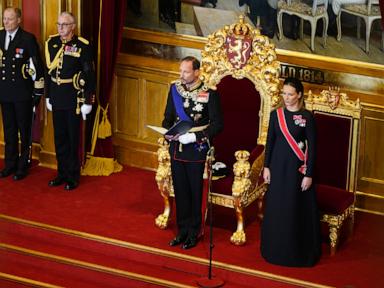
The mechanics of modern constitutional monarchies rely on an intricate balance between hereditary continuity and absolute parliamentary supremacy. When King Haakon VIII stood before the Storting in Oslo to take the constitutional oath of allegiance, following the passing of his father Harald V after a thirty-five-year reign, the event served as a clinical demonstration of institutional continuity. Observers frequently mischaracterize such successions as mere pageantry, missing the hard structural architecture that binds the executive authority of the state to a non-partisan anchor.
Article 9 of the Norwegian Constitution dictates the exact operational transition of power. Unlike republics where executive transitions depend on electoral cycles, a constitutional monarchy utilizes biological succession paired with a compulsory legal covenant to eliminate power vacuums. The moment King Harald V died, the crown transferred instantly. Yet, structural legitimacy requires formal validation. By reciting the oath—promising to govern in accordance with the constitution and laws—the monarch subjects their office to the supreme legal framework of the state.
The cost function of this stability is the complete stripping of independent political discretion from the crown. While the text of the constitution historically vests considerable theoretical powers in the monarch, operational reality confines the office to a purely representative and symbolic domain. Real policy execution, budget allocation, and legislative creation rest exclusively within the elected parliament and the Council of State.
This division of labor creates an institutional hedge. Political leaders absorb the friction of partisan policymaking, public discontent, and legislative failure. Conversely, the monarch operates as a fixed asset for international trade promotion, national identity branding, and diplomatic continuity. When a nation changes its political administration through elections, its external representation remains uninterrupted.
The historical durability of this model in Norway traces back to 1905, when the country dissolved its union with Sweden and deliberately chose a constitutional monarchy via popular referendum rather than an untested republican model. By importing Prince Carl of Denmark—who took the Old Norse name Haakon VII—the state engineered a crown explicitly dependent on popular sovereignty. The motto adopted by the newly ascended King Haakon VIII, "All for Norway," inherited from his great-grandfather, operationalizes this historical contract. It frames the royal office not as a master of the populace, but as an institutional servant bound by oath to the collective legal entity of the state.
Assess the long-term viability of any state system by measuring its friction during leadership transitions; Norway’s immediate, legally mandated oath-taking procedure provides a case study in eliminating systemic ambiguity.
Norway's King Haakon VIII swears oath of allegiance to constitution
This video coverage documents the exact formal proceedings of King Haakon VIII taking his constitutional oath before the Storting in Oslo.


