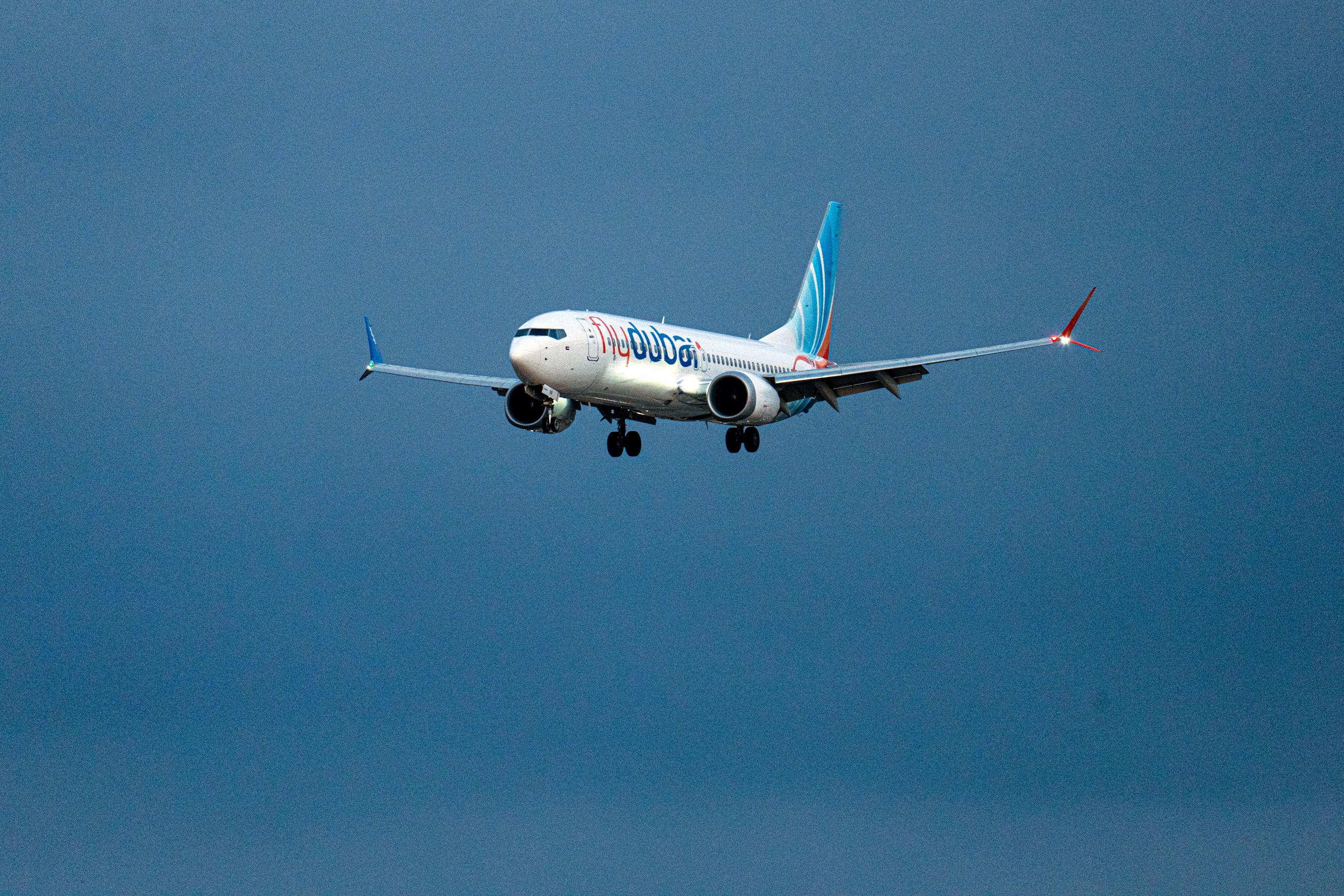
Commercial aviation operates under a deterministic security model: multi-layered access controls, psychological vetting, and strict redundancy protocols designed to isolate failure to a single point. When a catastrophic breach occurs within the flight deck involving personnel intent on physical violence, the incident exposes vulnerabilities not just in individual behavioral screening, but in the systemic assumptions governing crew isolation and physical access control.
Analyzing an incident where one pilot allegedly attacks another mid-flight requires moving past sensationalized narratives to examine the operational mechanics of flight deck security, the limits of procedural redundancy, and the cost function of emergency intervention protocols at cruising altitude. You might also find this connected article interesting: Why the Standard Narrative on Ukrainian Resilience is Completely Backward.
The Dual-Custody Security Paradox
The modern cockpit door is engineered as an impenetrable fortress against external threats. Reinforced with aramid fibers and designed to withstand small arms fire and forced entry, its primary function is asymmetric defense: keeping malicious actors out while granting flight crew unhindered internal access. This architectural design introduces a critical systemic vulnerability known as the dual-custody paradox.
When two individuals are locked inside a high-consequence operational environment with absolute separation from external physical intervention, safety relies entirely on behavioral predictability and mutual oversight. The system assumes that two trained professionals sharing the same operational goal will naturally self-regulate. As highlighted in detailed articles by BBC News, the implications are significant.
However, when an internal threat manifests—whether driven by acute psychological decompensation, ideological radicalization, or interpersonal conflict—the physical barriers designed to protect the aircraft from the outside now serve to isolate the victim and trap the threat inside.
External Threat Model:
[Outside Intruder] ---> [Reinforced Cockpit Door] (Effective Defense)

Internal Threat Model:
[Compromised Crew Member] <---> [Isolated Victim] (Systemic Vulnerability)
The mechanics of this failure reveal a misalignment in risk mitigation. Aviation security protocols evolved rapidly following historical events where unauthorized access was the primary vector of compromise. The regulatory response focused heavily on hardening physical perimeters.
Consequently, the industry optimized for perimeter defense while under-engineering internal threat containment mechanisms. There is currently no automated, remote override or differential locking mechanism that allows ground control or an external crew consensus to lock out a compromised internal operator without endangering the remaining healthy pilot.
Behavioral Baseline Drift and Screening Failures
The human element remains the most volatile variable in aviation safety. Pre-flight psychological evaluations and recurrent medical check-ins operate on a low-frequency sampling model, typically requiring evaluations annually or semi-annually. This temporal resolution is fundamentally mismatched with the velocity at which acute mental health crises, situational stressors, or cognitive degradation can manifest.
Behavioral baseline drift occurs when an individual's operational reliability degrades over time due to unmitigated stressors, neurological events, or psychological distress. Traditional screening methodologies rely heavily on self-reporting and observable symptom checklists during clinical interviews. These methods exhibit high false-negative rates for individuals who are adept at masking distress or whose pathology is situational and acute rather than chronic.
To quantify this risk, the aviation industry evaluates crew reliability through three distinct vectors:
- Cognitive capacity under high-workload conditions
- Emotional regulation during interpersonal friction
- Resistance to sudden behavioral anomalies
When these vectors fail simultaneously, the cockpit transforms from a collaborative control center into a closed-loop theater of conflict. The absence of continuous behavioral telemetry means that the system only detects the failure mode at the point of catastrophic expression.
Operational Redundancy and Intervention Mechanics
In a multi-pilot flight deck, crew resource management mandates shared situational awareness and cross-monitoring. If one pilot experiences incapacitation, the other assumes control. If one pilot becomes aggressive, standard operating procedures lack a clear, deterministic physical protocol for immediate neutralization short of physical combat.
The physical constraints of a flight deck severely limit defensive maneuvering:
- Restricted spatial volume prevents effective physical separation or defensive positioning.
- Critical flight controls, switches, and instrumentation are within arm's reach of both occupants, meaning a physical struggle inherently risks unintended control inputs (e.g., rapid pitch changes, autopilot disconnects).
- The requirement to maintain aircraft trajectory while simultaneously managing an internal physical assault creates an impossible cognitive and physical load.
When physical force is required to neutralize an internal threat, the primary objective shifts from trajectory optimization to damage limitation. Every second spent managing an internal struggle diverts cognitive bandwidth away from airspace deconfliction, terrain avoidance, and system monitoring. The kinetic energy of a cockpit altercation directly threatens the structural integrity of the aircraft through uncontrolled aerodynamic loads induced by erratic control surface manipulation.
Systemic Safeguards and Mitigation Pathways
Addressing the vulnerabilities exposed by internal flight deck violence requires a shift from perimeter-only security to continuous internal verification and architectural fail-safes. Relying solely on the presence of two pilots assumes mutual deterrence, an assumption that collapses when rational risk assessment is absent in the aggressor.
Implementing structural resilience involves exploring technological interventions that do not compromise the defense against external hijacking:
- Multi-factor internal authentication requirements for critical flight path modifications below specific altitudes or during high-density phases of flight.
- Enhanced cockpit telemetry monitoring that tracks physiological indicators of distress or erratic behavioral inputs, feeding data into automated flight stabilization systems if pilot responsiveness deviates from baseline parameters.
- Refined protocol training that prioritizes immediate physical containment and crew extraction over collaborative conflict resolution when behavioral anomalies cross defined safety thresholds.
The structural flaw in contemporary aviation security is the assumption that the boundary between safe and unsafe personnel is strictly binary and permanently established prior to pushback. By recognizing that human reliability is dynamic and subject to catastrophic acute failure, the industry must re-engineer the operational environment to ensure that no single individual inside the flight deck possesses unchallengeable, un-overridable authority over the aircraft's physical trajectory.


