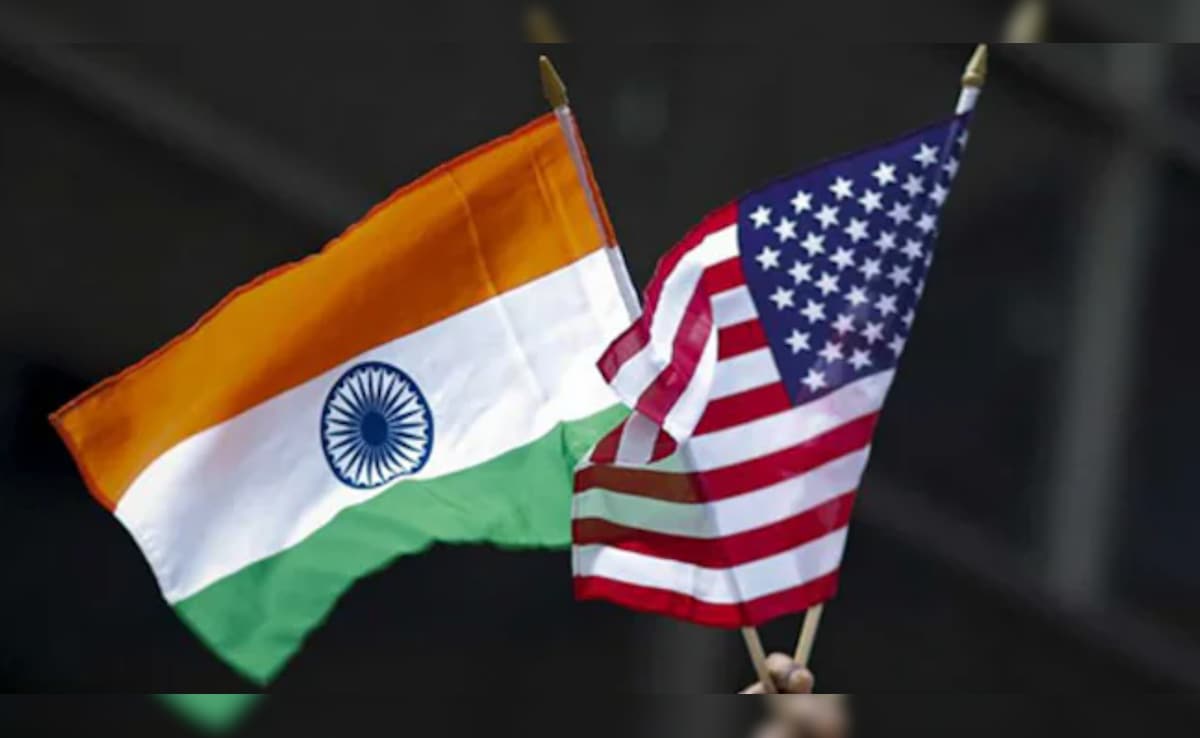
The upcoming Indian trade delegation to Washington marks a shift from reactive diplomacy toward a proactive calibration of the bilateral economic architecture. While political rhetoric often emphasizes "shared values," the functional reality of India-US trade is governed by a complex cost-benefit calculus involving intellectual property regimes, market access barriers, and the strategic decoupling from Chinese supply chains. This visit is not merely a diplomatic courtesy; it is a high-stakes negotiation aimed at reconciling India’s "Aatmanirbhar Bharat" (self-reliance) protectionism with the United States’ demand for predictable regulatory environments and reduced tariffs in the dairy, medical device, and agricultural sectors.
The Triad of Negotiating Friction
Three distinct structural bottlenecks define the current trade impasse. Resolving these requires more than mutual goodwill; it requires a fundamental restructuring of how both nations view sovereign economic interests versus integrated trade benefits.
The Regulatory Divergence in Digital Trade: The United States seeks a "free flow of data" model to support its dominant technology sector. Conversely, India maintains a stance on data localization, viewing data as a national sovereign asset. This creates a high-entry barrier for American firms while simultaneously restricting Indian tech startups from scaling within global cloud infrastructures without incurring significant compliance costs.
The Tariff-Subsidy Paradox: India maintains some of the highest bound tariff rates among G20 nations, particularly in the automotive and whiskey sectors. The U.S. argues these rates are prohibitive. India justifies these through the lens of protecting a massive, vulnerable small-scale labor force. This creates a zero-sum negotiation where any Indian concession on tariffs is viewed domestically as a threat to local livelihoods, while any U.S. failure to lower tariffs on Indian steel or aluminum (under Section 232) is seen as a lack of strategic partnership.
Generalized System of Preferences (GSP) Restoration: The revocation of India’s GSP status in 2019 removed duty-free access for approximately $5.6 billion of Indian exports. For the Indian delegation, securing the reinstatement of these benefits is a primary objective. For Washington, GSP restoration is a bargaining chip to be traded only for "equitable and reasonable" market access in American dairy and medical technology.
The Mechanics of Supply Chain De-risking
The delegation arrives at a moment when the "China Plus One" strategy is transitioning from a theoretical corporate preference to a geopolitical imperative. The U.S. requires a manufacturing hub that offers scale, and India is the only viable candidate with the requisite demographic profile. However, the mechanism of this transition is hindered by India's infrastructure deficit and the lack of a comprehensive Free Trade Agreement (FTA).
The logic of "friend-shoring" suggests that trade should follow security alliances. Yet, the economic data shows a lag. To accelerate this, the delegation must address the Cost of Convergence. This is the capital required to align Indian manufacturing standards with American quality and ESG (Environmental, Social, and Governance) requirements. If the U.S. provides technical assistance or preferential financing through the Development Finance Corporation (DFC), the speed of supply chain migration will increase. Without this, Indian manufacturers will continue to struggle against the entrenched efficiencies of the Pearl River Delta.
Total Cost of Trade Analysis
Analyzing the trade relationship through a simple surplus/deficit lens misses the underlying Efficiency Frontier. India’s trade surplus with the U.S. (approximately $30 billion) is often cited by American critics as a sign of unfair practices. A more rigorous analysis suggests this surplus is a byproduct of service-sector dominance rather than predatory manufacturing.
- Service Export Resilience: India’s IT and business process management (BPM) services provide a deflationary pressure on American corporate overhead. By outsourcing high-cost functions to India, U.S. firms maintain global competitiveness.
- The IP Enforcement Gap: A significant hidden cost for U.S. firms in India is the perceived weakness in patent protection, particularly in pharmaceuticals. The "evergreening" of patents is a specific point of contention where Indian law (Section 3(d) of the Patents Act) prevents firms from extending patent life through minor tweaks. This creates a structural standoff between the U.S. research-and-development model and the Indian generic-access model.
Defensive Interests vs. Offensive Gains
The Indian delegation’s strategy is split between protecting domestic sensitivities and pursuing aggressive export growth. This creates a "dual-track" negotiation.
On the defensive track, India cannot easily concede on agricultural imports. The political economy of the Indian dairy sector, comprised of millions of small-hold farmers, makes the entry of large-scale American dairy giants a non-starter. Any movement here would likely be restricted to high-end, niche products that do not compete with local liquid milk markets.
On the offensive track, India is pushing for a Totalization Agreement. Indian professionals working in the U.S. on H-1B and L-1 visas contribute billions to the U.S. Social Security system but rarely stay long enough to reclaim those benefits. A Totalization Agreement would eliminate this "double taxation," potentially saving Indian companies and employees $4 billion annually. This is a crucial "ask" that provides the Indian government with a domestic victory to offset any concessions made on tariffs.
The Criticality of the iCET Framework
The Initiative on Critical and Emerging Technology (iCET) serves as the new operational baseline for the relationship. It moves the conversation away from traditional "buy-sell" trade toward "co-development and co-production." This is particularly relevant in:
- Semiconductors: Establishing a resilient value chain that bypasses geopolitical chokepoints.
- Defense Innovation: Moving beyond the "buyer-seller" relationship to joint production of jet engines and long-range artillery.
- Space Exploration: Aligning commercial space sectors to compete with state-led models elsewhere.
The success of the Washington visit will be measured by how well the delegation can transition these high-level iCET ambitions into specific regulatory exemptions. If critical technologies remain hampered by International Traffic in Arms Regulations (ITAR) or Export Administration Regulations (EAR), the strategic partnership remains a rhetorical exercise rather than an economic engine.
Operationalizing the Trade Corridor
To move the needle, the delegation must move beyond the "mini-deal" mentality that has characterized the last five years. The focus must shift toward a Sectoral Integration Model.
Instead of an all-encompassing FTA, which is currently politically unfeasible in both capitals, the strategy should prioritize "Equivalence Agreements." This involves mutual recognition of testing and certification standards in specific sectors like chemicals, electronics, and textiles. By reducing the "Non-Tariff Barrier" (NTB) load, both nations can increase trade volume without the political theater of legislative tariff debates.
The second priority is the Labor Mobility Pivot. As the U.S. faces an aging workforce and a shortage of specialized STEM talent, India’s youth bulge is a complementary asset. Framing labor mobility as a "security of talent" issue rather than an immigration issue changes the political calculus in Washington.
Mapping the Outcome Matrix
The outcome of the Washington talks will likely fall into one of three scenarios based on the elasticity of the negotiators:
- Stagnation through Specificity: Negotiators get bogged down in the minutiae of specific agricultural commodities (e.g., pecans or pulses), leading to a joint statement with no actionable change.
- The Incremental Breakthrough: A restoration of GSP in exchange for limited market access in medical devices and a commitment to a "Trade Policy Forum" roadmap.
- The Strategic Leap: An agreement to carve out "Strategic Trade Corridors" where specific high-tech sectors are granted near-FTA status under the umbrella of iCET, bypassing broader tariff disputes.
The third scenario is the only one that addresses the long-term competitive threats faced by both nations. The Indian delegation must present a credible plan for regulatory reform in exchange for technology transfers that are currently restricted.
The immediate strategic play for the Indian delegation is to offer "Regulatory Certainty" as a tradeable commodity. By codifying tax laws and removing the threat of retrospective taxation, India can de-risk the environment for U.S. Foreign Direct Investment (FDI). In return, the U.S. must provide a clear pathway for India's reentry into the GSP program and a waiver or reduction of Section 232 duties on steel. This "Certainty-for-Access" swap is the only viable mechanism to break the current deadlock and build the infrastructure for a $500 billion bilateral trade target.