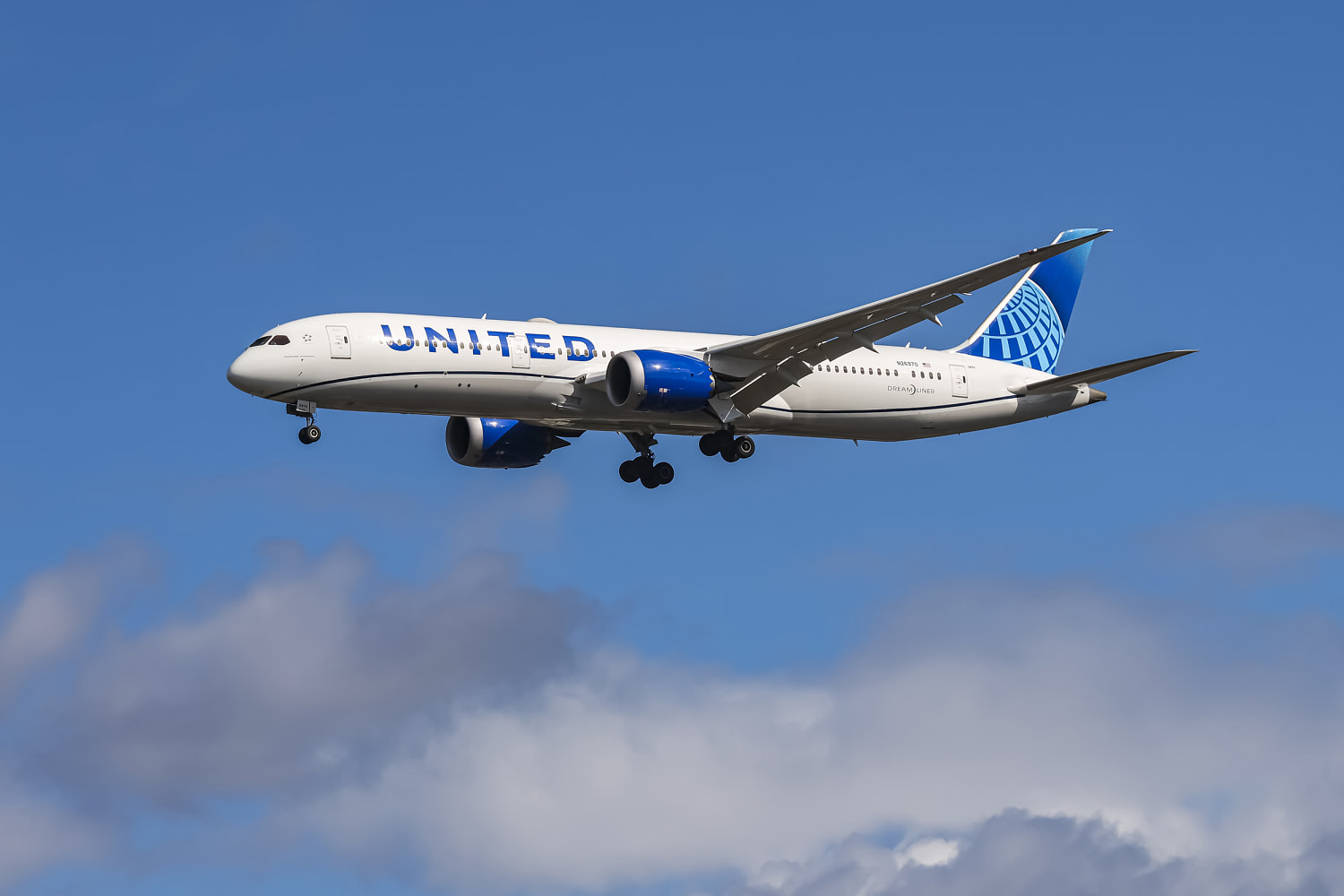
The security of a commercial aircraft rests on the integrity of the sterile flight deck and the physical compliance of the cabin. When a passenger attempts to breach the cockpit or assaults a crew member, it is not merely a localized criminal act but a systemic failure of the multi-layered defense-in-depth strategy employed by global carriers. The United Airlines incident involving an assault and an attempted cockpit breach serves as a data point in a rising trend of "Level 4" security threats—defined by the Federal Aviation Administration (FAA) as attempted or actual breach of the flight deck. Analyzing this event requires moving beyond the sensationalism of the assault to examine the technical breakdown of deterrents, the biomechanics of cabin defense, and the economic externalities of inflight interference.
The Hierarchy of Threat Classification
Aviation security protocols categorize passenger interference through a four-tiered escalation matrix. Understanding where this incident sits within that matrix explains the mandatory nature of the response.
- Level 1: Verbal Disruptions. Disruptive behavior that is suspicious or threatening but remains non-physical.
- Level 2: Physical Assault. Shoving, hitting, or any unwanted physical contact with crew or passengers.
- Level 3: Imminent Threat of Death or Serious Injury. The introduction of weapons or credible threats of lethal force.
- Level 4: Breach of the Flight Deck. Any attempt to enter the cockpit, whether successful or not.
By attempting to access the cockpit, the individual bypassed the lower rungs of the escalation ladder, moving the event from a civil disturbance to a high-kinetic security crisis. This transition shifts the crew’s mandate from "conflict de-escalation" to "active defense."
The Failure of the Pre-Boarding Psychological Filter
The first line of defense is the observation of behavioral cues during the boarding process. Gate agents and flight attendants perform "passive screening," looking for signs of intoxication, acute psychological distress, or belligerence. When a passenger capable of a Level 4 assault reaches their seat, the initial filter has failed. This failure often stems from the high-throughput nature of modern hub-and-spoke operations, where the pressure to maintain "Turnaround Time" (TAT) incentivizes staff to overlook marginal behavioral anomalies to avoid delays.
The cost of a diverted flight—fuel dumping, landing fees, passenger re-accommodation, and crew time-outs—can exceed $150,000 for a domestic narrow-body aircraft. This creates an implicit economic pressure on ground staff to board passengers who may be "yellow flags," hoping the controlled environment of the cabin will suppress the behavior.
The Biomechanics of Cabin Defense and Cockpit Integrity
The attempted breach of a United Airlines cockpit tests the physical and procedural barriers of the aircraft. Since the implementation of the Reinforced Flight Deck Door (RFDD) mandates, the physical barrier is virtually impenetrable from the cabin side under normal conditions.
The Vulnerability Window
The highest risk to the flight deck occurs during the "door transition" period—when a pilot exits to use the lavatory or when meals are exchanged. Standard Operating Procedures (SOPs) require a secondary barrier (usually a mesh wire or a heavy-duty strap) or the positioning of a galley cart to block the aisle. If a passenger attempts a breach during a non-transition period, they face a locked, bulletproof, and reinforced door. The assault on the flight attendant in this context serves as a "kinetic distraction" or an attempt to procure a keycode or force a door opening through coercion.
Crew Resource Management (CRM) under Stress
In an assault scenario, the crew utilizes a specialized subset of CRM. While one or two attendants manage the immediate physical threat, the flight deck enters "sterile cockpit" mode. They disconnect from cabin communication if they believe the interphone system is being used to lure them into opening the door. The physical assault on the attendant is a secondary concern to the pilots compared to the primary mission of maintaining the integrity of the flight controls.
The Economics of the Unruly Passenger
The financial impact of an inflight assault extends far beyond the immediate legal repercussions for the perpetrator. Airlines operate on razor-thin margins where a single mid-air disruption can erase the profit of the entire flight and several subsequent rotations.
Quantifying the Ripple Effect
- Fuel Consumption: If an aircraft is heavy with fuel for a transcontinental route and must land early, it may need to dump thousands of gallons of Jet A-1 fuel to reach its Maximum Landing Weight (MLW).
- Asset Utilization: Aircraft are scheduled with "block times" that leave little room for error. A three-hour delay caused by a police intervention at an unscheduled airport can cause a cascade of cancellations across the network.
- Labor Compensation: Crews have federally mandated rest periods. A diversion can push a crew into "illegal" status (exceeding their duty day), requiring the airline to fly in a replacement crew or cancel the next leg of the aircraft's journey.
The FAA’s "Zero Tolerance" policy, which allows for civil penalties up to $37,000 per violation, is designed to recover a fraction of these costs, but it rarely covers the total operational loss. The primary deterrent is no longer the fine, but the permanent placement on the airline’s Internal No-Fly List, which, unlike the federal No-Fly List, does not require a criminal conviction for implementation.
Legal Jurisdictions and the Tokyo Convention
A significant complexity in these cases is the "Locus of Crime." For an aircraft in flight, jurisdiction is governed by the Tokyo Convention (1963) and subsequent Montreal Protocol (2014). These international treaties grant the aircraft commander (the Captain) the authority to restrain any person they believe is committing or about to commit an act that jeopardizes the safety of the flight.
When the aircraft lands, the perpetrator is handed over to local or federal authorities. Because the assault occurred on a "Special Aircraft Jurisdiction of the United States," the FBI often takes the lead, and the charges move from state-level assault to federal interference with a flight crew—a felony carrying a maximum sentence of 20 years in prison.
The Cognitive Dissonance of High-Altitude Stress
Psychological research into inflight violence suggests a "pressurized environment" effect. The combination of hypoxia (slightly lower oxygen levels in the cabin), dehydration, restricted movement, and the consumption of alcohol or stimulants creates a physiological cocktail that reduces impulse control. In the United States, the "air rage" phenomenon has seen a statistical correlation with the density of the seating configuration. As airlines increase the "Seat Pitch" density, the baseline cortisol levels of passengers rise, lowering the threshold for violent outbursts.
The assault on the United Airlines crew member is a manifestation of this threshold being breached. It is rarely a calculated tactical maneuver; rather, it is a "systemic discharge" where a passenger’s internal stress encounters a rigid regulatory environment.
Hardening the System against Future Interference
To mitigate the recurrence of Level 4 threats, the industry is moving toward three structural shifts:
- Secondary Flight Deck Barriers (SFDB): The FAA has mandated that all new transport category aircraft must be equipped with a secondary barrier. This is a physical gate that stays locked whenever the primary cockpit door is opened, eliminating the "vulnerability window."
- Enhanced De-escalation Training: Flight attendant training is shifting from service-centric models to "Security-Service Hybrids." This includes Brazilian Jiu-Jitsu-based restraint techniques designed for the narrow confines of an aircraft aisle.
- Cross-Carrier Data Sharing: While the federal No-Fly List is reserved for terrorists, airlines are lobbying for a shared industry database of violent passengers. This would prevent an individual banned by United from simply purchasing a ticket on Delta or American the following day.
The immediate tactical play for the industry is the universal adoption of the Secondary Flight Deck Barrier. Until the physical possibility of a breach is zero, the flight deck remains a target for individuals in high-stress states. Carriers must prioritize the installation of these barriers on existing fleets—not just new deliveries—to close the structural gap that allows a cabin disturbance to evolve into a potential cockpit breach. The focus must shift from punishing the behavior after the fact to making the cockpit physically irrelevant to any actor in the cabin.