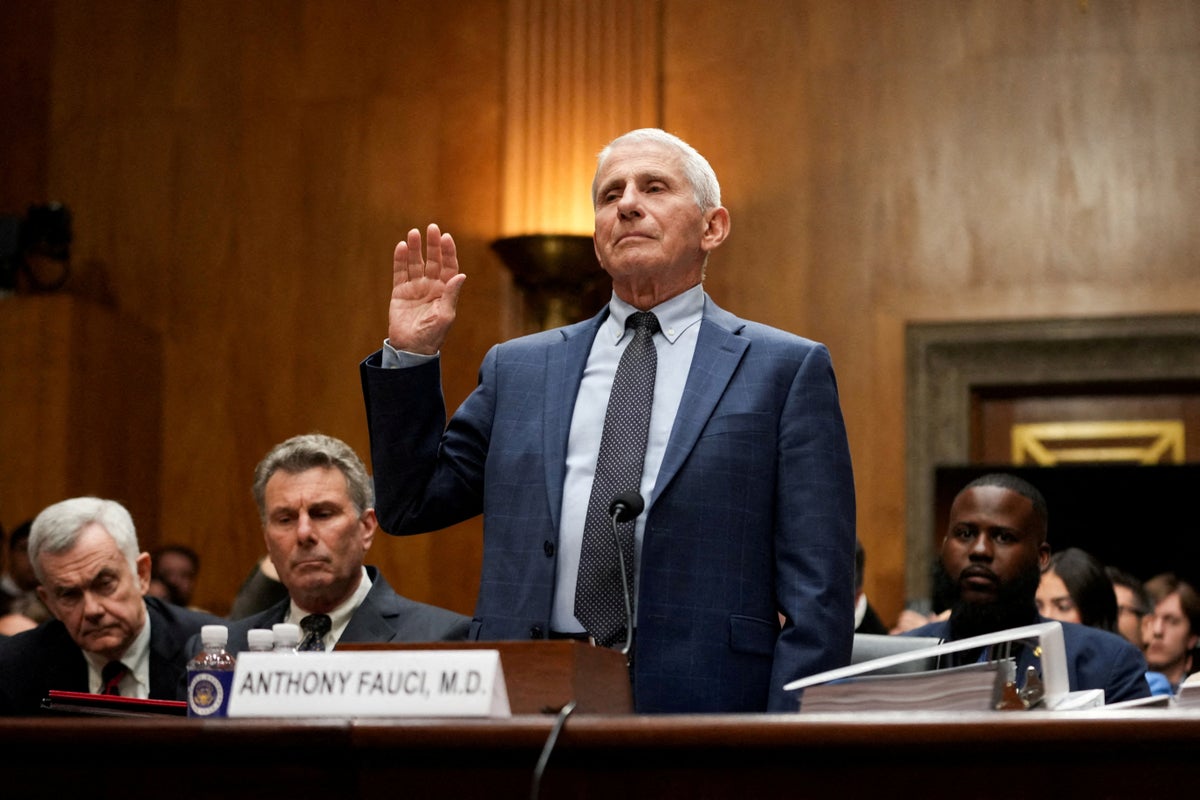
Political retribution strategies often founder when procedural shortcuts collide with constitutional hurdles. The legislative push to hold former National Institute of Allergy and Infectious Diseases director Anthony Fauci in contempt of Congress has encountered severe operational bottlenecks. While congressional committees wield significant investigative powers, converting political friction into a valid criminal indictment requires strict adherence to statutory mechanics that current oversight strategies have systematically bypassed.
The Mechanics of the Contempt Stalemate
The strategy deployed by Senator Rand Paul and the Senate Homeland Security and Governmental Affairs Committee relied on an unconventional procedural bypass. Following Fauci's repeated invocation of the Fifth Amendment during a July 2026 hearing, the committee voted along party lines to refer him for criminal contempt. Rather than routing the resolution through the traditional full-floor Senate vote, proponents sought direct certification via the Vice President.
This maneuver exposes a fundamental friction point between political urgency and statutory execution. Federal law governing congressional contempt, specifically Title 2, United States Code, Sections 192 and 194, outlines a precise chain of custody for a criminal referral. Historically and textually, these statutes contemplate action by the entire legislative body. Attempting to circumvent the full chamber creates an immediate vulnerability under judicial review.
Administration attorneys and institutional legal scholars have flagged this exact mechanism as a point of failure. If the Department of Justice were to act upon an improperly certified referral, the resulting indictment would face an immediate motion to dismiss based on procedural nullity. Consequently, executive branch hesitation is driven less by political protectionism and more by the near certainty that the legal foundation would disintegrate upon first contact with an Article III judge.
Constitutional Protections and the Pardon Variable
The justification offered by committee leadership for the contempt citation rests on the premise that Fauci's invocation of the Fifth Amendment was legally invalid. Proponents argued that because President Joe Biden issued a broad, preemptive pardon covering federal actions taken between 2014 and January 2025, Fauci faced no active federal jeopardy and therefore forfeited his constitutional privilege against self-incrimination.
This argument underestimates the multi-layered nature of legal exposure. A presidential pardon does not erase all potential liabilities:
- State-level investigations initiated by jurisdictions outside federal executive control retain independent subpoena and prosecutorial authority.
- Potential allegations regarding statements made during congressional testimony post-date the temporal boundaries of the federal pardon.
- The constitutional threshold for invoking the Fifth Amendment requires only a reasonable apprehension of risk, a standard that complex multi-jurisdictional scrutiny easily satisfies.
Because these variables create valid vectors for ongoing legal exposure, a witness maintaining silence to protect against subsequent state inquiries or perjury traps operates within established constitutional boundaries. Forcing a contempt citation under the assumption that a pardon completely voids the Fifth Amendment miscalculates how federal courts evaluate self-incrimination claims.
The Cost Function of Symbolic Oversight
When legislative oversight shifts from fact-finding to punitive signaling, the efficiency of the investigative apparatus drops. The allocation of committee resources toward un-certifiable contempt resolutions and document reviews of historical communications operates under diminishing marginal returns.
The strategy relies on maintaining public momentum through media disclosures and procedural confrontations. However, the structural realities of the executive branch create a hard ceiling. The Department of Justice operates with distinct institutional priorities, and federal prosecutors evaluate cases based on conviction probability rather than legislative mandate. When an underlying referral carries fatal procedural defects, prosecutorial discretion naturally defaults to non-action to avoid judicial rebuke.
To achieve an enforceable outcome against a federal official under similar circumstances, oversight bodies must choose between two distinct operational tracks. They can pursue traditional, bicameral legislative processes that survive judicial scrutiny at the cost of speed and consensus, or they can utilize public hearings strictly for narrative positioning while accepting that criminal prosecution remains mathematically improbable. Trying to merge both paths yields the exact administrative gridlock currently stalling the initiative.
Redirect the investigative focus toward statutory reforms of agency record-keeping mandates rather than retroactive punitive actions against individual retirees.
Fauci invokes fifth amendment and declines to testify in Senate Covid hearing
This video provides a direct look at the Senate hearing where Dr. Anthony Fauci repeatedly invoked his Fifth Amendment rights, triggering the procedural standoff analyzed above.
http://googleusercontent.com/youtube_content/1