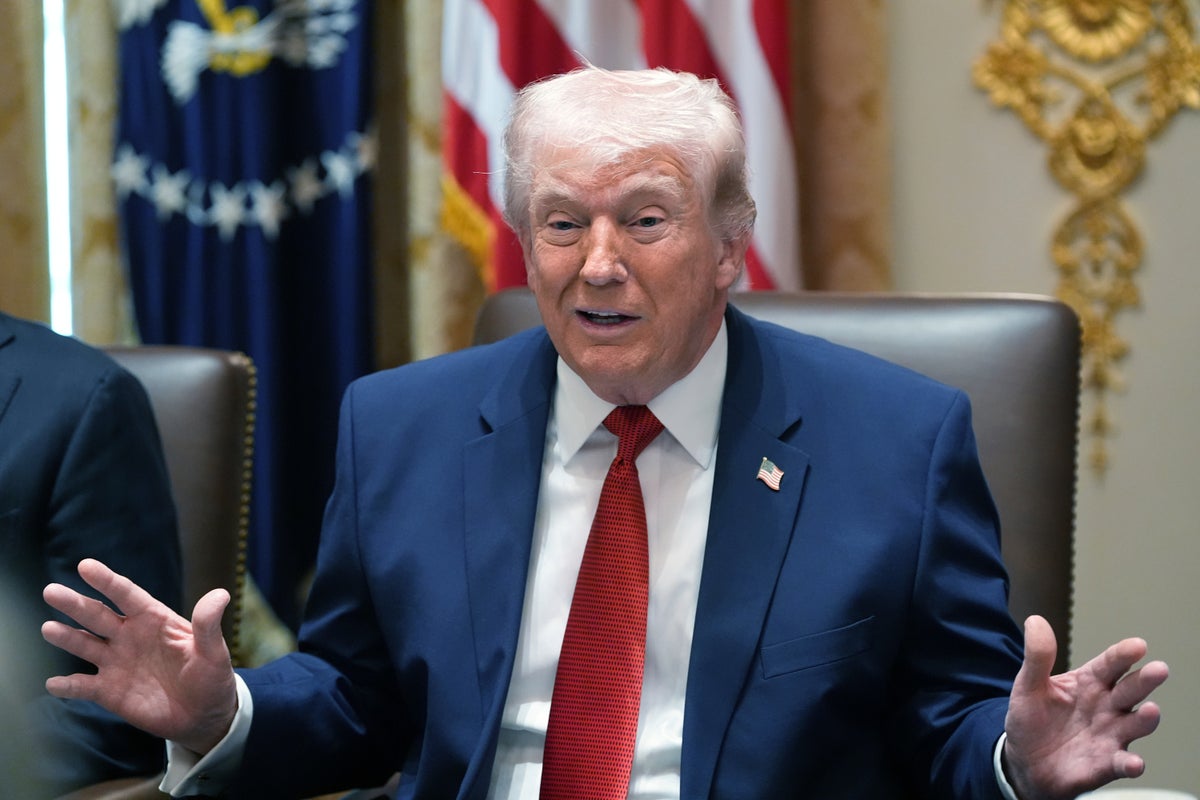
The stability of a political movement is predicated on the maintenance of a high-affinity core and the continuous conversion of peripheral swing-voters. When the rate of attrition among the periphery exceeds the rate of radicalization within the core, the movement enters a phase of structural decay. Donald Trump’s current domestic support is not merely fluctuating; it is experiencing a systematic contraction driven by three identifiable causal mechanisms: the exhaustion of the grievance economy, the institutionalization of MAGA-skepticism among independent blocks, and the diminishing marginal utility of populist rhetoric in a high-inflation, high-interest-rate fiscal environment.
Traditional polling often fails to capture this shift because it treats "support" as a binary variable rather than a spectrum of intensity and reliability. To understand the disappearance of Trump’s domestic floor, we must look at the velocity of shift among specific demographics that historically functioned as his "margin of victory" insurance.
The Cost Function of Political Loyalty
The relationship between a populist leader and their base is an exchange of cultural representation for political agency. For the past decade, Trump’s value proposition was his ability to disrupt institutional norms that his base perceived as hostile. However, the political utility of disruption follows a curve of diminishing returns. Once disruption becomes the status quo, it no longer provides the psychological "win" required to offset the social and economic costs of alignment.
We observe this in the divergence between Republican primary performance and general election viability. In the 2024 cycle, the "Double Hater" demographic—voters who hold unfavorable views of both major party candidates—has grown. Within this group, Trump’s ability to frame himself as the "outsider" has been compromised by his four-year tenure and subsequent legal entanglements. The grievance model, which relies on being the underdog, collapses when the candidate is viewed as a legacy fixture of the political system.
The erosion of support is most visible through three specific metrics of coalition health:
- The Suburban Churn: High-income, high-education voters in ring-counties who tolerated Trump for tax policy (The 2017 Tax Cuts and Jobs Act) are now weighing that benefit against the perceived instability of his executive style.
- The Youth Retention Deficit: While Trump has made marginal gains with young minority males, his overall "burn rate" with voters under 30 remains unsustainable for a long-term national coalition.
- The Donor Breadth Contraction: Small-dollar donation fatigue indicates that the "emotional subscription" model of his fundraising is hitting a ceiling.
The Three Pillars of Coalition Collapse
To quantify why support is evaporating, we must categorize the triggers of voter exit. Support does not disappear in a vacuum; it is redirected or suppressed by specific pressures.
Institutional Friction and the Rule of Law
The primary driver of peripheral attrition is the cumulative weight of litigation. While legal challenges initially provided a "rally around the flag" effect among the 30% of core MAGA supporters, the effect on the 10-15% of "persuadable" Republicans and Independents is inverse. These voters operate on a risk-mitigation framework. They view a candidate under multiple indictments as a "distracted asset"—a leader whose bandwidth is consumed by personal defense rather than policy execution.
The cause-and-effect relationship here is clear: as legal proceedings move from theoretical "witch hunts" to evidentiary phases, the cognitive load required to defend the candidate increases. When the social cost of defending a candidate exceeds the perceived benefit of their platform, the marginal supporter moves to a "silent exit" or a non-vote.
The Policy Performance Gap
Trump’s 2016 surge was fueled by a promise of radical economic protectionism and the "return" of manufacturing. By 2024, the data shows that while some manufacturing investment increased, the structural shifts in the American economy—specifically the transition toward automation and service-sector dominance—remained unaddressed. The gap between the rhetoric of "bringing back jobs" and the reality of the K-shaped recovery has created a credibility vacuum.
Voters in the Rust Belt are increasingly prioritizing tangible local investment over national cultural grievances. The "cost of living" crisis has shifted the voter's hierarchy of needs. While Trump focuses on election integrity and past grievances, the median voter is calculating the impact of 7% mortgage rates and grocery inflation. If the populist candidate cannot provide a technical solution to these fiscal pressures, their support becomes a luxury that many voters can no longer afford.
Demographic Inflection Points
The MAGA movement relies heavily on a specific age and education cohort: non-college-educated voters over the age of 50. Actuarial realities and the entry of Gen Z into the voting pool create a natural "sunset clause" on this demographic advantage.
The replacement rate—the speed at which younger, more diverse, and more socially liberal voters enter the electorate—outpaces the rate at which Trump is converting new supporters. This is not a failure of messaging, but a failure of product-market fit. The MAGA brand is optimized for a 20th-century cultural nostalgia that does not resonate with a digital-native generation facing a housing crisis and climate volatility.
Measuring the Break in the Feedback Loop
In a healthy political organization, a "negative feedback loop" exists where unpopular actions lead to internal course correction. Trump’s movement operates on a "positive feedback loop," where extreme actions are met with praise from an increasingly insular core. This creates a "Radicalization Trap."
The Radicalization Trap occurs when a leader must adopt more extreme positions to maintain the enthusiasm of their remaining base, which in turn alienates the moderate voters needed to win a general election. The data points to this trap being fully sprung. In every special election and mid-term since 2018, candidates most closely aligned with Trump’s "stolen election" narrative have underperformed the baseline Republican vote share.
This delta—the difference between a standard Republican’s performance and a Trump-aligned candidate’s performance—is the "Trump Tax." As this tax increases, party donors and local organizers begin to hedge their bets, leading to a quiet withdrawal of institutional support. This isn't a loud rebellion; it is a strategic reallocation of resources.
The Bottleneck of Candidate Quality
The disappearance of support is also a supply-side issue. Trump’s influence on the GOP has created a bottleneck where "loyalty" is prioritized over "competence" or "electability." This has resulted in a bench of candidates who mirror his rhetoric but lack his personal brand equity. When these candidates fail, it reflects poorly on the head of the ticket.
The structural failure here is the lack of an "off-ramp." Because the movement is centered on a single personality rather than a set of transferable policy goals, there is no way to evolve the brand without repudiating the leader. Consequently, as the leader's personal popularity wanes, the entire movement's infrastructure suffers from a lack of renewal.
The Strategic Path of Controlled Obsolescence
For observers and stakeholders, the logical conclusion is that we are witnessing the "hollowing out" of the MAGA coalition. The core remains dense and impenetrable, but the outer layers are sloughing off at an accelerating rate. This is not a temporary dip in polling; it is a structural realignment.
The move for political and economic strategists is to look past the "noise" of rallies and social media engagement and focus on the "signal" of suburban voter registration shifts and independent donor behavior. The data suggests that the coalition is no longer expanding, and in a zero-sum electoral environment, a stagnant coalition is a dying one.
The final strategic pivot for the GOP—and the primary indicator of Trump’s total disappearance from the viable political stage—will be the "pivot to post-populism." This involves a tactical adoption of Trumpian themes (border security, anti-globalism) but delivered by "sanitized" candidates who do not carry the legal or cultural baggage of the original. When the message is successfully decoupled from the man, the man’s support will not just disappear; it will be actively liquidated by his own party in favor of a more efficient delivery system for the same ideas.
Track the "Trump Tax" in upcoming state-level special elections; a consistent underperformance of 4-6% against the generic Republican ballot indicates that the coalition’s structural integrity has been compromised beyond the point of repair.
Would you like me to analyze the specific demographic shifts in the "Blue Wall" states to identify exactly where the "Trump Tax" is highest?


