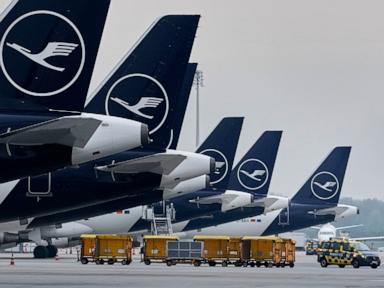
Geopolitical shocks to commercial aviation networks create cascading failures that extend far beyond immediate flight cancellations. When regional security incidents force carriers to suspend operations into primary hubs like Riyadh, the disruption is governed by structural economic constraints, safety thresholds, and fleet asset management protocols. Deconstructing the mechanics behind decisions made by carriers such as the Lufthansa Group and regional Indian operators reveals a calculated response to tail-risk probability and insurance liability.
The Risk Calculus of Terminal Proximity
Commercial airspace safety relies on a deterministic framework where the tolerance for ballistic or drone interference is absolute zero. When kinetic events impact metropolitan air corridors, airline network operations centers evaluate threat vectors using three operational criteria: Discover more on a connected issue: this related article.
- Terminal and Ground Infrastructure Vulnerability: Airfields located near administrative or economic centers face elevated exposure during geopolitical escalations. Debris from intercepted projectiles introduces physical hazards to active runways and terminal handling zones.
- Airspace Corridors and Air Traffic Control Integrity: Civil aviation authorities depend on stable navigational aids and predictable radar tracking. When air defense systems engage targets overhead, the risk of electronic warfare interference, GPS spoofing, or secondary shrapnel hazards multiplies exponentially.
- Crew and Asset Exposure Thresholds: Major international carriers operate under strict labor agreements and corporate governance mandates that prohibit exposing flight crews to active conflict zones.
The Economic Mechanics of Route Suspension
A flight suspension is not merely a tactical pause; it represents a complex cost function involving passenger reaccommodation, slot retention, and alternative aircraft routing.
Financial Impact = [Fixed Lease/Capital Costs] + [Rerouting & Fuel Penalties] + [Revenue Loss from Yield Compression] - [Mitigated Crew/Insurance Exposure]
When carriers pull out of a major financial center, the direct revenue loss is compounded by secondary logistical inefficiencies. Aircraft assigned to these city pairs must be reallocated to alternate routes, often flooding secondary markets with excess capacity and depressing yields. Conversely, maintaining operations without adjusting to heightened risk profiles exposes carriers to catastrophic liability, rendering temporary suspension the rational economic choice under uncertainty. More reporting by National Geographic Travel explores similar perspectives on the subject.
Network Propagation and Downstream Bottlenecks
A suspension at King Khalid International Airport triggers a domino effect across international hubs. European and Asian network carriers utilize these routes to feed traffic into broader regional networks.
- Crew Scheduling Fractures: Long-haul rotations rely on precise turnaround windows. Unplanned ground stops disrupt multi-day crew duty periods, requiring reserve staffing deployment and deadheading.
- Cargo Capacity Contraction: Passenger widebody aircraft carry significant bellyhold freight. Halting service restricts high-value supply chains, driving up spot rates for air cargo across adjacent Middle Eastern corridors.
- Code-Sharing Disintegration: Alliance networks rely on seamless interline connections. When a primary operating partner suspends service, secondary codeshare partners face immediate inventory management deficits.
Strategic Resilience and Market Re-entry
Carriers determining when to resume operations do not rely on political declarations; they require verifiable operational normalization. Re-entry protocols demand independent risk assessments, reinstatement of war-risk insurance coverage at commercially viable premiums, and explicit clearance from national aviation regulators. Until these parameters align, rolling suspensions will remain the standard industry mechanism for absorbing geopolitical volatility.