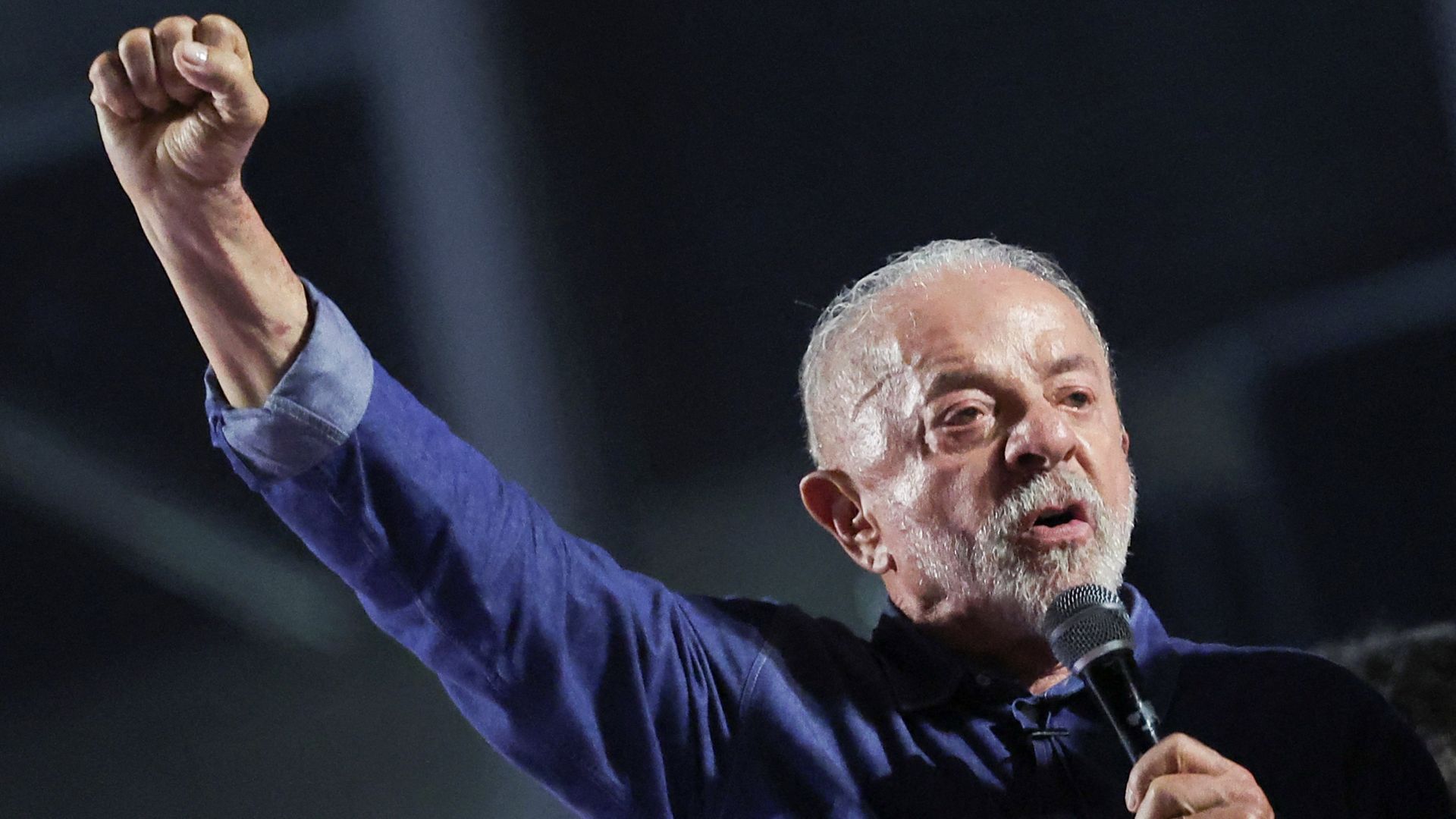
Winning a fourth presidential mandate in Brazil does not confer executive supremacy; it activates a high-friction governance trap defined by an entrenched legislative cartel, rigid fiscal liabilities, and expiring exogenous tailwinds. Luiz Inácio Lula da Silva enters this cycle facing a structural reality where traditional executive tools—discretionary spending, state-owned enterprise expansion, and ideological coalition-building—yield diminishing returns against a Congress that now controls the federal budget’s marginal dollar.
To analyze the operational viability of a fourth Lula administration, one must strip away campaign rhetoric and examine the underlying institutional mechanics. The administration’s room for maneuver is bounded by three hard constraints: the fiscal-monetary collision, the democratization of legislative rent-seeking, and the geopolitical hedging dilemma. Understanding these variables reveals why governing Brazil from 2027 onward requires a fundamental shift from distributive populism to institutional triage. Discover more on a similar topic: this related article.
The Fiscal-Monetary Collision and the Debt-Service Trap
The primary constraint on executive action in Brasília is not ideological opposition, but sovereign debt arithmetic. Brazil operates under a structural fiscal rigidity where roughly 90% of the federal primary budget is legally mandated—indexed to inflation, minimum wage adjustments, or constitutional spending floors for health and education. This leaves less than 10% of the budget for discretionary public investment, infrastructure, and the political pork required to keep a legislative coalition intact.
During the third term, the administration replaced the strict constitutional spending cap (Teto de Gastos) with a softer new fiscal framework (Arcabouço Fiscal), which permits real spending growth tied to revenue expansion. While this provided short-term breathing room, it introduced a pro-cyclical vulnerability. When revenue growth decelerates, the mandatory spending floors continue to expand automatically, forcing the Treasury to either compress discretionary investment to near zero or breach its primary balance targets. Additional journalism by The New York Times highlights comparable views on this issue.
This fiscal expansion collides directly with monetary policy. Under the institutional framework of an independent Central Bank (Banco Central do Brasil), persistent fiscal deficits force the Monetary Policy Committee (Copom) to maintain elevated real interest rates to anchor inflation expectations. This creates a self-reinforcing debt-service trap:
- Fiscal Expansion: The executive increases mandatory social transfers and minimum wage indexing to sustain approval ratings.
- Risk Premium Repricing: Fixed-income markets demand higher yields on domestic sovereign bonds (NTN-Bs) to compensate for perceived fiscal dilution.
- Monetary Tightening: The Central Bank raises or holds the benchmark Selic rate high to counter the fiscal stimulus and currency depreciation.
- Debt Rollover Escalation: Because a significant portion of Brazil’s domestic debt is indexed to the Selic rate, higher interest rates immediately increase the government's nominal deficit, absorbing capital that could otherwise fund primary expenditures.
In a fourth term, the administration cannot rely on the commodity super-cycle that rescued its fiscal accounts between 2003 and 2010. Nor can it easily manufacture tax increases without triggering Laffer-curve resistance or legislative vetoes. The operational reality is that every real spent on discretionary social programs now carries an immediate, quantifiable penalty in sovereign borrowing costs.
The Evolution of Coalitional Presidentialism
For three decades following the 1988 Constitution, Brazilian governance functioned through presidencialismo de coalizão (coalitional presidentialism). In that model, the president acted as a monopolistic distributor of ministries, state-owned enterprise directorships, and discretionary budget amendments (emendas parlamentares), trading these assets for congressional votes.
That model is dead. Over the past decade, constitutional amendments have systematically stripped the executive of its budgetary monopoly, transferring control of tens of billions of reais directly to individual lawmakers and standing committees via mandatory budget amendments (emendas impositivas and emendas PIX).
This structural shift has inverted the principal-agent relationship in Brasília. Congress—dominated by the Centrão, a fluid bloc of transactional, non-ideological parties—no longer needs to bargain with the Planalto Palace to secure resources for its electoral districts. The funds flow automatically. The executive branch now retains the constitutional responsibility for macroeconomic outcomes and public service delivery, while the legislative branch holds the discretionary capital without bearing executive accountability.
For Lula, this creates an asymmetric negotiation environment:
- Inflated Cost of Governance: Because lawmakers already possess guaranteed baseline funding, securing supermajorities (308 votes in the Chamber of Deputies and 49 in the Senate) for constitutional amendments requires exponentially higher concessions in cabinet positions and regulatory appointments.
- Fragmented Accountability: When infrastructure projects stall or municipal budgets suffer from misallocation, public opinion penalizes the presidency, insulating congressional brokers from electoral blowback.
- Ideological Veto Points: The expansion of conservative and agribusiness caucuses (Bancada do Boi, da Bala e da Bíblia) means that even if the executive pays the transactional price to the Centrão, non-economic policy initiatives—ranging from environmental licensing to social legislation—face permanent structural blockades.
Navigating this legislature requires abandoning grand legislative agendas in favor of targeted regulatory decrees and sub-constitutional adjustments that bypass the floor of Congress entirely.
The Exhaustion of the State-Led Growth Engine
Historically, Lula’s economic playbook relied on mobilizing state-owned enterprises (SOEs) and public development banks—specifically Petrobras and the Brazilian Development Bank (BNDES)—as counter-cyclical investment engines. In a fourth term, deploying this mechanism faces severe legal, financial, and operational barriers.
The 2016 State-Owned Enterprises Law (Lei das Estatais) erected strict corporate governance guardrails, mandating technical qualifications for board appointees and requiring market-parity pricing for fuel and commodities. While the executive can pressure management at the margins, outright politicization of Petrobras’s pricing policy immediately triggers minority shareholder lawsuits, capital flight, and a collapse in the company’s equity valuation—which paradoxically reduces the dividend payouts the National Treasury relies upon to balance its primary fiscal accounts.
Similarly, BNDES no longer operates with the subsidized Long-Term Interest Rate (TJLP) that allowed it to flood corporate balance sheets with cheap credit during the 2000s. Today, its lending is benchmarked to the Long-Term Rate (TLP), which tracks market yields on inflation-linked government bonds. Without massive, transparent fiscal transfers from the Treasury—which are blocked by the fiscal framework—BNDES cannot artificially compress the cost of capital for domestic industrial policy.
The administration's industrial policy ambitions, such as the Nova Indústria Brasil initiative, therefore suffer from an acute funding mismatch. Attempting to revive national champions through local-content rules and tariff protections risks replicating the productivity stagnation of the 2011–2014 period, where subsidized sectors failed to achieve global competitiveness while domestic consumers absorbed higher prices.
Environmental Ambition Versus Extraction Reality
A central pillar of Lula’s international brand is climate leadership and the zero-deforestation pledge for the Amazon by 2030. Domestically, this environmental agenda collides directly with the structural drivers of Brazil’s trade surplus and regional electoral math.
Brazil’s macroeconomic stability rests heavily on its external accounts, which are anchored by two primary sectors: agribusiness and offshore oil extraction. This creates an irreconcilable policy contradiction within the executive branch itself:
- The Hydrocarbon Paradox: To fund the energy transition and social programs, the state needs the royalties and dividends generated by Petrobras. Because existing pre-salt oil fields are projected to hit peak production around the turn of the decade, Petrobras must explore new frontiers, most notably the Equatorial Margin near the mouth of the Amazon River. Approving drilling licenses alienates the administration’s environmental base and undermines its credibility at global climate summits; blocking them threatens long-term state revenues and energy security.
- The Agribusiness Friction: Large-scale mechanized agriculture drives Brazil’s GDP growth and currency inflows, yet its political representation in Congress fiercely opposes land demarcation for Indigenous peoples, stricter environmental compliance (such as the EU Deforestation Regulation), and restrictions on infrastructure projects like the paving of the BR-319 highway through the Amazon.
In a fourth term, the administration cannot resolve this tension through rhetoric. Every regulatory decision by the environmental agency (IBAMA) or the Ministry of Mines and Energy becomes a zero-sum choice between macroeconomic solvency and ecological preservation.
Geopolitical Hedging in a Bifurcated Global Economy
Brazil’s traditional foreign policy doctrine—active non-alignment and multilateral hedging—faces rapidly diminishing returns as global trade fractures into competing geopolitical blocs. Lula’s strategy of positioning Brazil as a leader of the Global South, expanding the BRICS+ grouping, and maintaining simultaneous commercial ties with Washington and Beijing worked effectively in an era of hyper-globalization.
In the current geopolitical environment, that neutrality is increasingly penalized. China remains Brazil’s largest trading partner, absorbing massive volumes of soybeans, iron ore, and crude oil. However, China’s structural economic slowdown and pivot toward high-tech manufacturing have flooded Latin American markets with low-cost Chinese electric vehicles, steel, and industrial goods. This directly threatens Brazil’s domestic manufacturing base in São Paulo—a core constituency of Lula’s Workers' Party (PT)—forcing the administration into the awkward position of slapping import tariffs on its closest BRICS partner.
Simultaneously, Western supply-chain "friend-shoring" initiatives offer Brazil a historic opportunity to attract foreign direct investment in critical minerals (lithium, rare earths, nickel) and green hydrogen. Yet capturing this capital requires regulatory predictability, bilateral investment treaties, and alignment with Western environmental, social, and governance (ESG) standards. Frequent diplomatic friction with the United States and the European Union—often triggered by unscripted presidential commentary on foreign conflicts or skepticism toward the EU-Mercosur trade deal—raises the perceived political risk for Western institutional investors.
Succession Paralysis and Party Entropy
The final operational vulnerability is internal: the succession vacuum within the Workers' Party and the broader Brazilian center-left. For over forty years, the political viability of the Brazilian left has been entirely fused to Lula’s personal charisma and electoral transfer power.
Governing in a fourth term without a clear, electorally viable successor creates an immediate lame-duck dynamic. As political elites across the spectrum look toward the post-Lula era, the incentives for coalition partners to remain loyal to the Planalto Palace evaporate. Cabinet ministers begin prioritizing their own regional campaigns for governorships or Senate seats over cohesive policy execution.
Furthermore, the demographic and sociological foundations of the PT have eroded. The rise of evangelical Protestantism among urban working-class voters and the expansion of the gig economy have decoupled millions of low-income Brazilians from traditional labor unions and state-centric welfare narratives. Relying on legacy social programs like Bolsa Família secures a baseline floor of support, but it no longer guarantees electoral majorities in the dynamic, conservative-leaning urban peripheries of the Southeast and Center-West.
The Strategic Mandate for Institutional Triage
Faced with a captured budget, an assertive Congress, and narrow fiscal margins, a fourth Lula administration cannot govern as a transformative legislative force. Attempting to force sweeping structural reforms or massive state-led stimulus through an adversarial legislature will only accelerate capital flight, spike interest rates, and trigger premature political paralysis.
The optimal strategic play is a deliberate pivot to asymmetric executive governance and microeconomic efficiency:
- Concede the Macro-Budget, Dominate the Regulatory State: Stop burning political capital trying to claw back mandatory congressional budget amendments. Instead, redirect executive bandwidth toward the regulatory agencies, state-owned development funds, and administrative decrees that do not require floor votes in Congress. Use executive rulemaking to streamline tax compliance, accelerate environmental licensing for pre-approved renewable energy corridors, and enforce antitrust measures in concentrated banking and retail sectors.
- Execute Spending Reviews Over Tax Hikes: Abandon the pursuit of new revenue-raising taxes, which face certain death in Congress and alienate the middle class. Implement aggressive, data-driven audits of existing mandatory social programs—specifically targeting fraud and eligibility overlap in the Continuous Cash Benefit (BPC) and pension systems—to free up fiscal space within the existing spending framework without breaching primary deficit targets.
- Monetize the Green Transition via Private Capital: Rather than funding industrial policy through the National Treasury, structure public-private risk-sharing mechanisms (such as foreign exchange hedging facilities via BNDES and the Central Bank) to lower the cost of capital for private foreign investment in grid transmission, biofuels, and critical mineral processing. Let international institutional capital absorb the balance-sheet risk.
- De-Risk Foreign Policy: Transition away from high-profile diplomatic mediation in intractable foreign conflicts. Align foreign policy strictly with commercial pragmatism: finalize the EU-Mercosur trade agreement to lock in European market access, while using targeted anti-dumping tariffs to protect domestic industrial sectors from Chinese overcapacity without fracturing bilateral agricultural trade.
- Institutionalize the Succession Early: Empower a technocratic, centrist-palatable administrative core within the cabinet—prioritizing competence in the Ministries of Finance, Planning, and Development—to build an institutional bridge to the next electoral cycle, decoupling the survival of the administration's policy legacy from the personal approval ratings of the presidency.