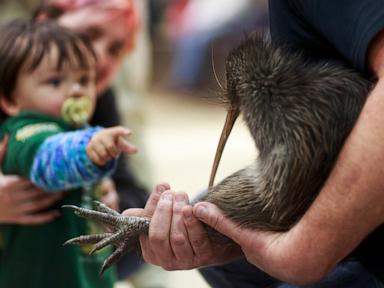
The reintroduction of the North Island brown kiwi (Apteryx mantelli) to Wellington, New Zealand, serves as a high-stakes case study in ecological engineering within high-density human habitats. While popular narratives focus on the emotional resonance of returning a national icon to its ancestral range after a 100-year absence, the success of the Capital Kiwi Project is actually a function of two critical variables: the systematic elimination of mammalian predator pressure and the maintenance of a social license for invasive land management. To understand how a flightless, nocturnal bird can survive in a city of 400,000 people, one must analyze the project through a framework of Biosecurity Saturation, Habitat Connectivity, and Community-Driven Surveillance.
The Biosecurity Saturation Framework
The primary bottleneck for kiwi survival is not food availability or climate, but the recruitment rate of chicks in the presence of mustelids—specifically stoats (Mustela erminea). In unmanaged environments, kiwi chick mortality rates often exceed 95%. To flip this ratio, the Capital Kiwi Project implemented a biosecurity grid covering 4,500 hectares of rugged terrain. If you enjoyed this article, you might want to read: this related article.
This grid operates on a principle of density-dependent protection. By deploying over 4,600 traps, the project achieved a saturation level that effectively suppresses predator populations below the threshold required for kiwi population growth. The logic follows a simple but brutal cost function: the labor cost of trap maintenance must be lower than the biological cost of predation.
- The Stoat Factor: Unlike rats or possums, stoats are specialized killers. A single stoat can devastate a kiwi cohort. The project’s strategy relies on a permanent "defensive perimeter" that treats the city’s fringes as a biological fortress.
- Trap Density Metrics: The project utilizes a high-frequency check cycle. Frequent maintenance ensures that traps remain primed, preventing a "population rebound" effect where predator numbers surge during gaps in monitoring.
- Data Integration: Every trap strike is logged. This creates a heat map of predator activity, allowing the team to shift resources toward "hot zones" where incursions are most frequent.
The Social License and Domestic Animal Mitigation
The most complex variable in urban rewilding is not the wild predator, but the domestic one. For kiwi to coexist with a human population, the project had to solve for the Canine Predation Variable. While stoats kill chicks, dogs are the primary killers of adult kiwi. Because kiwi lack a sternum, even a "playful" nudge from a dog can cause fatal internal crushing. For another perspective on this development, see the recent coverage from BBC News.
Securing a social license for reintroduction required a two-pronged strategy of behavioral modification and spatial regulation.
Avoidance Training Logistics
The project facilitates "Kiwi Avoidance Training" for local dogs. This process uses a controlled exposure method to condition dogs to associate the scent and sound of a kiwi with a negative stimulus. However, the limitation of this strategy is its lack of permanence. Avoidance training is not a "fire and forget" solution; it requires annual reinforcement to maintain the conditioned response.
The Boundary Problem
Wellington’s geography creates a natural "island" effect, but the boundaries between wild scrub and suburban backyards are porous. The project relies on a "neighborhood watch" model where residents become active participants in biosecurity. This decentralized surveillance turns the city's inhabitants into an extension of the conservation team, significantly reducing the overhead costs of monitoring a large geographic area.
Longitudinal Genetic Viability and Founder Effects
The initial release of 11 kiwi in late 2022, followed by subsequent cohorts totaling over 60 birds, addresses the immediate goal of re-establishment. However, the long-term success of the Wellington population depends on Genetic Effective Population Size ($N_e$).
If the founding population is too small, the colony will eventually suffer from inbreeding depression, reducing fitness and adaptability. To mitigate this, the strategy involves:
- Source Diversification: Translocating birds from various managed populations to ensure a broad genetic base.
- Managed Gene Flow: The potential for future "genetic top-ups," where new individuals are introduced to the Wellington population every decade to prevent genetic stagnation.
- The "Halo" Effect: Capital Kiwi leverages the success of Zealandia, a fenced ecosanctuary in the heart of Wellington. While Zealandia provides a secure "nursery," the Capital Kiwi Project aims to create a "halo" where birds can survive outside the fence. This effectively expands the available territory from a few hundred hectares to thousands.
The Economic Logic of Citizen-Led Conservation
Traditional conservation models rely on heavy government subsidies and centralized management. The Wellington model shifts the burden to a private-public partnership driven by citizen engagement. This transition changes the financial structure of the project from a Depletion Model (where funds are exhausted on a specific task) to an Endowment Model (where community involvement provides a perpetual flow of low-cost labor).
The "Three Pillars" of this organizational strategy are:
- Landowner Buy-in: Over 100 private landowners granted access for trap lines. Without this, the geographical continuity required for a predator-free zone would be impossible.
- Volunteer Labor Arbitrage: By utilizing thousands of volunteer hours for trap checking, the project reallocates its capital toward specialized ecological monitoring and veterinary care.
- Corporate Sponsorship: Aligning the project with Wellington’s regional identity allows for a diversified funding stream, insulating the project from shifts in government budget priorities.
Assessing the Bottlenecks of Scale
Scaling this model to other urban centers presents significant hurdles. Wellington's success is partially due to its unique "peninsula" geography, which limits the rate of predator reinvasion from the north. Cities with "open" borders face a much higher Reinvasion Rate ($R_i$), which necessitates a significantly more expensive and dense trapping grid.
Furthermore, the "Predator Free 2050" goal—a national initiative to eliminate rats, stoats, and possums from New Zealand—is the macro-framework that supports the Wellington project. If the national initiative loses momentum, the Wellington population will become an "ecological island," requiring permanent, intensive management to prevent a total population collapse.
Strategic Recommendation for Urban Biodiversity Management
To replicate the Wellington result, conservation strategists must move beyond the "feel-good" narrative and treat rewilding as a logistical and data-science challenge. The focus should be on the Total Area Managed ($A_m$) divided by the Predator Incursion Rate ($P_i$).
The final play for any urban rewilding project is the transition from "active reintroduction" to "autonomous persistence." For the Wellington kiwi, this means reaching a population density where natural recruitment outpaces the unavoidable background mortality rate of an urban environment. The project must now pivot from expanding the trapping grid to high-resolution monitoring of breeding success. If the first wild-born chicks in a century can reach a weight of 1,000 grams—the "stoat-proof" threshold—the Wellington model will have proven its viability as a global blueprint for urban-wildlife integration.
The strategic priority is now the hardening of the biosecurity perimeter at the city’s northern chokepoint. By creating a permanent technological "curtain" of AI-driven traps and thermal monitoring, the project can reduce its reliance on manual labor and ensure the long-term stability of the kiwi population against the inevitable pressure of predator reinvasion.