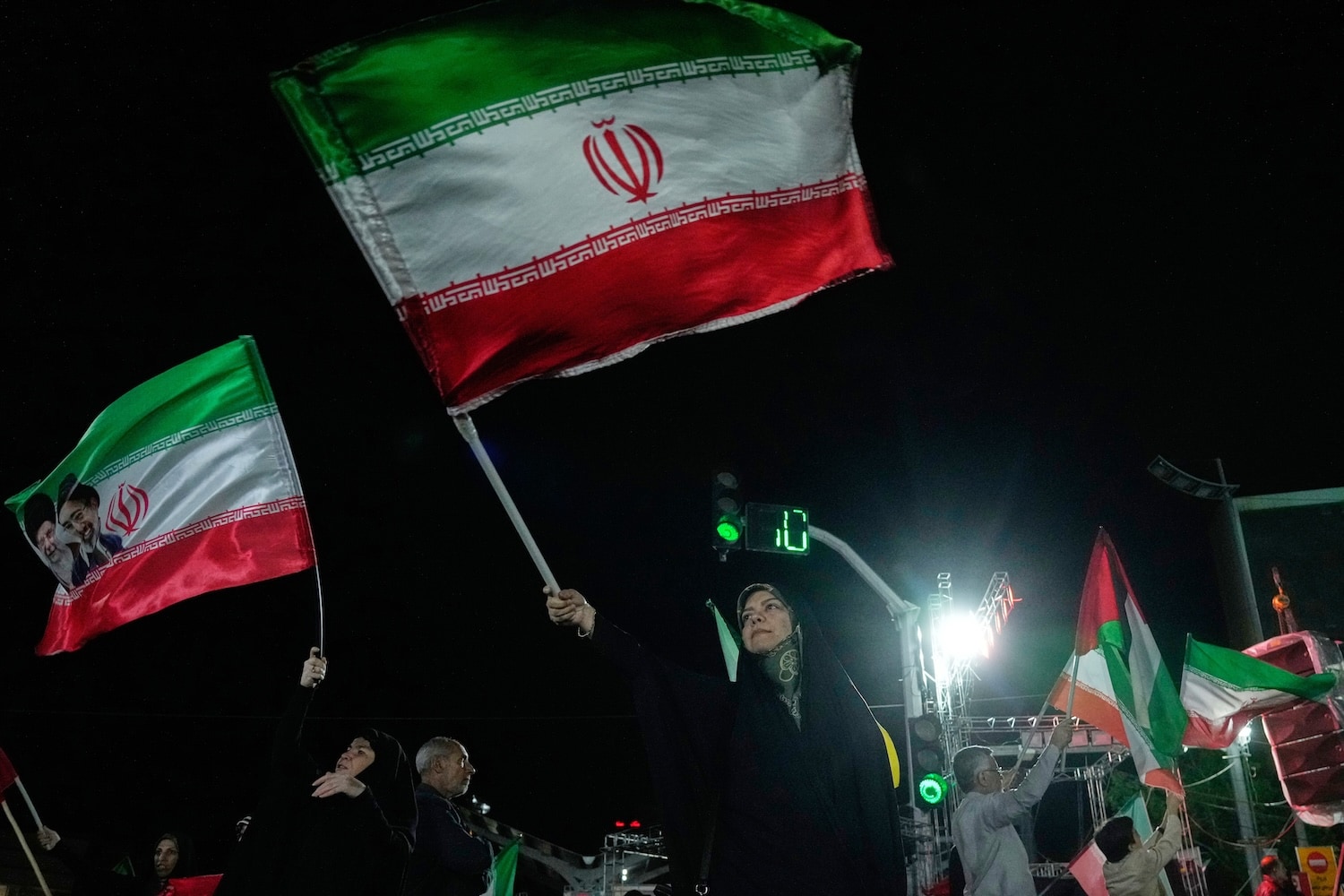
The proposed Iranian plan to exchange a phased reopening of the Strait of Hormuz for the cessation of the United States blockade represents a shift from kinetic brinkmanship to a structured diplomatic auction. This maneuver aims to convert Iran’s geographic leverage into economic liquidity. By offering a granular, step-by-step restoration of maritime transit, Tehran attempts to decouple its domestic economic survival from total geopolitical capitulation. The efficacy of this proposal rests not on goodwill, but on the mechanical alignment of three variables: the integrity of global energy flows, the security of sovereign maritime insurance, and the structural enforcement of US sanctions.
The Mechanics of Maritime Leverage
The Strait of Hormuz functions as a global economic valve, facilitating the transit of approximately 21 million barrels of oil per day, representing 21% of global petroleum liquid consumption. Iran’s proposal targets the specific cost-benefit calculus of global energy markets. A blockade in this corridor does not merely stop physical cargo; it triggers a cascade of financial volatility through "war risk" premiums in the insurance sector. If you found value in this article, you might want to read: this related article.
The Friction Gradient of Blockade Operations
When a chokepoint is threatened, the economic impact follows a non-linear trajectory:
- Insurance Escalation: Protection and Indemnity (P&I) clubs and Lloyd’s of London syndicates apply surcharges based on the probability of hull damage or seizure. Even without a single shot fired, the cost per transit can increase by 300% to 500%.
- Freight Rerouting Costs: While some cargo can bypass the Strait via the East-West Pipeline in Saudi Arabia or the Habshan–Fujairah pipeline in the UAE, these alternatives have a fixed capacity ceiling (approx. 6.5 million barrels per day combined). The remaining volume is stranded.
- Refinery Latency: Global refineries are often calibrated for specific crude grades (e.g., Arab Light or Basra Heavy). A disruption in the Strait forces refineries to source from the Atlantic Basin or US Shale, incurring higher shipping costs and lower yields due to sub-optimal crude-to-refinery matching.
By proposing a phased reopening, Iran seeks to reverse this friction gradient. Each phase of the "reopening" would theoretically correspond to a specific tier of sanctions relief, creating a transactional roadmap that avoids the "all-or-nothing" stalemate of previous negotiations. For another angle on this event, refer to the recent update from The Washington Post.
Strategic Pillars of the Iranian Proposal
The proposal is structured around three functional pillars designed to test the resolve of the US-led coalition while providing an exit ramp for energy-dependent European and Asian economies.
Pillar I: Defined Navigational Corridors
Tehran's strategy involves the restoration of "Safe Passage Zones" within the Traffic Separation Scheme (TSS). In the initial phase, Iran offers to guarantee the safety of non-aligned commercial vessels—specifically those not carrying cargo to or from "hostile" ports. This creates an immediate wedge between US policy and the interests of major energy importers like China, India, and Japan. If Iran can prove it can selectively stabilize the Strait, it weakens the argument for a permanent US naval presence.
Pillar II: Verification and De-escalation of Kinetic Assets
The second phase involves the withdrawal of Islamic Revolutionary Guard Corps (IRGC) fast attack craft and the deactivation of coastal anti-ship cruise missile (ASCM) batteries in exchange for the lifting of specific sectoral sanctions (e.g., petrochemicals or metals). This is a quantifiable metric. Satellite imagery and maritime patrols can verify the "cold" status of these assets. The logical flaw in this pillar is the "reversibility factor." Kinetic assets can be redeployed within hours, whereas the removal of a US blockade—and the subsequent return of international bank confidence—takes months or years to manifest.
Pillar III: Institutionalized Compensation Mechanisms
The final phase proposes a return to full maritime throughput in exchange for the unfreezing of Iranian assets held in foreign banks. This is the core objective. Iran is currently operating under a "resistance economy" model, characterized by high inflation and a decaying infrastructure. The Strait is their most valuable asset in a forced liquidation process.
The US Blockade: A Structural Analysis of Enforcement
To understand why a phased reopening is a complex sell, one must define the "US blockade" not as a physical line of ships, but as a multi-layered financial and kinetic containment system.
The Kinetic Layer
The US Fifth Fleet provides the physical enforcement. This involves "freedom of navigation" (FON) operations and the escorting of high-value tankers. For the US, the blockade is a tool of deterrence. Lifting it partially is technically difficult; a "semi-secure" Strait is an uninsurable Strait. Security is binary in the eyes of the maritime insurance market.
The Financial Layer: The "Secondary Sanctions" Mechanism
The real blockade occurs in the SWIFT messaging system and the compliance departments of global banks. Even if the US Navy stops patrolling, no major tanker owner will dock at Kharg Island if their bank risks being disconnected from the US dollar clearing system. The Iranian proposal assumes that a "phased reopening" will naturally lead to a "phased reinvestment." However, private capital is risk-averse. The threat of "snapback" sanctions—where the US can unilaterally re-impose restrictions if Iran violates the deal—creates a permanent risk premium that prevents long-term economic normalization.
Quantifying the Opportunity Cost of Stalemate
The status quo imposes a massive cost on both parties, though the weight is asymmetric.
- For Iran: The cost is internal stability. Every month the blockade persists, the opportunity cost is the lost revenue of roughly 1.5 to 2 million barrels of oil per day, plus the premium paid to "dark fleet" operators who smuggle crude at significant discounts (often $10-$15 below Brent).
- For the United States: The cost is the depletion of political capital and the acceleration of de-dollarization. When the US uses the financial system as a blockade tool, it incentivizes competitors (China, Russia) to build alternative payment architectures.
- For the Global Market: The cost is "tail risk." The mere possibility of a total closure of the Strait adds a permanent $5-$10 volatility premium to every barrel of oil traded globally.
The Bottleneck of Trust and Verification
The primary obstacle to the Iranian plan is the "verification lag." In high-stakes geopolitics, actions that can be reversed instantly (like moving a missile battery) are rarely traded for actions that take years to implement (like rebuilding a nation's credit rating).
The Security Dilemma of Phased Reopening
If the US agrees to phase one, it signals a lack of resolve, potentially encouraging Iran to use "salami slicing" tactics—achieving its goals through a series of small, non-provocative steps that individually don't warrant a massive military response but collectively change the regional balance of power. Conversely, if the US rejects the plan, Iran may feel compelled to escalate to a "full closure" scenario to prove that the current situation is more expensive for the West than the proposed compromise.
Strategic Pivot: The Role of Third-Party Intermediaries
The success of a phased plan depends on a third-party guarantor, likely an entity that consumes Iranian energy but maintains a functional relationship with the US Treasury. Oman and Qatar have historically filled the role of diplomatic couriers, but the complexity of a "phased reopening" requires a technical guarantor—perhaps a coalition of Asian energy importers who can provide "escort-lite" services or sovereign insurance guarantees that bypass the Western-dominated P&I clubs.
The Insurance Alternative
A critical failure in the competitor’s analysis of this news is the omission of the "Blue Economy" financial structure. If China or India were to provide state-backed insurance for tankers in the Strait, the US blockade's financial layer would lose significant potency. This would shift the conflict back to the kinetic layer, where the risk of direct military confrontation is much higher.
Forecast: The Probability of Implementation
The proposal is likely an opening gambit in a longer cycle of escalation and negotiation. The US is unlikely to accept the plan in its current form because it lacks a "permanent" solution to the underlying nuclear and regional influence issues. However, the proposal succeeds in shifting the narrative from "Iran is a threat to navigation" to "Iran is a manager of navigation."
The logic of the Iranian position is to create a "new normal" where the Strait of Hormuz is recognized as a sovereign Iranian lever rather than a global commons. If they can convince even one or two major powers to accept the phased plan, they effectively break the consensus of the blockade.
The strategic play for global energy actors is to prepare for "Corridor-Specific" volatility. Even if a phased plan begins, the risk of "accidental" kinetic events remain high. The priority for maritime logistics firms should be the diversification of off-loading points and the investment in pipeline capacity that bypasses the Strait entirely. The era of the "unrestricted" Strait of Hormuz is over; the era of the "managed" Strait—where every transit is a negotiated transaction—has begun.