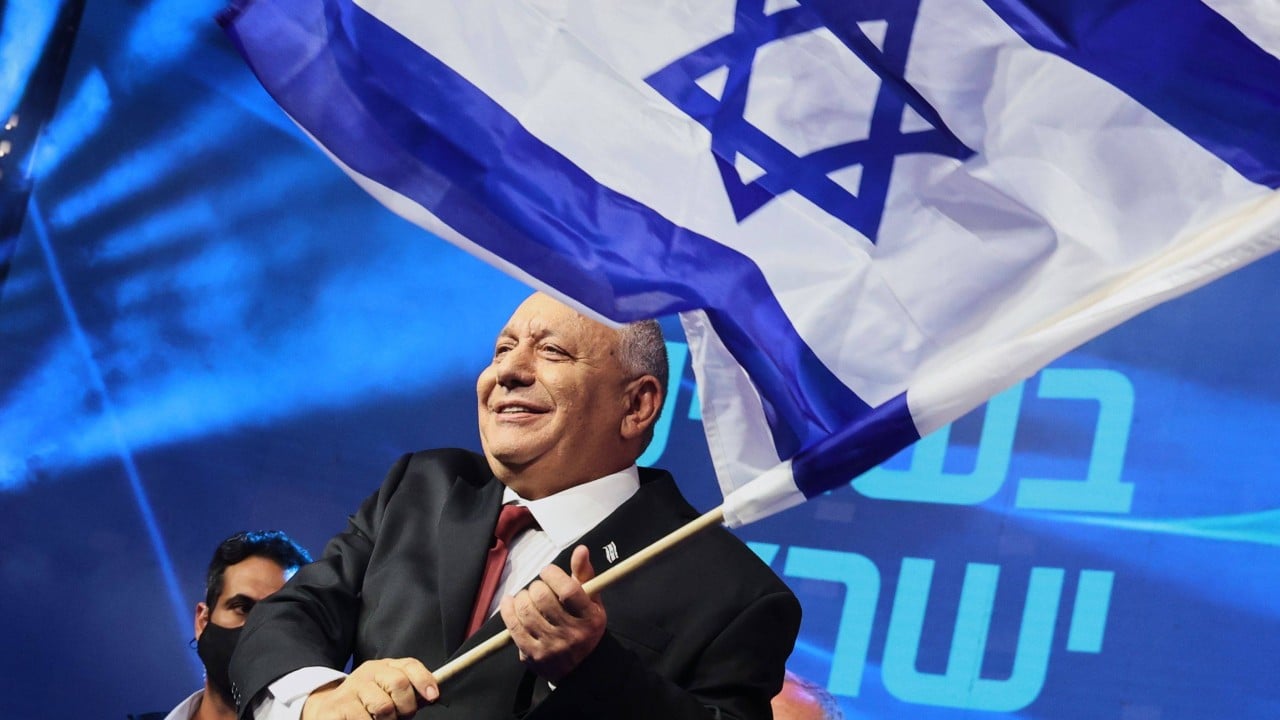
Gadi Eisenkot is not merely a former military commander seeking public office; he represents a specific structural mechanism in Israeli politics designed to bridge the widening institutional fracture between the security establishment and the civilian executive branch. To understand why political analysts, polling aggregates, and coalition architects view him as a primary contender to succeed Benjamin Netanyahu, one must strip away biographical sentiment and analyze the operational variables governing Israeli electoral dynamics: institutional trust deficits, coalition arithmetic, ideological triangulation, and the mechanics of crisis management.
Standard political commentary treats Eisenkot’s rise as a simple matter of personal popularity or reaction to immediate security failures. That framing misses the underlying structural shift. In parliamentary systems experiencing prolonged executive centralization and acute national security shocks, the electorate rarely replaces a long-serving populist incumbent with an ideological mirror image. Instead, voters gravitate toward an institutional stabilizer—an operator whose legitimacy derives from apolitical state organs rather than partisan machinery. Eisenkot’s trajectory from the 21st Chief of the General Staff of the Israel Defense Forces (IDF) to a central figure in the Knesset illustrates how military capital converts into political viability under conditions of systemic stress.
The Structural Deficit in Executive Legitimacy
Political transitions in proportional representation systems depend on the redistribution of voter trust across distinct institutional pillars. Over the past decade, Israeli governance has been characterized by high friction between the elected executive and the state’s gatekeeping institutions, including the judiciary, the civil service, and the senior defense echelon. When a governance model relies heavily on partisan loyalty to maintain coalition discipline, operational competence often degrades into a secondary metric.
The events of October 7, 2023, and the subsequent multi-front war exposed the liabilities of this governance model, triggering a severe legitimacy crisis for Benjamin Netanyahu’s administration. However, the political vacuum created by a collapse in incumbent approval does not automatically fill with traditional opposition figures. Opposition leaders who have spent years locked in binary partisan combat against Netanyahu carry high negative polarization metrics; their ceiling is capped by voters who view them as ideological adversaries rather than national stewards.
Eisenkot’s political utility stems from his insulation from pre-war partisan trench warfare. Having retired from the IDF in January 2019 and entered politics only in August 2022, his public brand remained anchored in institutional duty rather than factional survival. In political science terms, he entered the arena with high "valence" appeal—attributes such as competence, integrity, and non-partisan sobriety that voters across the ideological spectrum value regardless of their specific policy preferences.
The Four Pillars of Eisenkot’s Political Capital
To evaluate Eisenkot’s viability as a prime ministerial candidate, his profile must be disaggregated into four functional components that directly address the vulnerabilities of the current Israeli executive.
1. Operational Doctrine and Strategic Restraint
During his tenure as IDF Chief of Staff from 2015 to 2019, Eisenkot authored the "IDF Strategy," the first public, unclassified doctrinal document outlining the military’s operational philosophy. This document codified the "Campaign Between the Wars" (Mabam)—a sustained, low-profile kinetic and intelligence effort designed to degrade Iranian entrenchment in Syria and Hezbollah’s precision-missile project without triggering full-scale regional conflagration.
This doctrinal background serves a dual political function:
- Deterrence Credibility: It immunizes him against right-wing attacks that attempt to paint centrist or center-left candidates as weak on national security. A former commander of the Golani Brigade and Northern Command cannot be credibly accused of naivety regarding asymmetric threats.
- Escalation Management: Unlike ideological hawks who advocate for maximalist military solutions without defined diplomatic end-states, Eisenkot’s doctrine emphasizes proportionality, clear strategic objectives, and the preservation of international legitimacy—specifically the strategic alignment with the United States.
2. The Moral Economy of Personal Sacrifice
In Israeli political culture, bereavement carries profound, non-transferable authority, though exploiting it politically is strictly taboo. In December 2023, Eisenkot’s youngest son, Master Sergeant Gal Meir Eisenkot, was killed in combat in the northern Gaza Strip, followed days later by the death of his nephew in action.
The political impact of this loss was not driven by public campaigning, as Eisenkot maintained strict emotional restraint, returning to war cabinet meetings within days of the funeral. Rather, it established an insurmountable contrast in public perception between leaders perceived as prioritizing political survival and a leader demonstrably sharing the ultimate cost of state policy. In game-theoretic terms, this functions as a "costly signal"—an action or sacrifice so immense that it validates the actor's sincerity beyond any verbal commitment, neutralizing accusations of self-interest.
3. Coalition Triangulation and Ideological Elasticity
Israeli elections are rarely decided by total ideological realignment; they are won at the margins by parties capable of absorbing soft-right voters disillusioned with Likud while remaining palatable to the center-left. Eisenkot occupies a precise coordinate on the Israeli political spectrum:
- Security Realism: He rejects the messianic annexationism of the far-right, arguing that permanent military and civilian rule over millions of Palestinians leads inevitably to a binational state, which he views as an existential threat to Israel’s Zionist and democratic character.
- Territorial Pragmatism: Simultaneously, he rejects the unilateral withdrawal formulas of the traditional left, insisting on strict security control mechanisms in the West Bank and Gaza until viable, non-hostile governance structures emerge.
This positioning allows him to act as a coalition bridge. Soft-right voters who will never vote for Yair Lapid or the Labor-Meretz bloc can transfer their ballots to an Eisenkot-led ticket without feeling they have abandoned core security principles.
4. Institutional Friction Inside the War Cabinet
Following the outbreak of the Gaza war, Eisenkot joined the emergency unity government alongside Benny Gantz as an observer in the narrow War Cabinet. This move carried immense political risk, as it temporarily stabilized Netanyahu’s government. Yet, it provided Eisenkot with an internal vantage point to document and challenge executive decision-making from within.
By June 2024, when Gantz and Eisenkot resigned from the coalition, Eisenkot’s departure was framed not as a partisan maneuver, but as a whistleblowing exercise regarding strategic paralysis. His resignation letter and subsequent public statements systematically dismantled the government’s conduct, citing the subordination of hostage-release negotiations and post-war diplomatic planning to the preservation of Netanyahu’s right-wing coalition. This sequence transformed him from a passive critic into a credible insider witness.
Deconstructing the "General-Politician" Trap
The primary analytical flaw in assuming Eisenkot’s inevitable rise to the premiership is ignoring the historical failure rate of former IDF Chiefs of Staff in Israeli politics. The transition from military command to parliamentary leadership involves a sharp structural mismatch.
In the IDF, a Chief of Staff operates within a hierarchical command structure where orders are executed, information flows upward through disciplined channels, and the primary metric is operational efficiency. In the Knesset, a party leader operates within an anarchic, multi-party bazaar where leverage is fragmented, ideological purity is weaponized by minor faction leaders, and the primary metric is coalition survivability.
History demonstrates how this friction degrades military capital:
- Ehud Barak (1999–2001): Entered office with immense security credentials, only to see his coalition disintegrate within 18 months due to an inability to manage parliamentary partners and the collapse of the Camp David summit.
- Shaul Mofaz and Moshe Ya'alon: Both held the highest defense posts, yet struggled to build independent political machines capable of sustaining national electoral momentum.
- Benny Gantz: Successfully built a large centrist bloc, yet repeatedly hesitated at critical political junctures, allowing Netanyahu to outmaneuver him tactically in 2020 and again during the 2023–2024 war cabinet period.
Eisenkot’s vulnerability lies in this exact domain. He has historically demonstrated a preference for substance over political theater, avoiding the relentless media manipulation, backroom patronage, and populist rhetoric required to dominate Israeli campaign cycles. In a media ecosystem driven by algorithmic outrage and sharp soundbites, methodical, policy-heavy discourse often fails to mobilize base voters at the required scale.
The Structural Bottleneck: The Gantz-Eisenkot Dynamic
Any realistic assessment of Eisenkot’s path to the Prime Minister’s Office must confront the immediate structural obstacle standing directly in front of him: his political partnership with Benny Gantz within the National Unity party (HaMahane HaMamlachti).
For years, Gantz functioned as the default vessel for anti-Netanyahu centrist voters. However, prolonged exposure to the political arena, combined with perceived indecisiveness during the judicial overhaul protests and the Gaza war, eroded Gantz’s ceiling. Polling data consistently revealed a critical anomaly: while National Unity’s overall numbers fluctuated, individual favorability and suitability-for-premiership metrics frequently showed Eisenkot outperforming Gantz among undecided and soft-right voters.
This creates a classic collective action dilemma within the Israeli center:
- The Status Quo Trap: If Eisenkot remains subordinate to Gantz on the party slate, the ticket fails to maximize its electoral potential because voters fatigued by Gantz’s leadership style withhold their support.
- The Fragmentation Risk: If Eisenkot breaks away to form an independent faction or challenges Gantz openly, he risks splitting the centrist vote, inadvertently handing a mathematical advantage to Netanyahu’s tightly disciplined right-wing bloc under Israel’s electoral threshold and surplus-vote sharing agreements (the Bader-Ofer law).
Consequently, Eisenkot’s ascension requires a negotiated leadership transition—a voluntary or pressure-induced inversion of the National Unity ticket where Gantz steps back or assumes a secondary ministerial role, allowing Eisenkot to stand at the apex of a unified centrist-right bloc. Without this internal restructuring, Eisenkot remains a high-value asset locked inside a suboptimal vehicle.
The Post-War Electoral Matrix and Coalition Arithmetic
Replacing Benjamin Netanyahu is never a matter of winning a plurality of votes; it is strictly a function of assembling a 61-seat majority in the 120-seat Knesset without relying on unviable partners. To reach 61 seats, an Eisenkot-led coalition must navigate a rigid mathematical matrix composed of five distinct parliamentary blocs:
- The Centrist Core (Eisenkot/Gantz and Yair Lapid’s Yesh Atid): Forms the foundational anchor, likely accounting for 30 to 38 seats combined.
- The Secessionist Right (Avigdor Liberman’s Yisrael Beiteinu and Gideon Sa’ar’s New Hope): Essential for crossing the 61-seat threshold. These voters are staunchly secular, nationalist, and anti-Netanyahu, but deeply skeptical of any concessions to the left or Arab parties.
- The Reconstituted Center-Left (The Democrats, led by Yair Golan): A unified Labor-Meretz bloc providing 8 to 11 reliable opposition seats, though its inclusion creates friction with right-wing coalition partners.
- The Ultra-Orthodox Parties (Shas and United Torah Judaism): Historically aligned with Netanyahu, these 16 to 18 seats are theoretically transactional. However, the acute national crisis over Haredi military conscription—accelerated by IDF manpower shortages during the multi-front war—has created an ideological chasm. Eisenkot’s unwavering commitment to universal conscription and equal burden-sharing makes an alliance with the Haredi parties exceedingly difficult without a fundamental capitulation from the rabbinical leadership.
- The Arab Parties (Ra'am and Hadash-Ta'al): While Mansour Abbas’s Ra'am proved in 2021 that an Islamist party could sustain a Jewish-led government from the outside, the trauma of October 7 and the ongoing conflict in Gaza have made formal coalition inclusion politically toxic for any candidate courting soft-right Jewish voters.
Therefore, Eisenkot’s only mathematically viable path to the premiership is a "Zionist Unity" coalition spanning from Yair Golan on the left to Avigdor Liberman and Gideon Sa’ar on the right—a narrow, ideologically heterogeneous alliance united almost exclusively by the imperative of institutional stabilization and the exclusion of Netanyahu and his far-right partners (Itamar Ben-Gvir and Bezalel Smotrich).
Policy Architecture of an Eisenkot Administration
Should Eisenkot overcome the internal leadership bottleneck and assemble a 61-seat coalition, his governance model would represent a sharp departure from the Netanyahu era across four primary policy vectors.
The Gaza End-State and Regional Integration
Netanyahu’s strategy relied on managing the conflict while preventing the emergence of a unified Palestinian leadership, a policy that collapsed on October 7. Eisenkot’s framework prioritizes converting tactical military achievements into a durable regional diplomatic architecture. This involves establishing a transitional governing mechanism in Gaza backed by moderate Sunni Arab states (Saudi Arabia, the UAE, Egypt) and a reformed, non-inciting Palestinian technocratic administration, explicitly excluding both Hamas and permanent Israeli civilian resettlement. This alignment is designed to unlock formal normalization with Riyadh and reconstitute a regional defense coalition against Iran.
Civil-Military Relations and Conscription Reform
Facing a multi-front reality that demands a significantly larger standing and reserve army, an Eisenkot government would enforce mandatory military or national service frameworks across all sectors of Israeli society. By tying state funding and institutional budgets directly to compliance with conscription quotas, this policy would systematically dismantle the decades-old political arrangement that insulated the Ultra-Orthodox sector from military duty in exchange for coalition loyalty.
Institutional De-escalation and Constitutional Guardrails
To repair the domestic fractures caused by the 2023 judicial overhaul attempt, Eisenkot favors halting unilateral legislative changes to the judiciary. Instead, his platform emphasizes enacting a formal Basic Law on Legislation that codifies the separation of powers, establishes clear constitutional buffers against executive overreach, and restores the operational autonomy of the civil service, the Attorney General’s office, and the police force.
Deterrence Restoration on the Northern Front
Drawing directly from his tenure as Northern Command chief, Eisenkot’s approach to Hezbollah and Iran rejects prolonged wars of attrition that bleed Israel’s economy and reserve forces. His operational logic dictates using decisive, time-bound military pressure paired with aggressive American-led diplomatic enforcement to push hostile forces away from the border, coupled with massive state investment to rehabilitate devastated northern communities.
The Strategic Reality of the Succession
The narrative framing Gadi Eisenkot as the inevitable heir to Benjamin Netanyahu underestimates the resilience of Israel’s populist right and the structural friction inherent in centrist politics. Netanyahu’s political survival has always relied on his unmatched ability to fragment his opposition, frame existential security threats around his personal leadership, and maintain ironclad discipline among his ideological and religious satellites.
Eisenkot possesses the precise attributes required to neutralize Netanyahu’s traditional advantages: unassailable security credentials, immunity to partisan smears, deep alignment with Washington, and a demeanor that projects institutional stability to an exhausted electorate. Yet, possessing the optimal profile does not guarantee execution.
For Eisenkot to transition from a respected elder statesman into Israel’s next Prime Minister, three sequential conditions must be met: he must assert primacy over the centrist bloc by resolving the leadership ambiguity with Benny Gantz; he must construct a disciplined, high-velocity campaign apparatus capable of surviving the brutal media environment of an Israeli election; and he must lock in pre-election coalition commitments from the secular right to prevent Netanyahu from peeling off wavering factions during post-election negotiations. If Eisenkot fails to execute the political mechanics of consolidation, his institutional capital will remain theoretical, leaving the Israeli political system trapped in the same structural paralysis he entered the Knesset to resolve.