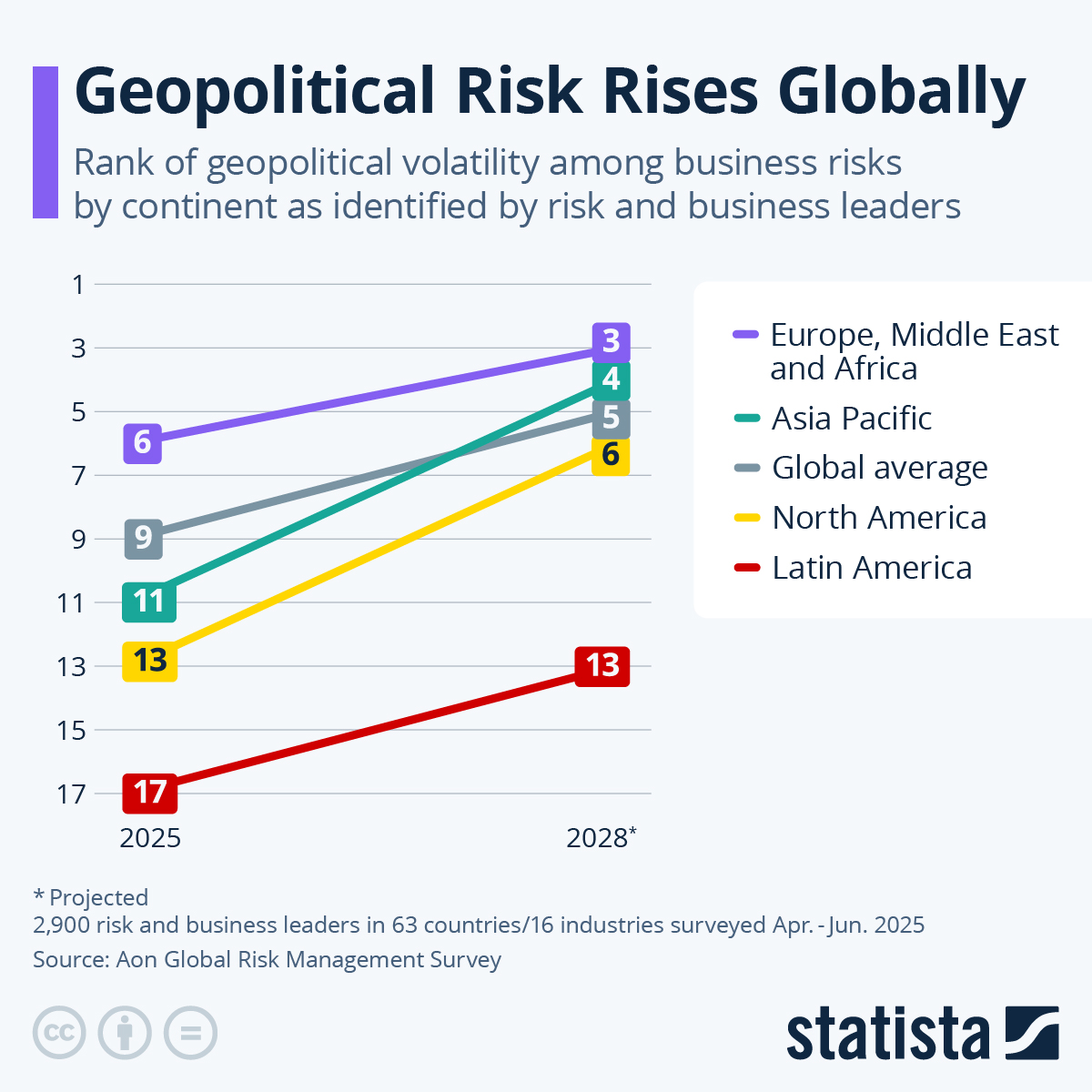
The shift in American foreign policy from a predictable institutionalism to a transactional, high-variance model has fundamentally altered the risk calculus for European defense architecture. When General Thierry Burkhard, Chief of the French Defense Staff, signals that U.S. unpredictability impacts French interests, he is not merely making a diplomatic observation; he is identifying a structural failure in the "extended deterrence" model that has underpinned Western security since 1949. The current friction is a direct result of a divergence between American domestic political cycles and the multi-decadal timelines required for military procurement and force posture.
The Mechanics of Strategic Decoupling
The primary challenge for French and European military planners is the degradation of the "Security Guarantee." In traditional game theory, a deterrent is only effective if the cost of reneging is higher than the cost of fulfillment. As the U.S. internalizes its focus and questions the ROI of its overseas presence, the perceived cost of fulfillment rises, thereby lowering the credibility of the deterrent. This creates a "Certainty Gap" that adversaries exploit.
French strategic doctrine rests on three specific pillars that are currently under pressure from this American volatility:
- Nuclear Independence: France maintains a sea-launched and air-launched nuclear triad that operates outside the NATO Nuclear Planning Group. This is a hedge against a "decoupling" event where a U.S. President decides that defending a European capital is not worth the risk of a domestic strike.
- Industrial Sovereignty: The requirement to maintain a Tier-1 defense industrial base (BITD) capable of producing everything from Rafale fighters to nuclear-powered aircraft carriers. Dependency on U.S. platforms like the F-35 introduces "kill-switch" risks—where software updates or parts supplies can be throttled by Washington for political leverage.
- Expeditionary Capability: The ability to project power in the Sahel or the Mediterranean without relying on U.S. heavy-lift or ISR (Intelligence, Surveillance, Reconnaissance) assets.
The Cost Function of Dependency
The friction described by General Burkhard can be quantified through the lens of interoperability costs. For decades, NATO members optimized for "Plug-and-Play" compatibility with U.S. systems. While this provided a massive force multiplier, it created a technical debt. If the U.S. pivots toward the Indo-Pacific or adopts an isolationist stance, the cost to "re-platform" European defense is astronomical.
This technical debt manifests in three specific bottlenecks:
- Data Sovereignty: Modern combat is defined by Collaborative Combat (the SCORPION program in France). If the underlying data cloud is hosted or controlled by U.S.-regulated entities, French operational freedom is subject to U.S. ITAR (International Traffic in Arms Regulations).
- Ammunition Cycles: The Ukraine conflict revealed that European stockpiles are insufficient for high-intensity warfare. Relying on the U.S. "arsenal of democracy" is a viable strategy only if the U.S. political will remains static. When that will fluctuates, the "Just-in-Time" supply chain for 155mm shells or Patriot interceptors becomes a single point of failure.
- The Intelligence Asymmetry: The "Five Eyes" framework excludes France, forcing Paris to invest heavily in its own space-based signals intelligence (SIGINT) and imagery intelligence (IMAGINT). This redundancy is expensive but necessary to avoid "Intelligence Blinding" during a crisis where U.S. and French interests might diverge.
The NATO Multiplier vs. The Sovereign Drag
A common critique of the French position is that "Strategic Autonomy" is a redundant expense in a world where NATO provides a collective umbrella. However, this ignores the Principal-Agent Problem. In this framework, the U.S. (the Agent) is tasked with providing security for Europe (the Principal). When the Agent’s priorities shift—for instance, prioritizing the containment of China over the stability of Eastern Europe—the Principal is left with an "Incomplete Contract."
France's insistence on a "Europe of Defense" is an attempt to rewrite this contract. It is an effort to move from a hub-and-spoke model (where every nation connects individually to Washington) to a mesh network (where European nations can operate effectively if the Washington node goes offline).
The volatility Burkhard references is most acute in the realm of Long-Range Strike Capabilities. If Europe cannot produce and target its own deep-strike missiles without U.S. GPS or satellite guidance, its "sovereignty" is a polite fiction. This explains the urgency behind the FCAS (Future Combat Air System) and the MGCS (Main Ground Combat System), which are designed to be "ITAR-free."
Operational Realism in a Multipolar Shift
The French Army is currently transitioning from "reaper-style" counter-insurgency (as seen in Operation Barkhane) to "Major War" (HEM: Hypothèse d'Engagement Majeur). This transition requires a massive recapitalization of heavy armor, electronic warfare, and cyber-defense.
The U.S. unpredictability acts as a catalyst for this transition. When the U.S. signaled a "Pivot to Asia," it wasn't just a change in geography; it was a signal that the European theater was being downgraded in terms of resource priority. For France, this means the "burden sharing" debate is no longer about satisfying a U.S. President’s demand for 2% GDP spending. It is about the physical survival of European borders.
The "Burden of Lead" is shifting. France is positioning itself as the "Nation Cadre" (Framework Nation) capable of leading European coalitions. This requires not just hardware, but a command-and-control (C2) architecture that can function independently of the U.S. European Command (EUCOM).
The Capability Gap Calculus
To understand the magnitude of the task, one must look at the specific deltas in European vs. American power projection. The U.S. maintains a fleet of 11 supercarriers; France has one. The U.S. has a massive lead in stealth technology and satellite constellations. For France to bridge this gap while the U.S. becomes more inward-looking, the "Strategic Autonomy" project must move from political rhetoric to industrial reality.
There is a distinct difference between Strategic Autonomy and Strategic Isolation. France does not seek to leave NATO; rather, it seeks to build a "European Pillar" within it. The logic is simple: A stronger, more independent Europe is a better partner for a predictable U.S. and a more formidable obstacle for an unpredictable one.
The instability of U.S. policy creates a "Hedging Requirement." In financial terms, France is paying a premium for an "out-of-the-money" put option on American withdrawal. This premium is high, but the cost of the alternative—security bankruptcy—is higher.
Quantitative Friction in Procurement
The impact of unpredictability is felt most sharply in the 10-year procurement window. A defense program initiated today will not see operational deployment until 2034 or beyond. If a U.S. administration shifts its stance on technology transfers or export licenses every four years, the risk of a program being "stranded" becomes unmanageable. This has led France to prioritize "Sovereign Tech Stacks" even when they are more expensive or less advanced than American alternatives in the short term.
The Forecast: A Bifurcated Defense Market
The logical progression of the current volatility is the emergence of two distinct defense markets within the West. The first is the "F-35 Block," comprised of nations that have fully integrated their security apparatus into the U.S. ecosystem, accepting the loss of sovereignty in exchange for superior immediate capability. The second is the "Sovereign Block," led by France, focusing on high-end, independent capabilities.
The success of the French model depends on its ability to convince other European partners (specifically Germany and Poland) that the U.S. umbrella is no longer a permanent fixture of the atmosphere, but a seasonal asset.
The strategic play for France is to accelerate the European Defense Fund and the Permanent Structured Cooperation (PESCO) initiatives. These are not merely bureaucratic frameworks; they are the financial and legal infrastructure for an independent military capability. The objective is to reach a "Critical Mass of Autonomy" where the withdrawal or redirection of U.S. assets no longer results in a total collapse of European security.
The move toward high-intensity training and the "war-readiness" focus of the French General Staff indicates that the era of the "Peace Dividend" is over. The volatility of the U.S. has forced a return to "Realpolitik," where the only guarantee of interest-protection is the physical capacity to enforce it. France is betting that by the time the U.S. settles its internal political identity, the European defense landscape will have already fundamentally hardened around a French-led, autonomous core.