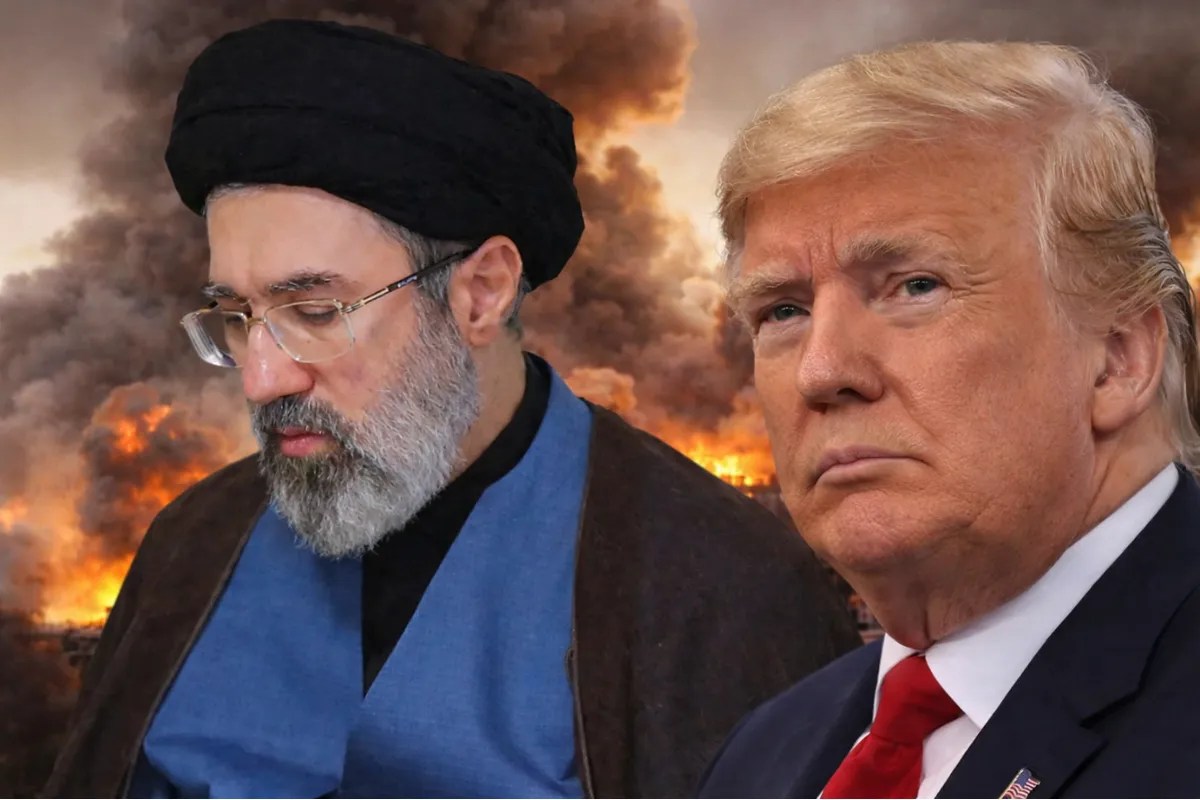
The threat to close the Strait of Hormuz is the oldest card in Tehran's deck, and they are playing it again with renewed aggression. Iranian officials recently signaled that they, not Washington, will dictate the terms of engagement in the world’s most volatile maritime chokepoint. While the headlines often frame this as a sudden escalation, the reality is a calculated performance of brinkmanship designed to mask deep domestic vulnerabilities and test the limits of Western naval resolve. Tehran claims it can shutter the 21-mile-wide waterway at will, but doing so would be an act of economic suicide that even the most hardline elements of the Islamic Revolutionary Guard Corps (IRGC) are hesitant to commit.
The Strait is a jugular vein for global energy. Roughly one-fifth of the world’s total oil consumption passes through this narrow passage daily. If the flow stops, the global economy does not just slow down; it fractures. Iran knows this. They use the threat of a blockade as a geopolitical lever to force concessions on sanctions and to deter military action against their nuclear program. However, the logistical reality of a "blockade" is far messier than the rhetoric suggests. You might also find this similar article interesting: Why Targeting Iran Power Plants is a Strategic Dead End.
The Geography of a Chokepoint
The Strait of Hormuz is not a single gate that can be locked. It is a complex maritime environment where the shipping lanes—each only two miles wide—are separated by a two-mile buffer zone. These lanes sit largely within Omani and Iranian territorial waters. While Iran has the geographical advantage, holding the high ground is not the same as holding the room.
The IRGC Navy (IRGCN) has spent decades perfecting "swarming" tactics. They rely on hundreds of fast-attack craft, anti-ship missiles, and a massive inventory of naval mines. In a high-intensity conflict, these assets could certainly cause chaos. They could sink a tanker, damage a destroyer, or scatter mines that would take weeks for specialized units to clear. But a temporary disruption is not a permanent blockade. The U.S. Fifth Fleet, based in nearby Bahrain, exists specifically to ensure these waters remain open. Any attempt to physically hold the Strait would require Iran to face the full weight of American and allied air superiority. As extensively documented in recent reports by USA Today, the results are worth noting.
Why Iran Cannot Afford to Close the Gates
The most significant deterrent against an Iranian blockade isn't the U.S. Navy. It is the Iranian economy. Iran is a rentier state, despite years of crushing sanctions. It relies on the export of petroleum and petrochemicals to survive. Most of those exports move through the very Strait they threaten to close.
Closing the Strait would mean cutting off their own lifeline. Furthermore, such a move would immediately alienate Tehran's few remaining partners. China is the primary buyer of Iranian "clandestine" oil. Beijing’s appetite for energy is bottomless, and they have zero interest in a regional war that spikes global oil prices to $200 a barrel. If Iran shuts the Strait, they aren't just poking the American eagle; they are biting the hand that feeds them in Beijing.
The Shadow War on Commercial Shipping
Instead of a full-scale blockade, we are seeing a "gray zone" strategy. This involves the seizure of tankers under the guise of legal disputes, the use of limpet mines that cause damage without sinking vessels, and the deployment of drones to harass merchant ships. This allows Iran to maintain a state of perpetual tension without crossing the red line that would trigger a total war.
- Legal Pretext: Iran often cites environmental violations or "colliding with Iranian vessels" as a reason to board ships.
- Proxy Pressure: Utilizing Houthi rebels in the Red Sea to create a secondary front, stretching Western naval resources thin.
- The Insurance Factor: By making the region appear unstable, Iran drives up maritime insurance premiums, effectively imposing a "tax" on global trade.
The Failure of Deterrence
The West has struggled to find a calibrated response to these tactics. If the response is too soft, Iran is emboldened to push further. If it is too heavy-handed, it risks the very regional explosion everyone wants to avoid. The current strategy of "escort and monitor" is a holding pattern, not a solution.
The U.S. and its allies have attempted to build international coalitions like the International Maritime Security Construct (IMSC). While these efforts provide a sense of security, they do not address the fundamental issue: Iran sees the Strait as its backyard and views any foreign presence as an inherent provocation. This is a fundamental clash of philosophies between the "freedom of navigation" principle held by the West and the "regional hegemony" sought by the IRGC.
The Technology of Interdiction
Iran’s military evolution has focused heavily on asymmetric warfare. They don't need a billion-dollar destroyer to threaten a carrier strike group.
They have invested heavily in the Noor and Ghadir anti-ship cruise missiles, which can be launched from mobile coastal batteries. These launchers are easy to hide in the rugged terrain along the Iranian coast, making them difficult to target in a preemptive strike. Furthermore, their development of "suicide" underwater drones (UUVs) represents a new tier of threat that traditional sonar and radar systems are still struggling to master.
These tools are designed to make the cost of entry too high for commercial shipping. If a shipping company decides the risk to its crew and hull is too great, the Strait is effectively closed even without a single shot being fired. This is "psychological interdiction," and it is where Iran is currently winning the battle.
The Role of Regional Players
Saudi Arabia and the United Arab Emirates have spent years trying to mitigate their dependence on the Strait. Pipelines have been built to move oil to ports on the Red Sea or the Gulf of Oman, bypassing the chokepoint entirely. However, these pipelines do not have nearly enough capacity to handle the volume of the entire Persian Gulf's output.
The regional powers are in a precarious position. They want Iran's influence curtailed, but they are also the first ones who will burn if a hot war breaks out. This led to the recent diplomatic thaws between Riyadh and Tehran, mediated by China. It was a pragmatic admission that if the U.S. cannot guarantee absolute security in the Strait, the regional players must negotiate their own survival.
The False Narrative of Iranian Terms
Tehran’s claim that they will "set the terms" is a bold piece of propaganda aimed at a domestic audience and the broader "Axis of Resistance." It suggests a level of sovereignty over international waters that does not exist under the United Nations Convention on the Law of the Sea (UNCLOS). While Iran has not ratified UNCLOS, most of its provisions are considered customary international law.
Setting the terms implies the power to enforce them indefinitely. Iran can create a crisis, and they can certainly cause a spike in the price of gas at pumps in Ohio or Berlin. But they cannot sustain a blockade against a concerted international effort. The moment they move from harassment to a hard blockade, they transition from a regional nuisance to a global target.
The Intelligence Gap
One of the most dangerous aspects of the current standoff is the potential for miscalculation. The IRGC operates with a significant degree of autonomy from the civilian government in Tehran. If a local commander decides to take an aggressive action against a U.S. asset, it could trigger a chain reaction that neither Washington nor Tehran actually wants.
We are currently operating in an environment where communication channels are brittle. The "Hotline" concepts that existed during the Cold War between the U.S. and the Soviets are largely absent here. This lack of transparency increases the value of the Strait as a flashpoint.
The Energy Transition Factor
Long-term, the strategic importance of the Strait should diminish as the world pivots away from fossil fuels. However, that transition is decades away. In the immediate future, the rise of LNG (Liquefied Natural Gas) has actually made the Strait more important. Qatar, one of the world’s largest LNG exporters, sends almost all of its product through the Strait. A blockage today would not just freeze cars; it would shut off the electricity for millions of people across Asia and Europe.
Iran understands the shifting energy landscape. They know their window of maximum leverage is now. As the world eventually moves toward diverse energy sources, the "Hormuz Card" will lose its value. This explains the current desperation and the increased frequency of their threats.
Operational Reality on the Water
Naval commanders in the region describe a "daily dance" of provocation. Iranian fast boats often approach Western warships at high speeds, only turning away at the last possible moment. It is a game of chicken played with live ammunition.
The US Navy has updated its rules of engagement to allow for more proactive defense against these swarming tactics, but the primary goal remains de-escalation. The problem with de-escalation is that it can be interpreted as weakness by a regime that views the world through the lens of revolutionary struggle.
The Economic Consequences of a Misfire
If Iran ever followed through on its threat, the immediate fallout would be a total freeze of global credit markets. The uncertainty of how long a blockade would last would lead to hoarding and a massive flight to safety.
- Crude Oil: Projections suggest an immediate jump to $150-$200 per barrel.
- Global Shipping: A total rerouting of global trade, adding weeks to transit times and billions to costs.
- Food Security: The cost of transporting grain and other essentials would skyrocket, hitting the developing world the hardest.
Iran would not be immune to this. Their population is already reeling from inflation and a devalued currency. A global depression triggered by their own hand would likely lead to the kind of domestic unrest that the regime fears most.
The Strait of Hormuz remains a theater of the absurd. It is a place where a country threatens to destroy its own economy to prove a point to its enemies. Tehran’s "terms" are not a reflection of strength, but a desperate attempt to stay relevant in a world that is slowly learning to live without them. The threat is real, the weapons are lethal, but the blockade remains a bluff that Iran can never afford to call.
The standoff will continue not because Iran has the power to win, but because the cost of calling their bluff is still higher than the cost of enduring their threats. This is the uncomfortable equilibrium of the Persian Gulf. It is a state of "no war, no peace" where the only certainty is that the next crisis is just one fast-boat maneuver away. There is no diplomatic masterstroke on the horizon that changes this dynamic. The world is simply waiting for the day when the oil stops being worth the fight. Until then, the Strait remains a 21-mile stretch of water where the global economy goes to hold its breath.