The illusion of a Middle East ceasefire has shattered completely. If you thought the tentative agreements brokered over the last few months would bring stability back to global shipping, Sunday morning delivered a brutal reality check. The vital waterway is closed again, a civilian container ship is abandoned and burning, and bombs are falling on Iranian port cities.
This isn't just another standard diplomatic spat. We are watching a rapid escalation that threatens to plunge the global economy back into an energy crisis and expand a localized war into a regional conflagration.
The Spark in the Chokepoint
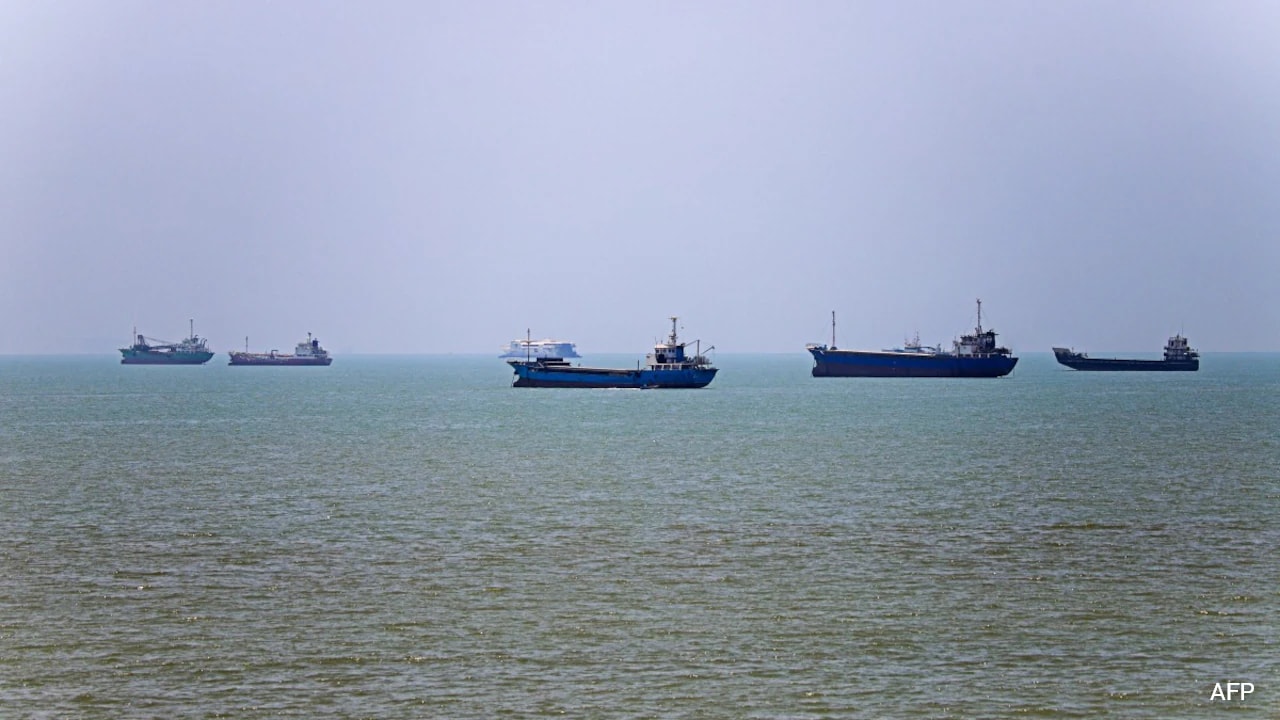
The latest breakdown began when the Islamic Revolutionary Guard Corps (IRGC) opened fire on a Cyprus-flagged commercial container ship, the M/V GFS Galaxy, as it transited the Strait of Hormuz. Tehran claims it fired "warning shots" because the vessel was taking an unauthorized route and had switched off its tracking systems.
The reality on the water tells a far more violent story. According to US Central Command (CENTCOM), the ship was blatantly attacked, leaving it disabled with severe engine room damage and a fire on board. The situation became so dire that the crew abandoned the vessel and took to lifeboats. One civilian crew member remains missing.
Immediately following the assault, the IRGC announced that the Strait of Hormuz is closed "until further notice." They tied the reopening directly to the end of American interventions in the region.
Washington didn't wait around to negotiate. At the direction of President Donald Trump, the US military launched a massive wave of retaliatory strikes. This marks the third major round of American strikes this week, targeting approximately 140 Iranian military sites. Explosions rocked the key Iranian port cities of Bandar Abbas and Sirik. US Defense Secretary Pete Hegseth summarized the administration's stance bluntly on social media, stating that Iran made a poor choice and now they pay.
Regional Retaliation and the Failed Ceasefire
The conflict didn't stop at the Iranian coastline. Within hours of the US strikes, the IRGC launched ballistic missiles and drones at American bases and regional allies across the Gulf.
- Jordan: Iran claims to have struck a US command and control center and drone hangars.
- Qatar: The massive US air base at Al Udeid was targeted, with Iran claiming hits on a fighter jet maintenance center. Qatar confirmed it intercepted a missile attack while explosions were heard in Doha.
- The UAE and Bahrain: Air defense systems engaged incoming targets over the United Arab Emirates, and warning sirens wailed across Bahrain.
This chaotic escalation effectively ends the shaky interim ceasefire that had been keeping a fragile peace since April. The broader war, which erupted in late February 2026 with devastating US-Israeli strikes that killed former Supreme Leader Ali Khamenei, has been defined by this precise tug-of-war over maritime control.
The Hormuz Sticking Point
You can't understand this war without looking at the geography. Before the conflict began, roughly a fifth of the world’s petroleum and liquefied natural gas flowed through this narrow strip of water.
The core issue keeping both sides from a permanent peace deal is simple: who rules the strait?
Iran insists that the old days of free international navigation are over. Tehran wants total control to regulate shipping, dictate approved corridors, and levy transit fees on commercial vessels. Washington and its international allies maintain that the strait is an international waterway that must remain entirely unrestricted.
While diplomats from Oman and Qatar have spent weeks trying to salvage a solution, the reality on the ground has outpaced them. Iran's new Supreme Leader, Mojtaba Khamenei, issued his first major statement since his father's death, vowing absolute vengeance against the US and Israel. He made it clear that Iran's hostile posture doesn't depend on individual officials; it's national policy. In response, Trump has warned that 1,000 missiles are locked and loaded, aimed directly at Iran if any assassination plots are attempted against US officials.
What This Means for Global Markets
If you are waiting for oil prices to stabilize, don't hold your breath. The effective blockade of the strait during the height of the war pushed crude prices to $120 a barrel, sparking painful global inflation and spikes at the gas pump. While prices had eased slightly during the truce, this renewed shutdown will almost certainly send energy markets back into a tailspin.
The US has previously advised commercial shipping companies to bypass the northern routes and hug the southern territorial waters of Oman. Right now, even those routes are highly perilous. Shippers are facing skyrocketing insurance premiums or are being forced to route vessels entirely around the African continent, adding massive delays and costs to global supply chains.
If you have cargo moving through the Middle East, the immediate next step is clear. You need to contact your freight forwarders to verify if your vessels are currently trapped inside the Persian Gulf or if they can be rerouted through the Red Sea or around the Cape of Good Hope. Expect immediate force majeure declarations from carriers and preparing for a prolonged disruption to maritime transit is the only logical move.