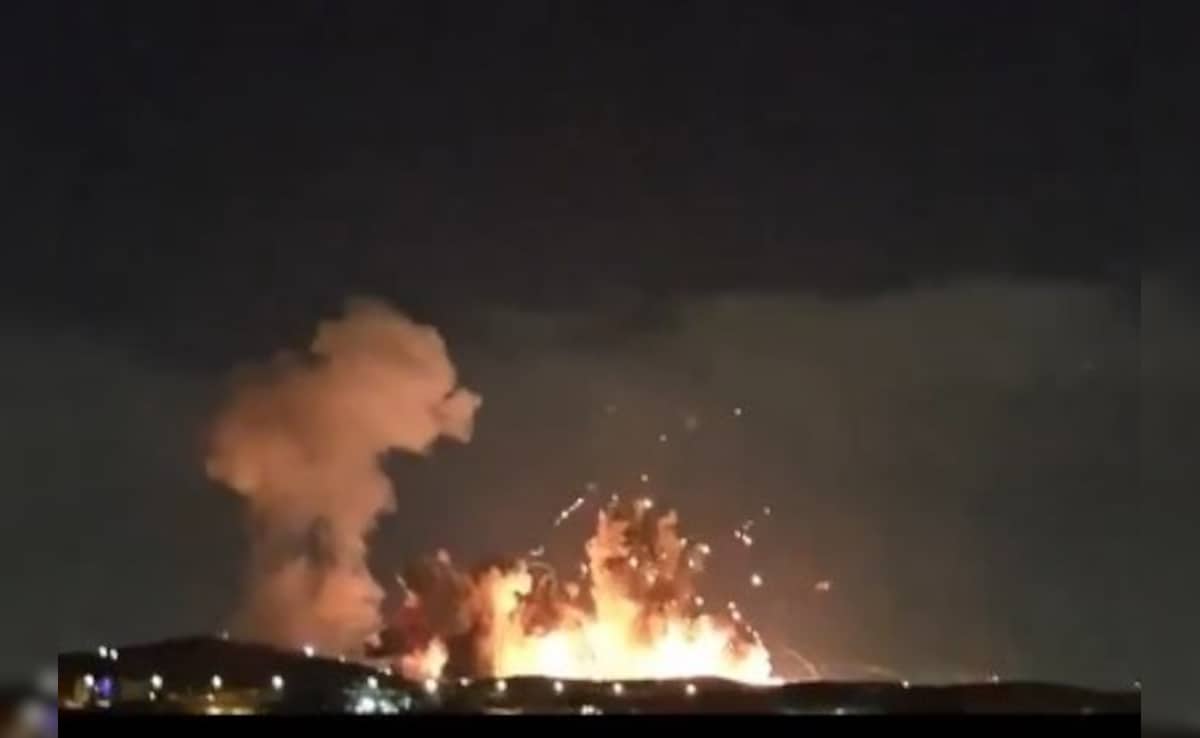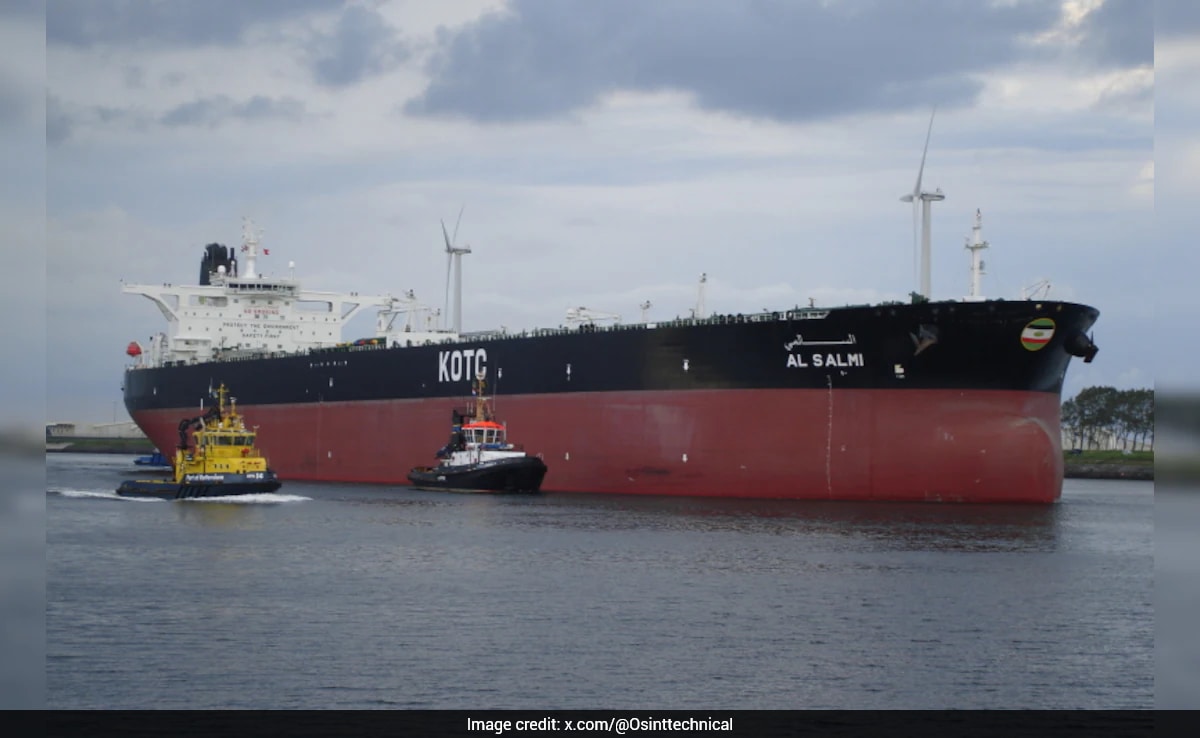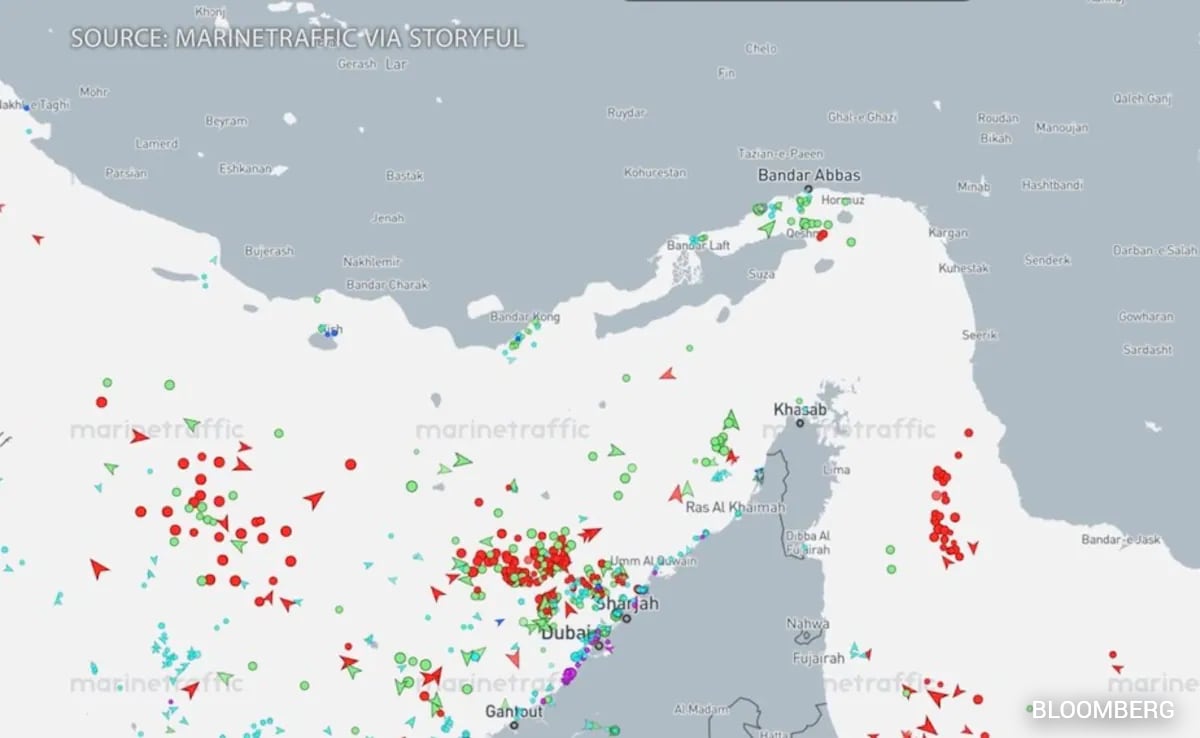
The physical geography of the Strait of Hormuz—a 21-mile wide corridor at its narrowest point—dictates a permanent asymmetric advantage for the Iranian military. Conventional naval power relies on the freedom of maneuver and the ability to project force across open water; however, the Strait functions as a geographic bottleneck that compresses high-value maritime targets into predictable transit lanes. After decades of investment in "Anti-Access/Area Denial" (A2/AD) capabilities, Tehran has transitioned from a strategy of potential disruption to one of functional control. This control is not predicated on a traditional blue-water navy, but on a layered system of low-cost, high-attrition technologies designed to saturate the defenses of superior technical adversaries.
The Tri-Layered Architecture of Maritime Denial
Iran’s grip on the Strait is built upon three distinct operational layers. Each layer operates on a different cost-curve, forcing an opponent to expend high-cost interceptors against low-cost offensive assets. For an alternative view, see: this related article.
1. The Littoral Saturation Layer
This layer consists of hundreds of fast-attack craft (FAC) and fast inshore attack craft (FIAC). These vessels are small, radar-evasive, and highly mobile. In a conflict scenario, these assets do not engage in ship-to-ship duels. They function as mobile launch platforms for short-range missiles and torpedoes. By employing "swarm" tactics, Iran aims to overwhelm the Aegis Combat System or similar integrated defense networks. A single destroyer may have a finite number of vertical launch system (VLS) cells; a swarm of fifty boats, each costing a fraction of a single SM-6 missile, creates a mathematical deficit for the defender.
2. The Sub-Surface Ambush Layer
The shallow, noisy, and thermally complex waters of the Persian Gulf provide an ideal environment for midget submarines, such as the Ghadir-class. Unlike large nuclear submarines, these small vessels are difficult to detect via passive sonar in high-traffic shipping lanes. Their primary utility lies in bottom-laying—sitting silently on the seabed to wait for a target—or deploying smart mines. The EM-52 "rising" mine, for instance, remains tethered to the sea floor and uses acoustic or magnetic sensors to launch a rocket-propelled warhead upward when a specific hull signature is detected. Similar insight on the subject has been shared by BBC News.
3. The Precision Stand-off Layer
This is the most significant evolution in Iranian capability over the last decade. It includes the integration of long-range anti-ship cruise missiles (ASCMs) like the Noor and Gader, and increasingly, anti-ship ballistic missiles (ASBMs) like the Khalij Fars. These assets are housed in "missile cities"—hardened underground bunkers carved into the Zagros Mountains along the coastline. Because these launchers are mobile and concealed, they cannot be neutralized via a single preemptive strike.
The Economic Cost Function of Closure
The Strait of Hormuz facilitates the transit of approximately 20% of the world's liquid petroleum gas and oil. Any disruption is immediately reflected in the Brent Crude "war premium." However, the true economic weapon is not the physical blockage of the Strait, but the escalation of the "Cost of Assurance."
- Insurance Premiums: When a region is declared a "listed area" by the Joint War Committee (JWC), hull stress and war risk premiums can increase by 500% to 1000% within 48 hours.
- Freight Rates: Shipowners demand higher "danger pay" for crews and higher day-rates for the vessels themselves to compensate for the risk of seizure or damage.
- Logistical Re-routing: While pipelines like the Habshan–Fujairah line exist, they can only handle a fraction of the Strait's total volume. The remainder must be offloaded or sent around the Cape of Good Hope, adding 10 to 15 days to transit times and significantly increasing carbon costs and fuel consumption.
Iran utilizes this economic sensitivity as a "calibrated escalation" tool. By seizing a single tanker or deploying a drone against a merchant vessel, they trigger a global price shock without initiating a full-scale kinetic war. This allows Tehran to exert pressure on Western sanctions regimes through the mechanism of global inflation.
The Technical Shift: Low-Cost Loitering Munitions
The emergence of the Shahed-series loitering munitions has fundamentally altered the tactical calculus in the Strait. Previously, attacking a ship required a sophisticated missile with a seeker head. Now, a $20,000 drone can be programmed with GPS coordinates or equipped with a basic camera for terminal guidance.
These drones serve a dual purpose. First, they act as reconnaissance assets, providing real-time targeting data to shore-based battery commanders. Second, they serve as "decoy-saturated" kinetic threats. In a coordinated strike, Iran can launch dozens of Shahed drones alongside a few high-speed cruise missiles. The defender must treat every incoming blip as a lethal threat, quickly depleting their stock of million-dollar interceptor missiles on wooden-framed drones.
Kinetic Friction and the Rules of Engagement
A Month of increased regional conflict has allowed Iran to test the "Redline Threshold" of Western navies. Through proxy forces in the Bab el-Mandeb and direct IRGC Navy actions in the Strait of Hormuz, Tehran has gathered intelligence on:
- Response Times: Measuring the interval between a distress call and the arrival of a Quick Reaction Force (QRF).
- Electronic Warfare Signatures: Analyzing how Western ships use radar and jamming when under perceived threat.
- Political Will: Assessing the degree of international consensus regarding a multi-national maritime protection force.
The data suggests that while the United States and its allies possess superior firepower, they are constrained by the Rules of Engagement (ROE). Iran operates in the "Gray Zone"—actions that are aggressive enough to achieve strategic goals but remain just below the threshold that would justify a massive conventional retaliation.
Infrastructure Vulnerabilities: The Port Factor
The grip on the Strait extends beyond the water to the port infrastructure of the United Arab Emirates and Oman. Modern logistics relies on Just-In-Time (JIT) delivery. A delay of even three days at the mouth of the Gulf creates a backlog that can take weeks to clear. Furthermore, the reliance on automated container terminals makes these hubs vulnerable to cyber-kinetic attacks. If Iran were to pair a physical blockade with a cyber-attack on port management systems in Jebel Ali, the regional economy would suffer a systemic collapse that no amount of naval escorting could fix.
The Mathematics of a Blockage
Closing the Strait does not require a physical "wall" of ships. It requires "Functional Denial."
Total closure is achieved when the risk-to-reward ratio for commercial shipping reaches a point where no private insurer will cover the voyage.
$$Risk\ Total = (P_{capture} \times C_{vessel}) + (P_{strike} \times C_{cargo}) + I_{war}$$
Where:
- $P_{capture}$ is the probability of seizure by IRGC.
- $C_{vessel}$ is the total replacement cost of the ship.
- $P_{strike}$ is the probability of a drone or missile hit.
- $C_{cargo}$ is the value of the oil/gas.
- $I_{war}$ is the war-risk insurance premium.
When the $Risk\ Total$ exceeds the profit margin of the voyage, the Strait is effectively closed, regardless of whether a single shot is fired. Currently, Iran is incrementally increasing $P_{capture}$ and $P_{strike}$ to keep this equation in a state of constant tension.
Geopolitical Realignment and the "Internal Lake" Strategy
Tehran is moving toward a long-term goal of turning the Persian Gulf into a "Strategic Iranian Lake." This involves building deep-water ports outside the Strait, such as Jask, which allows Iran to export its own oil while maintaining the ability to block everyone else's. By diversifying their own exit points, they reduce their own vulnerability to the very blockade they threaten to impose on neighbors.
This strategy is reinforced by the "Eastward Pivot." As Iran integrates more deeply into the security architectures of non-Western blocs, the threat of sanctions loses its potency. If the primary buyers of the oil passing through the Strait are also the primary strategic partners of Iran, the leverage shifts. The West becomes the primary casualty of a blockade, while Eastern markets negotiate "safe passage" through diplomatic backchannels.
The Shift to Persistent Surveillance
The deployment of long-endurance Unmanned Aerial Vehicles (UAVs) like the Mohajer-6 provides Iran with a persistent "Eye in the Sky." This removes the element of surprise for any naval task force. Every movement of a US Carrier Strike Group (CSG) is tracked, filmed, and broadcasted, serving as both a military tactical advantage and a psychological warfare tool. The constant presence of Iranian drones over international waters signals that the Strait is under constant observation, reinforcing the perception of "The Grip."
Strategic Countermeasures and Limitations
Despite the strength of this position, the Iranian "grip" is not absolute. It faces three critical bottlenecks:
- Technological Obsolescence: While drones are effective, they are susceptible to high-power microwave (HPM) weapons and electronic spoofing, which are being deployed more frequently by Western forces.
- Economic Overextension: Maintaining a high-readiness A2/AD posture is expensive. Internal economic instability in Iran could undermine the long-term sustainability of these military investments.
- The "Total War" Trigger: If Iran were to fully close the Strait, it would likely invite a decapitation strike against its leadership and nuclear infrastructure. The "grip" is most effective when it is tightened just enough to cause pain, but not enough to trigger an existential response.
The current tactical environment favors the asymmetric actor. The ability to disrupt global trade with a $2,000 sea mine or a $20,000 drone remains the most significant imbalance in modern naval warfare. For global energy markets, the "war premium" is no longer a temporary fluctuation but a structural reality of the Hormuz geography.
Naval planners must pivot from a "Protection" model to a "Resilience" model. This involves shifting cargo to overland pipelines where possible, investing in rapid-repair salvage capabilities to keep lanes clear of wrecks, and deploying automated "escort swarms" to intercept Iranian drones before they reach high-value targets. The era of unchallenged maritime dominance in the Gulf has ended; the era of contested, high-friction transit has begun. Any strategy that assumes the Strait can be "kept open" through conventional deterrence alone fails to account for the mathematical reality of Iran's layered A2/AD system. The objective must instead be the management of an indefinite, high-threat environment where the cost of transit is permanently elevated. Middle Eastern energy security now depends on the ability to absorb attrition rather than the ability to prevent it.