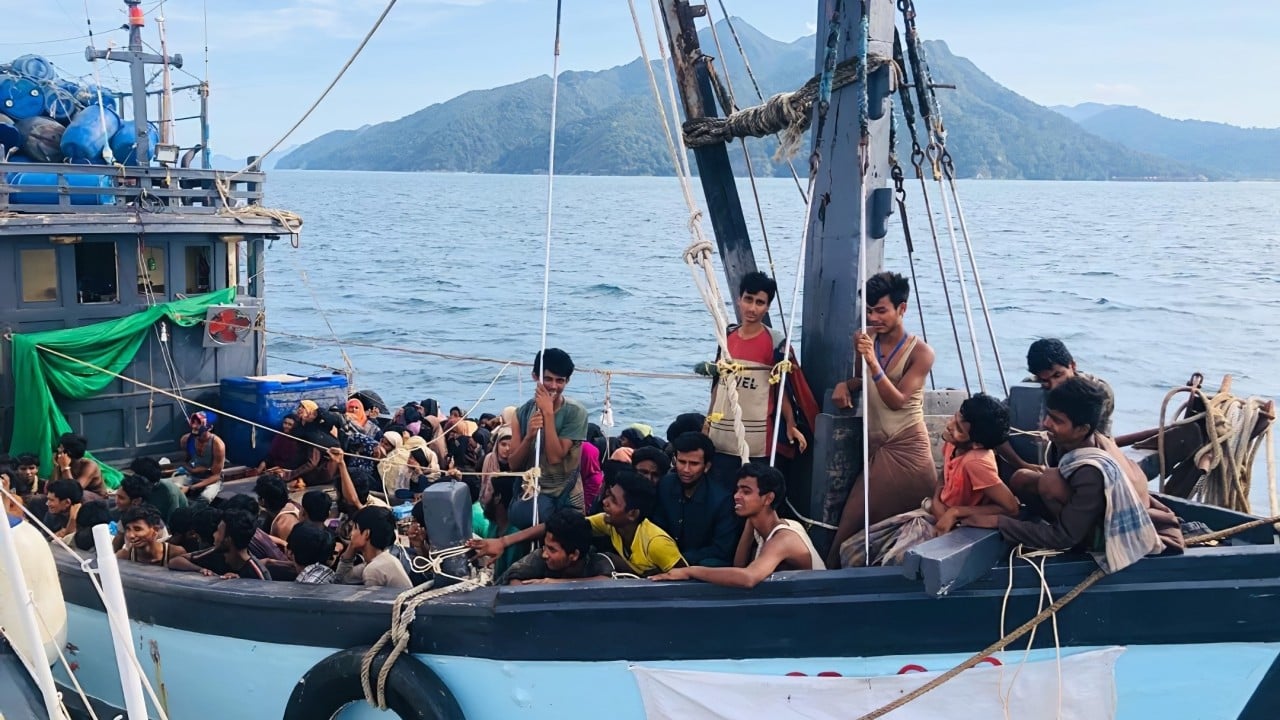
The mainstream humanitarian media loves a predictable narrative. Read any standard dispatch on the Rohingya in Malaysia—such as the typical tear-jerking profiles highlighting decades of legal limbo and survival against all odds—and you will find the same tired formula. It starts with a harrowing sea journey, detours into the tragedy of statelessness, and finishes with an emotional plea for Western NGOs or host governments to step up their humanitarian charity.
This framing is completely broken. It treats refugees exclusively as permanent victims, economic liabilities, and objects of pity. For another perspective, check out: this related article.
I have spent years analyzing regional labor markets and economic integration policies across Southeast Asia. If there is one thing that becomes obvious when you look at the raw data instead of NGO brochures, it is this: the "humanitarian crisis" framework is a failure. By focusing entirely on survival and charity, Western commentators miss the real structural mechanics at play. The Rohingya in Malaysia are not a helpless population waiting for a handout. They are already a vital, hyper-resilient pillar of the Malaysian informal economy.
Treating this as a tragedy of "limbo" ignores the massive, distorting economic reality that keeping an entire workforce underground creates a hyper-exploitative shadow economy that actively harms domestic growth. We need to stop asking how to feed these people and start asking why we are intentionally sabotaging our own markets by keeping them illegal. Similar insight on this trend has been shared by Reuters Business.
The Myth of the Refugee Burden
The lazy consensus among regional politicians and surface-level journalists is that granting legal status or work rights to refugees creates a magnetic pull factor that will overwhelm local resources. They argue that refugees depress domestic wages and drain public coffers.
This argument collapses under basic macroeconomic scrutiny. Malaysia is not suffering from a shortage of work; it is suffering from a massive, structural shortage of labor in critical sectors. The country relies heavily on millions of undocumented and foreign laborers to sustain its construction, agriculture, plantation, and manufacturing industries.
When an article laments that a refugee is surviving by running an unregistered convenience shop in Langkawi, it frames the story as a poignant tale of marginalization. Let us look at that exact scenario through a cold economic lens. An individual arrives with zero capital, navigates a hostile legal environment, avoids state detention, establishes a supply chain, manages inventory, and successfully serves a local market demand. That is not a welfare case. That is an aggressive display of micro-entrepreneurial talent.
By forcing over 150,000 UNHCR-registered Rohingya into the informal sector, the state creates distinct market distortions:
- Zero Income Tax Revenue: Informal workers pay consumption taxes (like Sales and Service Tax) but zero direct income or business tax. The state incurs security and administrative costs without capturing the direct fiscal upside of their labor.
- Artificial Wage Suppression: Keeping workers illegal means they have zero labor protections. This allows unscrupulous employers to underpay them drastically, which artificially depresses baseline wages for the lowest-tier Malaysian citizens.
- Underutilized Human Capital: When skilled individuals are banned from formal higher education and professional certification, a generational talent pool is forced into manual labor.
The Hypocrisy of the Signatory Obsession
Humanitarian observers obsess over the fact that Malaysia is not a signatory to the 1951 UN Refugee Convention. They treat this legal document like a magical panacea. The narrative implies that if the government would just sign the piece of paper, the systemic issues would vanish.
This is a profound misunderstanding of how policy works in Southeast Asia. Signatures on international treaties mean nothing without domestic enforcement mechanisms and structural alignment. Look at countries that have signed international conventions but lack the economic capacity or political stability to enforce them; their refugee populations face identical, if not worse, destitution.
The real barrier to integration is not a lack of international virtue signaling. It is the failure to decouple humanitarian aid from national economic strategy.
Imagine a scenario where the Malaysian Ministry of Human Resources, rather than looking at refugees through the lens of national security and border immigration, viewed them through the lens of human resource optimization. The country regularly spends millions of ringgit processing, recruiting, and importing foreign workers from Bangladesh, Indonesia, and Nepal to fulfill labor quotas. Simultaneously, it spends millions more detaining and policing a pre-existing, localized, culturally integrated population that already speaks the language and wants to work.
It is a masterclass in fiscal inefficiency. You are paying to deport the exact resource you are paying to import.
The Cost of the Shadow Economy
Let us be completely transparent about the downsides of the contrarian approach. Legalization and structural integration are not free, nor are they seamless.
If Malaysia were to grant formal work rights to refugees, it would immediately put pressure on public infrastructure. If you allow people to work legally, they will demand legal access to public healthcare and state schooling. It forces a collision between the domestic working class and a new legal demographic competing for low-to-medium-skilled jobs. There would be an immediate, sharp political backlash from nationalist factions.
But staying the course is vastly more expensive. The current policy of ignoring the informal workforce while occasionally executing massive immigration raids is the equivalent of taking a financial loss on purpose.
Consider the mechanics of an immigration raid in places like Selayang or the outskirts of Kuala Lumpur. The state deploys hundreds of personnel, locks down commercial zones, detains thousands of individuals, and houses them in immigration depots. This disrupts supply chains, deprives local businesses of their staff overnight, costs taxpayers money for detention maintenance, and yields exactly zero long-term changes because the market demand for that labor remains unchanged. Within weeks, the vacancies are filled by other informal workers.
It is a performative, high-cost cycle that serves political optics while draining state resources.
Stop Healing, Start Monetizing
The premise of almost every question asked by international observers regarding this crisis is fundamentally flawed. They ask: "How can international donors better support refugee communities?"
The brutal, honest answer is that international donors cannot fix this, and their money is shrinking anyway. With global aid budgets being slashed across the board, relying on external humanitarian handouts is a losing strategy.
The correct question is: "How can the host country maximize the fiscal output of the population already within its borders?"
The solution requires ditching the Western human-rights playbook and adopting a hardheaded, transactional economic framework.
1. Temporary Economic Work Permits
Instead of waiting for a permanent resettlement to a third country that will never happen, the state should issue sector-specific, non-citizen economic work permits. These permits should be tied directly to industries facing acute labor shortages, such as construction and agriculture.
2. Commercial Regularization
Acknowledge the thousands of informal storefronts, stalls, and micro-enterprises currently operating in the shadows. Force them to register as legal business entities under temporary resident frameworks. Charge them standardized licensing fees and subject them to municipal commercial taxes. Move them from a source of corruption and bribery for local enforcement into a source of transparent municipal revenue.
3. Flat-Rate Healthcare Levies
Refugees frequently use public healthcare facilities in emergencies, creating uncompensated costs for public hospitals. By formalizing their employment, the state can mandate a flat-rate healthcare levy deducted directly from their legal wages. This stabilizes hospital funding while ensuring the population receives basic preventative care, preventing expensive, large-scale public health outbreaks.
The survival of these communities is no longer the question. They have already proven they can survive under the harshest conditions imaginable. The real failure belongs to the policy makers and analysts who look at a hyper-resilient, economically active workforce and see nothing but a burden to be managed. Stop treating immigration policy as a branch of international charity. It is a branch of national macroeconomics. Start running it like one.