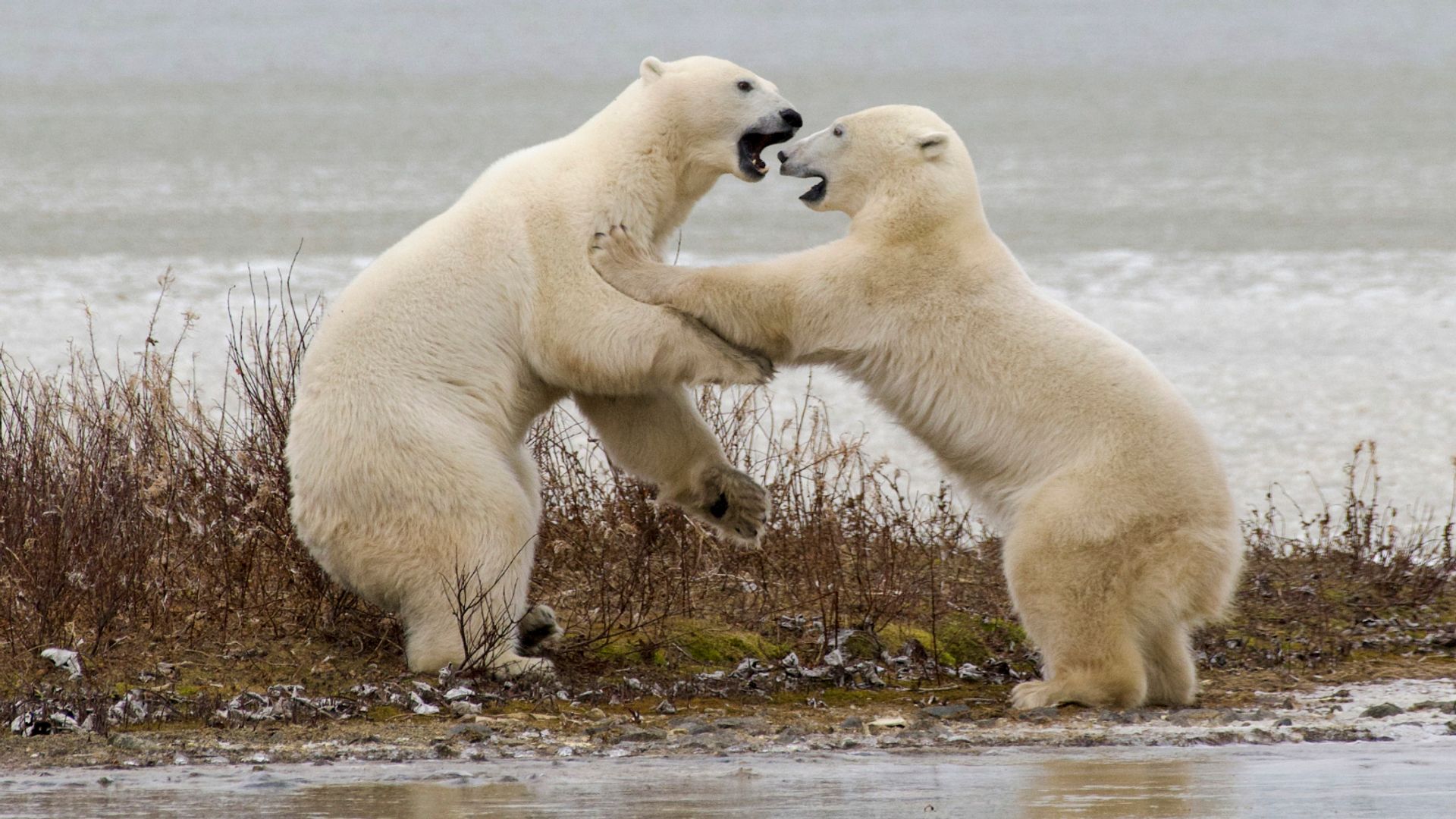
Silicon Valley loves a shiny object. Drop a neural network into an Arctic village, slap a consumer-friendly label like "doorbell camera" on a ruggedized housing, and watch the tech press swoon.
The mainstream coverage of AI-powered polar bear detection systems—most notably the Bear-dar initiatives tested in places like Churchill, Manitoba, by organizations like Polar Bears International—follows a predictable, lazy script. The consensus goes like this: climate change is melting sea ice, hungry bears are wandering into human settlements, and machine learning is the heroic shield that will save both species. Recently making news recently: Why AI Could Break the World's Digital Infrastructure Before We Notice.
It sounds great in a press release. On the ground, in minus-forty-degree windchill, that narrative falls apart.
Treating wildlife conflict as a computer vision problem misses the fundamental physics, economics, and behavioral realities of the Arctic. While engineers celebrate high accuracy rates on curated test datasets, northern communities face a much harsher truth. Adding another layer of fragile digital infrastructure to remote regions doesn't solve human-bear conflict. Often, it creates a dangerous illusion of safety while ignoring the unglamorous, low-tech solutions that actually keep people alive. Additional details into this topic are covered by TechCrunch.
The Myth of the Smart Perimeter
The core premise of the AI bear camera is simple. You mount optical or thermal sensors around the perimeter of a town, train a convolutional neural network to distinguish Ursus maritimus from a snowdrift, an Arctic fox, or a husky, and trigger an alert on a resident’s phone before the predator reaches the front porch.
On paper, the logic holds. In practice, you are asking edge-computing hardware to survive an environment designed to destroy electronics.
I have watched conservation tech pilots burn through hundreds of thousands of dollars in grant money only to fail because nobody accounted for basic atmospheric physics. Standard lithium-ion batteries lose up to half their capacity—or fail entirely—when temperatures plummet below minus-twenty degrees Celsius. Condensation freezes inside housing seals. Blowing snow, known locally as ground drift, creates whiteout conditions where optical lenses become completely blind, and thermal cameras struggle to resolve temperature differentials when wind strips heat from every surface equally.
When a system goes offline during a blizzard, it doesn't just stop working. It fails silently, or worse, creates alert fatigue through endless false positives triggered by shifting ice and blowing snow.
The Latency Trap in Real-World Encounters
Even when the hardware survives the cold, the operational workflow of a "doorbell alert" misunderstands how polar bear attacks happen.
A Ring camera works in the suburbs because a delivery driver walks up a paved path at three miles per hour, rings a bell, and waits. A polar bear is an apex ambush predator capable of sprinting at twenty-five miles per hour over uneven terrain.
Imagine a scenario where a resident in Arviat or Churchill receives a push notification on their smartphone while getting ready for work. By the time the phone vibrates in a pocket, gets pulled out, unlocked, and the app loads a low-bandwidth video feed over congested northern cellular networks, a bear spotted fifty yards away has already closed the distance to the door.
Alerts require human reaction time, situational awareness, and a clear defensive plan. A notification on a screen is not a barrier. It is just a heads-up that you are already in trouble.
Why Tech Coverage Gets Conservation Wrong
To understand why these projects get breathless media coverage, you have to look at who funds them and who writes about them. Tech journalists love stories where algorithms solve visceral, real-world problems. Nonprofits love them because "AI for conservation" unlocks massive corporate sponsorships from cloud providers and chipmakers looking for good PR.
What gets left out of the coverage is the opportunity cost.
Every dollar spent calibrating custom object-detection models, maintaining cloud servers, and flying engineers up to the Hudson Bay is a dollar not spent on municipal infrastructure that works when the power goes out.
| Approach | Primary Mechanism | Failure Mode | Maintenance Burden |
|---|---|---|---|
| AI Camera Networks | Optical/thermal detection + mobile alerts | Extreme cold, whiteouts, network latency, false positives | High (requires specialized tech support and constant power) |
| Electric Deterrent Fencing | Physical + non-lethal high-voltage shock | Snow drifting over wires (solvable with basic shoveling) | Low (local technicians can repair with basic tools) |
| Waste & Attractant Management | Bear-proof bins, incinerators, electric dump fences | Human negligence or budget cuts to sanitation | Medium (requires consistent municipal policy) |
| Community Bear Patrols | Trained local monitors using noise/cracker shells | Patrol gaps during extreme storms | Ongoing labor (creates local jobs and builds human expertise) |
Look at that table. Notice which column actually stops a thousand-pound bear from breaking down a door.
Cameras observe. They do not deter. When Polar Bears International and their partners test radar and camera arrays, they are building early-warning systems, not defense systems. Yet the headlines consistently frame these tools as replacements for physical security.
Dismantling the "People Also Ask" Fallacies
When people read about AI bear alerts, their questions usually reveal how deeply they misunderstand both machine learning and Arctic life. Let's look at the common assumptions and break them down.
Can AI accurately tell a polar bear apart from snow?
In clear daylight, yes. Modern computer vision models like YOLO (You Only Look Once) can easily isolate a bear's distinct gait, snout profile, and yellow-white coat against pristine snow.
The problem isn't clear daylight. Polar bear season in places like Churchill peaks in October and November, right as daylight shrinks to a few hours a day and winter storms roll in. During heavy snow, blowing ice crystals scatter infrared and visible light. Thermal imaging relies on detecting body heat, but polar bears are evolutionary masterpieces of insulation. Their thick blubber layer and hollow, air-trapping guard hairs prevent heat from escaping. On a thermal sensor, a polar bear often looks like a faint smudge—barely warmer than the ambient air, with only their eyes, nose, and breath registering strong heat signatures. If a bear is facing away from the camera in a gale, the algorithm is essentially guessing.
Will smart cameras replace human bear patrols?
No, and suggesting they could is insulting to the people who actually keep northern communities safe.
In towns like Churchill, Conservation Officers and dedicated bear patrols run 24/7 during peak season. They know individual bears by sight. They read body language—distinguishing between a curious sub-adult passing through and an emaciated, desperate bear that poses an immediate lethal threat. An algorithm outputs a bounding box and a confidence score. It cannot read intent. Worse, if a town council decides to cut patrol budgets because they just installed a million-dollar camera network, the community becomes less safe, not more.
Why not just put GPS collars on all the bears?
This is the classic outsider question. Researchers do collar bears, primarily adult females, to track sea ice migrations. You cannot collar adult males because their necks are wider than their heads—the collar slips right off. You also cannot collar growing juveniles without risking strangulation as they gain weight. Furthermore, tranquilizing and collaring hundreds of wild bears is invasive, expensive, and logistically impossible across the vast stretches of the Arctic coast.
The Uncomfortable Truth About Attractants
If you want to know why polar bears enter towns, stop looking at the sky for satellites and stop looking at poles for cameras. Look at the town dump.
The primary driver of human-bear conflict isn't a lack of surveillance. It is food conditioning. Polar bears have an extraordinary sense of smell, capable of detecting a seal breathing hole through three feet of ice from miles away. An open landfill, improperly stored sled-dog food, or a backyard freezer left unlatched acts like a beacon pulling bears straight into residential neighborhoods.
Decades of wildlife management research—from Dr. Stephen Herrero’s foundational work on bear attacks to modern polar bear conflict studies across Svalbard, Alaska, and Canada—point to the exact same conclusion. Attractant management is the single most effective intervention for preventing bear-human encounters.
When communities invest in closed-loop waste incineration, bear-proof dumpsters, and electrified perimeter fencing around landfills and dog yards, conflict rates plummet. No neural networks required. No cloud subscriptions. No firmware updates.
Where AI Actually Belongs in the Arctic
I am not arguing that machine learning has zero place in wildlife management. I am arguing that we are deploying it at the wrong scale and selling it with the wrong promises.
If you want to use computer vision effectively in the North, take it off the front porch and put it on high-altitude drones, fixed-wing aircraft, or satellite imagery analysis.
- Automated Aerial Surveys: Biologists spend thousands of grueling, dangerous hours flying transects over sea ice to count bear populations. Training models to scan thousands of high-resolution aerial photos for bears and tracks saves lives, cuts aviation fuel costs, and produces cleaner population data.
- Industrial Perimeter Monitoring: Remote mining camps, radar stations, and research outposts—where staff are strictly controlled, power generators run continuously, and dedicated security teams sit in control rooms 24/7—can actually use radar-camera fusion effectively. In an industrial compound, an alert goes straight to a trained guard with a truck and deterrence gear, not a sleeping family.
- Sea Ice Forecasting: Machine learning excels at processing massive oceanographic and meteorological datasets to predict freeze-up and break-up dates. Knowing two weeks in advance when sea ice will fracture gives wildlife managers actionable time to prepare ground teams before bears are forced ashore.
Notice the difference. In those three use cases, AI supports professionals who have the resources to act on the data. It isn't being peddled as a consumer gadget to solve a municipal infrastructure problem.
The Downsides of the Low-Tech Reality
Let’s be completely honest about the trade-offs. Relying on physical barriers, strict waste management, and human patrols is not easy, and it is certainly not cheap.
Electrified fences require constant maintenance. In the Arctic, snow drifts pile up against wire strands, shorting out the current or creating a ramp that a bear can simply walk over. Someone has to go out in a blizzard with a shovel and clear that fence line by hand.
Incinerators break down, and shipping replacement parts to fly-in communities costs a fortune. Strict bylaws about garbage storage frustrate residents who have lived a certain way for generations. And hiring full-time bear patrols requires permanent operational funding—the exact kind of recurring line item that governments hate approving, whereas tech companies love donating one-off hardware grants for a photo op.
The low-tech path demands continuous human discipline and local political will. You cannot outsource it to an algorithm.
What Northern Communities Actually Need
If an organization shows up in an Arctic hamlet offering a pilot program for AI doorbell cameras, community leaders should ask a simple set of questions before signing a single waiver:
- Who pays for maintenance in year three? Grant money always covers installation. It almost never covers replacing corroded sensors or paying cellular data fees three winters later.
- Does this work offline? If the system relies on cloud processing and the town's satellite internet goes down during a storm, the cameras are just expensive decorations.
- Where is the deterrence? An alert without an immediate physical response is useless. How does this tool connect directly to an armed, trained responder?
Stop letting tech companies use vulnerable communities as a testing ground for feel-good case studies. If you want to save polar bears and protect the people who live alongside them, put down the smartphone, pick up a shovel, secure the dump, and fund the patrols.


