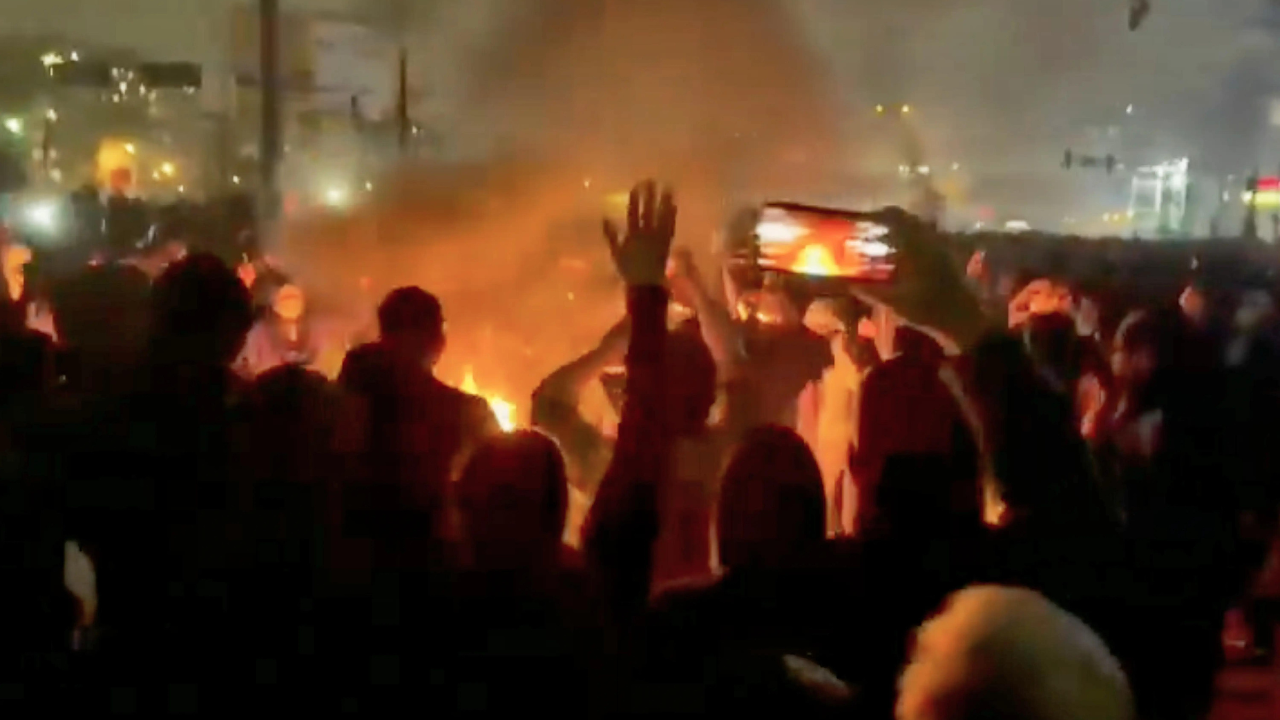
Every time an explosion echoes near Qeshm Island or a radar blip flashes red in the Strait of Hormuz, cable news anchors dust off the exact same breathless script. They pull up a map of the Persian Gulf, draw a big red circle around that 21-nautical-mile chokepoint, and warn you that global oil supply is five minutes away from cardiac arrest.
Al Jazeera’s coverage of strikes hitting Qeshm Island and Hormuz while diplomats scramble to prevent a full-blown US-Iran war follows this predictable formula to the letter. A kinetic strike happens. Mediators fly to Muscat or Doha. Analysts warn of a regional conflagration that will send crude past $150 a barrel and wreck the global economy.
That consensus is lazy, outdated, and flat-out wrong.
If you are watching the Strait of Hormuz waiting for Iran to actually close it—or waiting for Western mediators to "solve" the crisis with a piece of paper—you are looking at the wrong board. Strikes on Qeshm Island and Hormuz are not the opening salvo of a blockade. They are a calculated, calibrated tax on global shipping designed to extract concessions without ever committing economic suicide.
The Myth of the Hormuz Blockade
Let’s dismantle the biggest fairy tale in energy geopolitics first. Conventional wisdom says Iran holds a gun to the world's head because roughly 20% of global petroleum liquids consumption passes through the Strait of Hormuz.
Here is what the mainstream coverage leaves out: Iran is holding that gun to its own temple.
Closing the Strait of Hormuz is not a strategy for Tehran; it is a suicide pact. Iran’s economy survives on two lifelines: exporting its own crude—primarily to independent "teapot" refineries in China—and importing refined goods, food, and industrial inputs through its own Persian Gulf ports like Bandar Abbas, which sits directly across the water from Qeshm Island.
If Tehran drops naval mines into the shipping lanes or sinks a supertanker to physically block the channel, three things happen within seventy-two hours:
- Iran’s own oil revenue drops to zero. You cannot mine a 21-mile channel selectively. If VLCCs (Very Large Crude Carriers) stop moving, Iranian shadow-fleet tankers stop moving too.
- China turns from protector to enforcer. Beijing buys the overwhelming majority of Iranian oil and relies on Gulf crude from Saudi Arabia, Iraq, and the UAE to keep its factories humming. Xi Jinping will not applaud Tehran for detonating the Chinese economy.
- The US Fifth Fleet gains a blank check. Right now, Washington is desperate to avoid a ground or sustained air war in the Middle East. A literal closure of Hormuz removes all political restraint in Washington, giving the Pentagon an immediate mandate to dismantle the Islamic Revolutionary Guard Corps Navy (IRGCN) down to the last fast-attack craft.
I have watched energy traders and corporate risk teams burn millions of dollars hedging against a total Hormuz shutdown every single time missiles fly in the Gulf. They treat a kinetic strike near Qeshm as a binary switch—either the Strait is open, or it is closed.
It is never binary. It is a dimmer switch.
Why Qeshm Island Matters (And Why Everyone Missed It)
To understand why strikes on Qeshm Island and Hormuz happen alongside diplomatic mediation, you have to understand the geography of asymmetric warfare.
Qeshm is the largest island in the Persian Gulf. It sits parallel to the Iranian coast, right at the pinch point of the Strait. It is not just a sleepy free-trade zone; it is an unsinkable aircraft carrier bristling with anti-ship cruise missiles, coastal defense batteries, drone launch pads, and hardened underground facilities operated by the IRGCN.
When Qeshm or nearby Hormuz Island gets hit, the headlines scream escalation. In reality, both sides are operating inside a tightly choreographed escalation ladder that military strategists like Thomas Schelling mapped out during the Cold War—compellence through calibrated pain.
Think of it as a high-stakes auction where neither bidder wants to win the item at the reserve price.
- The Strike: Hits specific military infrastructure, radar installations, or logistics nodes on Qeshm. It sends a message: We can reach your most fortified forward operating bases at will.
- The Response: Harassment of commercial shipping, GPS spoofing, or drone strikes that spike war-risk insurance premiums in London by 300% overnight.
- The Mediation: Diplomats rush in not to achieve "peace," which is a fantasy, but to establish the new price of quiet.
Imagine a scenario where a shipping conglomerate pays $150,000 for standard transit insurance on a single voyage through the Gulf. After a strike on Qeshm, Lloyd’s of London underwriters reclassify the zone, and that same policy jumps to $750,000 per transit. Nobody closed the Strait. Not a single barrel of oil was permanently lost. Yet Tehran just imposed a massive financial penalty on Western consumers, and Washington demonstrated kinetic reach without triggering a ground invasion.
Mainstream news treats mediation and military strikes as opposites—as if diplomats are desperately trying to put out a fire that generals keep lighting. That is completely backwards. In the Persian Gulf, the strikes are the diplomacy. They are how the parties establish leverage before sitting down in Oman or Qatar.
The Pipeline Illusion and Real Energy Resilience
Whenever Hormuz heats up, armchair analysts immediately bring up bypass pipelines. They point to Saudi Arabia’s East-West Pipeline (Petroline) to the Red Sea and the UAE’s Habshan-Fujairah pipeline to the Gulf of Oman as magic bullets that render Hormuz obsolete.
Let’s inject some hard math into that delusion.
According to data from the U.S. Energy Information Administration (EIA), roughly 20 to 21 million barrels per day of oil and petroleum products transit the Strait of Hormuz. Meanwhile, the combined unused spare capacity of the Saudi and Emirati bypass pipelines sits around 2.6 to 3.5 million barrels per day—assuming they aren't simultaneously targeted by Houthi drones from Yemen.
You cannot squeeze 20 million barrels through a 3-million-barrel straw.
So if the pipelines cannot save the market, and Iran won't close the Strait, why hasn't oil exploded past $150 a barrel every time Qeshm Island takes a hit?
Because the global oil market has fundamentally changed since the Tanker War of the 1980s.
1. The Western Hemisphere Buffer
The United States is no longer dependent on Middle Eastern crude. Between Permian Basin shale, Canadian oil sands, Brazilian offshore pre-salt fields, and Guyana’s massive Stabroek block, the Atlantic Basin is awash in non-OPEC supply. When Persian Gulf risk spikes, Atlantic Basin producers simply pump into the rally, capping upside price explosions faster than OPEC+ can manage them.
2. Strategic Reserve Weaponization
Governments no longer treat Strategic Petroleum Reserves (SPR) as dusty relics saved only for World War III. As demonstrated during the 2022 energy shock, Washington and International Energy Agency (IEA) members will dump millions of barrels onto the physical market to crush speculative spikes and protect domestic consumers ahead of elections.
3. Algorithmic Fatigue
Modern commodity markets are dominated by quantitative funds and algorithmic trading desks. Ten years ago, a headline reading "Qeshm Island Struck" triggered blind algorithmic buying that pushed Brent crude up $8 in ten minutes. Today, those algorithms are trained on historical mean-reversion data from dozens of Middle East flare-ups. They know that geopolitical risk premiums in the Gulf have a half-life of about seventy-two hours unless actual production facilities—like Saudi Aramco’s Abqaiq processing plant in 2019—are knocked offline.
Answering the Questions You Should Actually Be Asking
If you are an investor, a supply chain director, or just someone trying to figure out what a flare-up near Hormuz means for your wallet, stop asking "Will this start World War III?" and start asking the questions that actually dictate outcomes.
"Are mediators actually going to fix the US-Iran standoff?"
No. Stop waiting for a grand bargain. Neither Washington nor Tehran possesses the domestic political capital to sign a comprehensive treaty. What mediators in Muscat, Doha, and Baghdad are actually negotiating is deconfliction rules—an unwritten agreement on where the guardrails sit. They are trading prisoner releases, frozen asset waivers, or sanctions enforcement pauses in exchange for temporary pauses in proxy attacks and tanker seizures. Mediation in the Gulf does not cure the disease; it manages the fever.
"Does a strike on Qeshm Island mean gas prices will surge next week?"
Only briefly, and mostly because refiners and wholesalers use geopolitical headlines as cover to widen retail margins. Unless strikes hit export terminals like Kharg Island—where roughly 90% of Iran’s crude exports are loaded—or processing hubs in Saudi Arabia and the UAE, physical supply remains intact. Watch Kharg Island, not Qeshm. Qeshm is a military garrison; Kharg is the jugular.
"Who actually profits when Hormuz tensions spike?"
Not oil majors, who hate volatility because it ruins long-term capital expenditure planning. The real winners are VLCC tanker owners and marine war-risk insurers. When vessels have to slow down, reroute, or wait outside the Gulf of Oman for naval escorts, effective global tanker supply shrinks overnight. Daily charter rates for supertankers can double or triple in a matter of days, printing cash for shipping firms while consumers foot the bill at the pump.
The Flaw in the Contrarian View
Every contrarian thesis has a blind spot, and ignoring it is how smart people go broke.
The danger of assuming both Washington and Tehran are rational actors playing a calibrated game of brinkmanship is miscalculation at the tactical level.
You can have the sharpest strategists in the Pentagon and the smartest planners in Tehran drawing neat red lines on a map, and still end up in a shooting war because a 22-year-old radar operator on a patrol boat panics, misidentifies a commercial transponder, and fires an anti-ship missile into a vessel carrying US personnel.
In July 1988, the USS Vincennes mistook Iran Air Flight 655 for an attacking F-14 Tomcat over the Strait of Hormuz, killing 290 civilians. Nobody ordered a tragedy. Fog of war, compressed decision windows, and extreme stress did the work.
With drones, loitering munitions, and autonomous surface vessels crowding the narrow waters between Qeshm Island and Oman, decision windows have shrunk from minutes to seconds. Calibrated deterrence works brilliantly—right up until an automated defense system or an exhausted junior officer makes a mistake nobody intended.
How to Read the Next Headline
The next time a major news outlet runs a breathless dispatch about strikes near Qeshm Island, emergency UN consultations, and frantic backchannel mediation in the Persian Gulf, ignore the panic and run this three-step filter:
- Check the target type. Was it a military radar site, drone depot, or IRGC garrison on Qeshm? That is signaling. Was it an oil loading terminal on Kharg Island or a desalination plant on the Arab coast? That is economic warfare.
- Watch the freight rates, not the pundits. Ignore talking heads on television. Look at the Baltic Dirty Tanker Index and war-risk insurance premiums for the Persian Gulf. Money never lies about real physical danger.
- Look at China’s silence. As long as Beijing stays quiet and lets Western diplomats run around the Middle East putting out fires, the Strait of Hormuz will stay open. The day China starts publicly lecturing Tehran on maritime security is the day you know the threat is real.
Stop treating every explosion in the Strait of Hormuz like the end of the world. It is not a prelude to the apocalypse; it is just the cost of doing business in the world's most heavily armed tollbooth.