The headlines are bleeding with sensationalism. "Americans flee virus-hit ship." "Cruise liners become floating petri dishes." It is a tired, lazy narrative that serves no one but the click-hungry media cycles. While everyone is busy clutching their pearls over a few hundred passengers returning to U.S. soil, they are ignoring the fundamental mechanics of viral transmission and the reality of modern maritime logistics.
The consensus says we should be terrified of the ship. The logic suggests we should be looking at the screening protocols at the border.
Let’s get one thing straight: ships don't create viruses. People do. Specifically, people moving through high-density transit hubs with inconsistent hygiene standards. Blaming a cruise ship for a viral outbreak is like blaming an umbrella for the rain. It is a vessel, a controlled environment that is actually easier to monitor than any international airport or subway system in America.
The Myth of the Floating Petri Dish
The media loves the "petri dish" trope because it’s easy. It’s a visual that sells. But if you’ve spent a decade auditing maritime health protocols like I have, you know that a modern cruise ship is arguably the most sanitized environment on the planet.
Show me an office building, a school, or a shopping mall that requires every single person to sanitize their hands before entering a dining area. Show me a hotel that can track the movement of its guests with the precision of a keycard-access manifest. You can't. Because they don't exist.
When a virus like Hantavirus—which is typically spread by rodents, not human-to-human contact—makes its way into a travel narrative, the public health "experts" jump on the bandwagon of isolation. They demand quarantines. They demand the grounding of fleets. This is a knee-check reaction that ignores the science of the specific pathogen. Hantavirus Pulmonary Syndrome (HPS) isn't the flu. You aren't catching it because the guy in 4B coughed on you. You're catching it because of environmental exposure to specific vectors.
If a passenger is returning to the U.S. with a suspected infection, the danger isn't the return journey. The danger is the lack of transparency regarding where they were before they boarded.
The Screening Charade at JFK and LAX
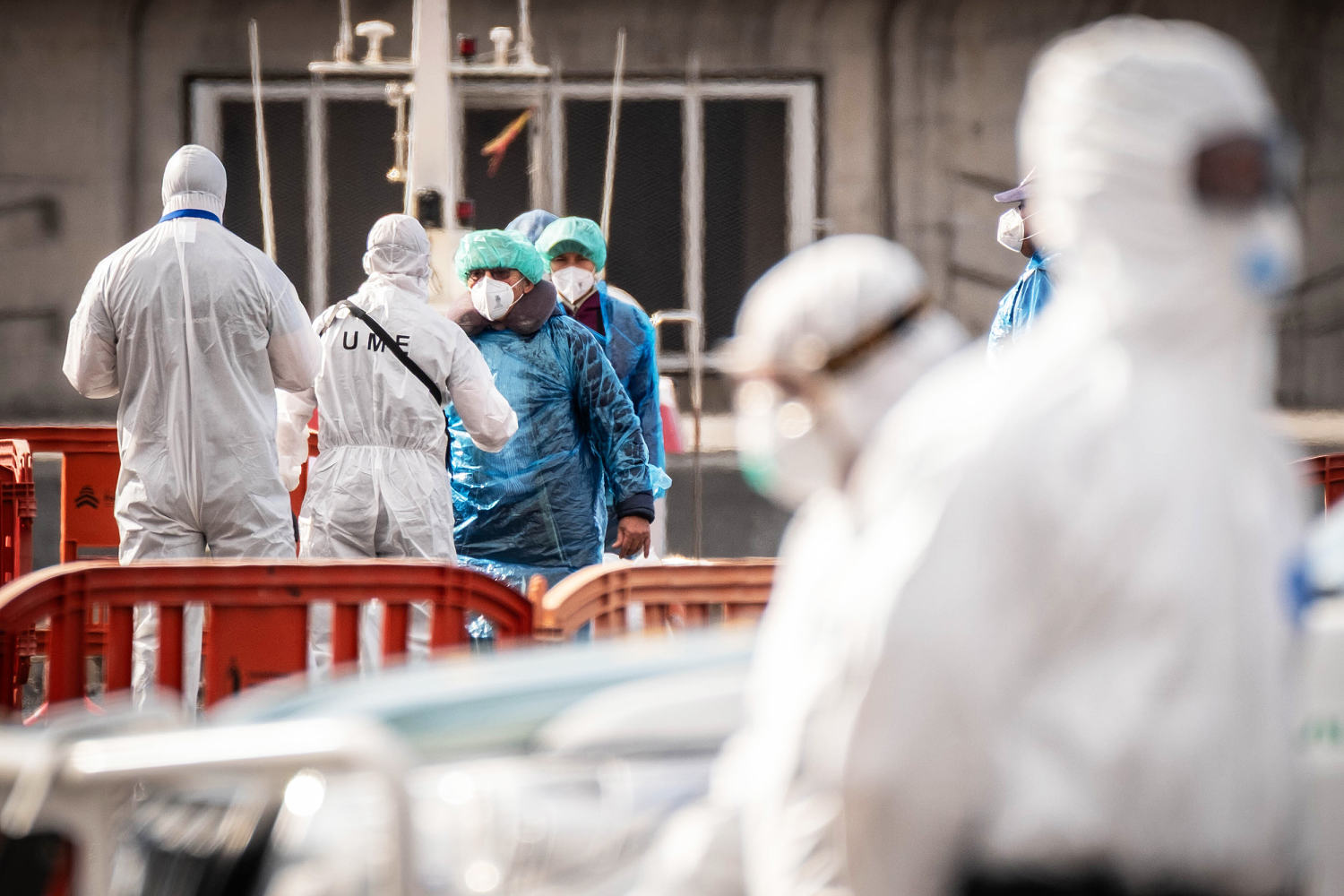
We watch these passengers walk off planes and into the arms of CDC officials as if we're witnessing a scene from a disaster movie. It’s theater.
I’ve stood in the backrooms of these "screening zones." The protocols are often a joke. A thermal camera that misses a low-grade fever because the passenger just drank an iced coffee? That happens every hour. A self-declaration form where a traveler lies about their symptoms because they don't want to be stuck in a government-mandated hotel for fourteen days? That’s the industry standard.
We are focused on the wrong end of the pipe. Instead of obsessing over the "arrival" of these passengers, we should be dismantling the "departure" protocols of the ports they visited.
If a ship stops in a region known for endemic viral activity, the responsibility shouldn't fall on the U.S. Coast Guard once the ship hits the twelve-mile limit. It falls on the cruise line's shoreside operations and the local port authorities. But because those entities are often shielded by international maritime law and sovereign immunity, the U.S. media chooses to attack the easiest target: the returning American traveler.
Why Your Fear is Profitable
Fear sells travel insurance. It sells 24-hour news cycles. It justifies bloated budgets for agencies that often fail to catch the real threats until they’ve already hit the midwest.
Consider the economics of a cruise ship "outbreak."
- The Insurance Kickback: Thousands of passengers suddenly realize they didn't buy the "cancel for any reason" policy. The next day, the insurance companies see a 400% spike in premiums.
- The Media Loop: A minor gastrointestinal or respiratory uptick is branded as a "crisis," ensuring the story stays at the top of the feed for 72 hours.
- The Regulatory Flex: Government agencies get to put on their high-visibility vests and look busy, distracting from the fact that they missed the signal weeks ago.
The Nuance of Pathogen Mechanics
Let's talk about the specific threat. In the case of Hantavirus, we are looking at a pathogen that is notoriously difficult to transmit between humans. In fact, Andes virus is one of the only strains where person-to-person transmission has even been documented, and even then, it’s rare.
The competitor's article wants you to think the "ship" is the threat. The reality? The threat was likely a specific land-based excursion or a storage facility at a port of call. By the time those passengers reached U.S. soil, the incubation period was already doing the work. Quarantine is often a post-hoc solution for a problem that has already moved past the containment phase.
If we were serious about public health, we wouldn't be filming passengers walking through an airport terminal. We would be auditing the grain storage and rodent control of the ports in South America and Southeast Asia where these ships dock. But that’s hard work. It requires international diplomacy and boots-on-the-ground investigation. It’s much easier to just put a "breaking news" banner over a picture of a boat.
The Hard Truth About Risk
You want to be safe? Stop looking for "virus-free" guarantees. They don't exist in a globalized economy.
When you see a report about a "hit ship," don't ask how many people are sick. Ask what the baseline infection rate is for the city they just left. You will often find that the ship is actually safer than the urban center it was docked in.
I’ve seen cruise lines spend millions on UVC light disinfection and HEPA filtration upgrades that make hospital wards look like medieval dungeons. Yet, the public still treats the industry like it’s 1912 and everyone has scurvy.
The real danger isn't the ship. It isn't the virus. It’s the institutional incompetence of believing that a border is a magic filter.
The Protocol Failure Nobody Talks About
The most controversial part of this? The U.S. government often knows these risks weeks in advance but refuses to issue "No Sail" orders because of the economic fallout. They wait until the passengers are already sick, then they act surprised and "heroically" intervene at the border.
It’s a cycle of planned negligence followed by performative rescue.
The travelers returning home aren't a threat to your safety. They are the victims of a system that prioritizes trade routes over rigorous, proactive environmental auditing. If you’re worried about the next outbreak, don't look at the cruise manifest. Look at the shipping containers. Look at the port-side warehouses where the food for those ships is stored.
The Actionable Reality
If you are a traveler, ignore the hysteria. The statistical likelihood of you contracting a rare hemorrhagic fever on a cruise is lower than the likelihood of you being struck by lightning while winning the lottery.
If you are a policy maker, stop the theater at the arrivals gate. It’s too late by then. Shift the resources to the source. Demand that any vessel docking in a U.S. port provides a 30-day environmental audit of every port of call on its itinerary. Not just a "health check" of the passengers, but a biological audit of the ship’s supply chain.
Anything less is just rearranging deck chairs on the Titanic and calling it "biosafety."
The "petri dish" isn't the ship. The petri dish is our global supply chain, and we’re all living in it.
Stop watching the gangplank. Watch the warehouse.