The media wants you to look at the umbrella.
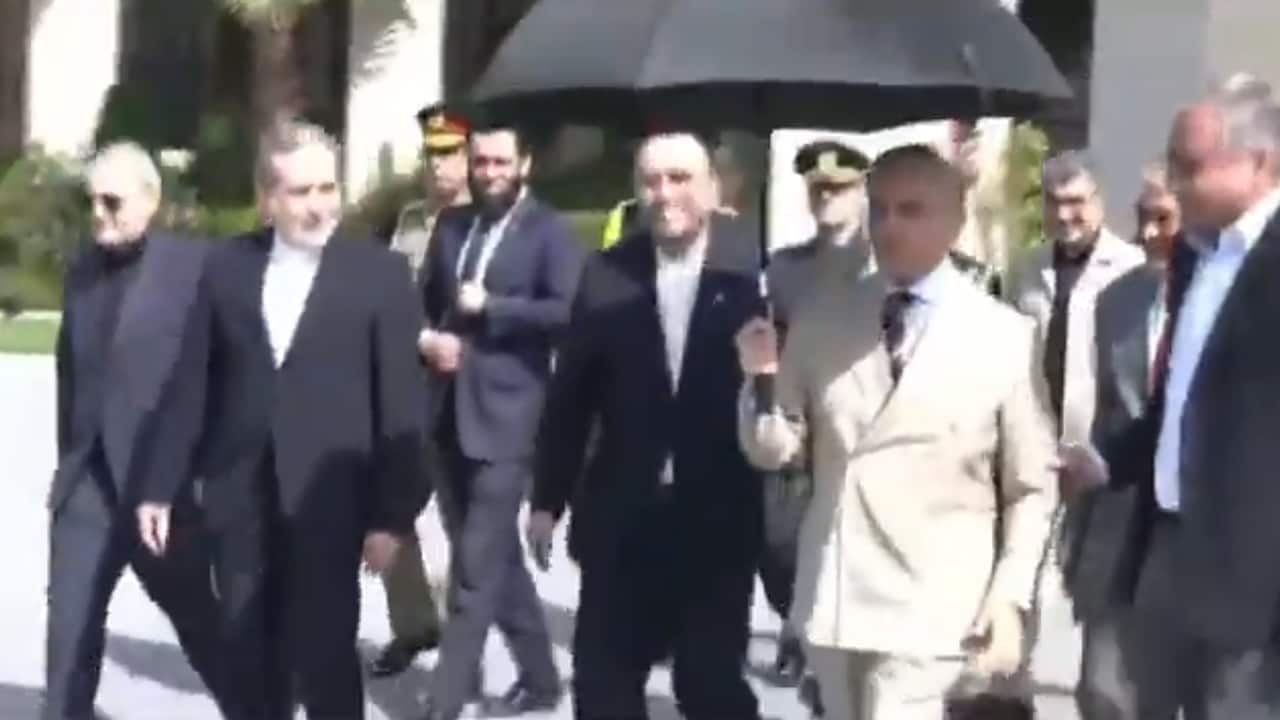
When Pakistani Prime Minister Shehbaz Sharif and President Asif Ali Zardari had an uncomfortable, awkward shuffle over who gets to hold a single canopy while welcoming Iranian President Masoud Pezeshkian, social media went into its predictable tailspin. The internet laughed. The legacy pundits groaned about "national embarrassment" and "overshadowed diplomacy."
They are dead wrong. This obsessive focus on aesthetic protocol is the laziest form of international relations analysis.
I have spent two decades sitting in closed-door state dinners, high-stakes trade negotiations, and bilateral security briefings. I have seen nations sign massive pipeline deals while their leaders actively refused to shake hands, and I have seen heads of state embrace like brothers right before launching economic warfare against each other.
The belief that a clumsy physical interaction destroys diplomatic leverage is a fairy tale for the terminally online.
The Illusion of Perfect Protocol
Mainstream analysts operate under a flawed premise: that foreign policy is dictated by flawless etiquette. They assume that if a leader looks uncoordinated on camera, their bargaining chips suddenly evaporate.
Let us dismantle that delusion. Diplomatic leverage is built on concrete realities, not posture. It is built on deep-water ports, nuclear warheads, geographic positioning, and liquidity.
Iranian President Pezeshkian did not travel to Islamabad to evaluate the umbrella mechanics of his hosts. He arrived because Iran is managing massive regional tensions with the West and needs a stable eastern border. Pakistan did not host him to show off their flawless manners; they hosted him because they are balancing a delicate dance between Tehran’s energy reserves, Beijing’s investments, and Washington’s financial influence.
Imagine a scenario where a CEO walks into a multi-billion-dollar acquisition meeting, trips over a rug, spills coffee on the table, and yet holds the patents to the target company's entire supply chain. Does the seller get a discount because the CEO looked silly? No. The leverage remains untouched.
Why Bumbling Can Be A Strategic Asset
The media treats Sharif's history of viral gaffes—from snatching umbrellas from French ushers in Paris to talking into non-functioning microphones in Switzerland—as unmitigated disasters.
In reality, an unpolished, slightly chaotic public appearance can act as a highly effective smoke screen. While the internet spends 48 hours making memes about who got left in the sun or who got wet in the rain, the actual working groups are locked in backrooms hammered out the real, highly controversial details.
Consider what was actually happening during that visit:
- High-level discussions on regional stability amidst Middle Eastern conflict.
- The delicate navigation of the Iran-Pakistan gas pipeline under threat of international sanctions.
- Bilateral border management strategies to curb cross-border militancy.
The bickering over the umbrella absorbs all the public outrage, media space, and opposition talking points. It provides a low-stakes lightning rod. It lets the media feel smug while the state machinery operates without intense public scrutiny on the decisions that actually matter.
The Flawed Premise of Social Media Backlash
Look at the standard "People Also Ask" entries regarding these viral moments. They always skew toward triviality: Did the umbrella moment damage relations? Is Pakistan isolated because of bad protocol?
The answer is a brutal no. Nations do not shift their multi-decade strategic doctrines because of a five-second clip on Twitter.
The downside of this contrarian view is obvious: it requires ignoring the emotional gratification of mocking politicians. It requires admitting that world events are driven by cold, structural calculations rather than satisfying narratives of competence or incompetence. It is boring to read a 40-page trade agreement; it is easy to laugh at an awkward shuffle.
But if you want to understand where the world is actually going, you have to stop looking at the distraction. The media focuses on the umbrella because they do not understand the pipeline underneath the ground.
The actual footage of the incident highlights the exact disconnect between viral media interpretation and real-world interactions. Watch the Hindustan Times analysis of the viral exchange, which breaks down how a moment of physical awkwardness between two domestic political rivals immediately became a global talking point, completely divorcing the public from the actual geopolitical weight of the tri-nation summit taking place behind closed doors. Stop letting the broadcast feed dictate your understanding of global power dynamics; look past the fabric canopy.