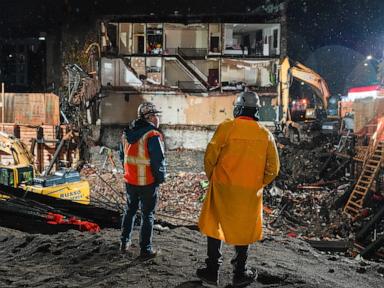
Every time bricks hit the pavement in New York City, the media runs the exact same playbook. A wall buckles in Brooklyn, dust chokes the block, and within four hours, every local outlet publishes a breathless rundown titled "What we know about the victims." They list ages, hometowns, and heartbreaking quotes from shell-shocked neighbors. They treat a structural failure like a random weather event—a tragic bolt of lightning that struck an unlucky few.
That framing is a lie. And worse, it is a distraction that keeps the next collapse on schedule.
I have spent years dissecting post-incident forensic reports, structural engineering audits, and municipal inspection logs across the five boroughs. When you look past the tear-jerking profiles and pull the Department of Buildings (DOB) jacket on a failed structure, a completely different story emerges. The real victims of a Brooklyn building collapse aren't just the people pulled from the rubble; they are every tenant and passerby currently walking past thousands of uninspected, illegally altered, and deferred-maintenance time bombs across New York.
By reducing a systemic failure of urban governance and real estate negligence to a human-interest tally, conventional news coverage lets the actual perpetrators walk away in the confusion.
The Lazy Consensus of Disaster Journalism
Standard breaking news coverage relies on a comfortable formula. First, establish the human toll. Second, quote a city official promising a "thorough investigation." Third, mention whether the building had open violations, usually buried in paragraph twelve without context.
This approach fails the reader because it treats violations as trivia rather than causation. In New York City, a building doesn't suddenly decide to fall down on a Tuesday afternoon. Masonry structures—especially the pre-war brick row houses, tenements, and aging commercial walk-ups that define Brooklyn—are remarkably forgiving. They telegraph their distress for years. Mortar turns to sand. Lintels rust and expand, jacking up the brickwork above them. Foundations settle unevenly when adjacent lots are excavated without proper underpinning.
When a competitor article focuses exclusively on biographical sketches of the injured or deceased, it satisfies morbid curiosity while starving the public of accountability. You learn what the victims did for a living, yet you learn nothing about the LLC shell company that bought the building three years ago, stripped the maintenance budget, and slapped cosmetic drywall over a bowing load-bearing wall.
You Are Asking the Wrong Question
If you searched for details on the victims of a Brooklyn collapse, you are likely asking the standard questions that dominate search engines after every structural failure: Who was hurt? Was the building up to code? Could this have been prevented?
Let’s dismantle the premise of the second and third questions right now.
"Was the building up to code?"
In New York City, "up to code" is a meaningless phrase for existing structures. Tens of thousands of Brooklyn buildings operate under legacy status, governed by the codes in effect when they were built in 1910 or 1925, not the 2022 NYC Construction Codes. A building can be legally compliant on paper while actively rotting from the inside out. Furthermore, a lack of DOB violations does not mean a building is safe; it usually means nobody called 311 to complain about it. The DOB is primarily a complaint-driven agency for low-rise buildings. No complaint, no inspection.
"Could this have been prevented?"
Asking if a collapse could have been prevented implies it was a freak accident that required heroic foresight to stop. It didn't. Prevention in structural engineering isn't rocket science; it is basic arithmetic and routine upkeep. Collapses happen because someone made a calculated financial decision to defer a $40,000 facade repair or hire an unlicensed contractor to knock out a basement wall to squeeze in an illegal apartment.
The Anatomy of a Brooklyn Collapse
To understand why these buildings fail, you have to understand the specific physics and economics of Brooklyn real estate. Unlike Manhattan’s steel-framed high-rises—which fall under Local Law 11 (the Facade Inspection & Safety Program) requiring mandatory engineering inspections every five years for buildings over six stories—most of Brooklyn’s building stock flies completely under the regulatory radar.
Walk down any commercial corridor in Crown Heights, Flatbush, Bed-Stuy, or Sunset Park. You are looking at three- and four-story unreinforced masonry (URM) buildings. Because they are under six stories, they are exempt from mandatory periodic facade inspections.
Here is how they actually fail:
- The Neighboring Excavation Trap: Brooklyn has been in a decade-long infill boom. Developers buy a vacant lot or tear down a one-story garage next to a 100-year-old brick building. To maximize square footage, they dig deep for a cellar. If they fail to properly underpin the neighbor's shallow rubble-stone foundation, the soil shifts, the old wall loses its footing, and gravity does the rest.
- The Cosmetic Flip: An investor buys a distressed walk-up. Instead of repointing deteriorating lime mortar or replacing corroded steel I-beams, they cover the exterior with stucco or synthetic cladding (EIFS) and slap white paint over everything inside. Moisture gets trapped behind the new facade, accelerating freeze-thaw damage until the brick wythes delaminate and peel off the building like wet wallpaper.
- Unpermitted Structural Surgery: Ground-floor retail spaces frequently undergo rapid turnovers. A new commercial tenant wants an open floor plan, so a contractor removes a brick pier or cuts a chase into a bearing wall for HVAC ductwork without filing alteration plans with the DOB or hiring a licensed Professional Engineer (PE).
Imagine a scenario where a landlord owns a four-story corner building in Bushwick. Water has been leaking through the parapet wall for six winters, saturating the brick. An engineer warns that the front facade is bulging outward by two inches—a classic sign of tie-back failure. Repairing it properly requires scaffolding, permits, and $85,000. Instead, the landlord pays a handyman $3,000 to patch the cracks with hard Portland cement—which actually traps more water and crushes soft historic brick—and lists the property for sale. Two years later, a heavy rainstorm adds thousands of pounds of water weight to the compromised masonry, and the wall shears off onto the sidewalk.
When the news reports that event, they will call it a tragedy. Engineers call it inevitable.
Why "More Regulation" Is a Trap
Whenever dust settles on a Brooklyn street, politicians immediately demand tougher laws and stiffer fines. This sounds decisive on the evening news, and it fails completely in practice.
New York City already possesses some of the densest, strictest construction regulations in the Western world. Adding another layer of permitting rules does nothing to stop bad actors who already ignore the existing rules. Worse, hyper-complex bureaucracy actively penalizes the honest building owners who actually want to fix their properties.
When getting a simple structural repair permit takes six months of DOB plan examination, environmental asbestos testing, and extortionate sidewalk shed rentals, small property owners delay maintenance. A sidewalk shed alone can cost thousands of dollars a month in rental fees, turning a modest masonry repair into a six-figure financial crisis. By making legal compliance prohibitively expensive and slow, the city inadvertently incentivizes owners to look the other way until bricks start falling.
I have seen conscientious building owners spend more money on expediting fees, architectural drawings, and sidewalk shed extensions than on the actual steel and mortar needed to stabilize their property. That is a broken system.
The Heavy Hitters Know the Score
You don't have to take my word for it. Look at the forensic work done by organizations like the American Society of Civil Engineers (ASCE) and the findings published by the National Institute of Standards and Technology (NIST) following major structural failures, from Surfside to Manhattan crane and facade collapses.
The consensus among forensic structural engineers is blunt: catastrophic failures are almost always preceded by ignored warnings.
In New York, the Department of Buildings' own data repeatedly shows that buildings involved in major structural incidents frequently have a trail of Class 1 (Immediately Hazardous) violations, Stop Work Orders that were blatantly ignored, or complaints closed out without physical access to the interior. The data sits in public databases—BIS (Building Information System) and DOB NOW—completely accessible to anyone with an internet connection, yet largely ignored until an ambulance arrives.
The Downside of Aggressive Enforcement
Let’s be intellectually honest about the trade-offs here. If New York City suddenly decided to deploy an army of structural engineers to inspect every three- and four-story masonry building in Brooklyn and immediately vacate any structure showing signs of structural distress, the result would be an overnight housing crisis.
Thousands of working-class tenants would be forced onto the street via emergency vacate orders. Small mom-and-pop landlords—who lack the liquid capital of private equity real estate firms—would face immediate foreclosure because they cannot finance sudden $150,000 structural overhauls. The city would end up warehousing displaced families in hotels while blocks of Brooklyn sat behind chain-link fences for years.
This is the dirty secret municipal officials never say out loud: total enforcement is politically and economically impossible. The city relies on a fragile equilibrium where aging buildings remain occupied while officials hope nothing catastrophic happens on their watch.
How to Actually Protect Yourself in Brooklyn
If you live, work, or invest in Brooklyn, waiting for the city or the local news to protect you is a losing strategy. You have to audit your own physical environment. Stop reading victim profiles and start reading building data.
1. Pull the DOB Jacket Before You Sign a Lease
Never rent an apartment or commercial space in an older Brooklyn building without running the address through the NYC DOB Building Information System (BIS) and DOB NOW. Look for:
- Open Class 1 violations involving structural stability, bulging walls, or defective facades.
- Stop Work Orders (SWO)—especially if construction noise is still happening behind closed doors.
- OATH/ECB violations that remain unpaid or unresolved for years. Unpaid fines signal an owner who is either broke or brazenly negligent.
2. Learn to Spot Structural Distress on the Street
You don't need an engineering degree to spot a building in trouble. When walking past a masonry structure or inspecting a property, look up and scan for four specific red flags:
- Step-cracking: Stair-stepped cracks following the mortar joints near windows or corners. This indicates foundation settlement.
- Bulging or bowing: Look down the length of a brick wall from the corner. If the brick belly-flops outward, the metal ties holding the outer brick to the interior framing have rusted away.
- Spalling brick: Bricks whose outer faces are flaking, crumbling, or turning to powder. This means water is penetrating the wall and freezing.
- Fresh, mismatched mortar patches: Random smears of bright gray cement slapped over old, weathered red brick. That is the calling card of a cheap cover-up, not a structural restoration.
3. Watch the Lot Next Door
Your building might be solid as a rock, yet still be in mortal danger if the developer next door starts digging. If excavation begins on an adjacent property, demand to see the Support of Excavation (SOE) plans and verify that optical monitoring targets have been installed on your building's facade to track movement. If new cracks suddenly appear in your apartment's drywall or doors stop latching properly during next-door construction, call 311 immediately and document everything with timestamped photos.
4. Respect the Sidewalk Shed—For the Wrong Reason
New Yorkers love to complain about the miles of green plywood and steel scaffolding cluttering the sidewalks. Here is a reality check: a sidewalk shed is rarely erected because an owner loves paying monthly rental fees. It goes up because an architect or engineer found an unsafe exterior condition that could drop masonry onto pedestrians. When you walk under a shed, you are walking through an active hazard zone. Do not loiter under them, and pay attention to whether actual repair work is happening above your head or if the owner is simply using the shed as a permanent band-aid to avoid fixing the facade.
Stop Consuming Tragedy Porn
The next time a wall comes down in Brooklyn, skip the articles cataloging the personal hobbies of the victims. Those stories generate clicks, trigger momentary sympathy, and leave the underlying machinery of negligence completely untouched.
Look up the address instead. Pull the property deed on ACRIS. Check the corporate shell company hiding behind the ownership LLC. Read the open DOB violations. Look at the adjacent construction permits.
Buildings do not fall down by accident, and people do not become victims by chance. Until New Yorkers start demanding forensic accountability before the dust settles, the only question left is which block is next.