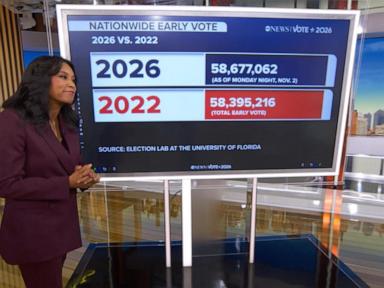
Cable news loves a magic wall. Every two years, pundits tap glowing maps, stringing together three-state parlays like degenerate gamblers trying to hit a six-leg accumulator at the sportsbook. They call it analyzing "paths to victory." In reality, it is political astrology dressed up in touchscreen graphics.
The competitor’s take on the state of the race falls straight into this trap. It treats swing states like independent dominoes waiting to be tipped over by a charismatic speech, a clever ad buy, or a sudden shift in suburban sentiment. That framing is lazy, outdated, and fundamentally misunderstands how modern elections are actually won or lost.
When you strip away the pundit theater, races do not turn on intricate geographic combinations. They turn on differential turnout, demographic elasticity, and the brute-force mechanics of who actually shows up when the rain starts falling on Election Day.
The Illusion of the Independent Swing State
Look at how mainstream coverage breaks down electoral math. Analysts point to one state in the Rust Belt, pair it with a state in the Sun Belt, and declare a candidate "one state away" from locking up the map. That logic assumes each state operates inside a vacuum. It does not.
American politics has undergone deep nationalization over the past two decades. Political scientists like Daniel Hopkins have documented this extensively: local and state-level voting behavior now mirrors national partisan preferences more closely than at any point in modern history. Voters in Pennsylvania, Michigan, and Wisconsin are not evaluating candidates through distinct regional lenses. They are reacting to the exact same national information environment, the same economic anxieties, and the same cultural fault lines.
When a candidate moves two points nationally among non-college-educated voters or college-educated suburbanites, that wave washes across the entire map simultaneously. A candidate does not randomly win Michigan while getting blown out in Wisconsin unless there is a massive, localized structural failure in ground operations. Treating states as modular puzzle pieces gives campaigns and viewers the false impression that you can lose the national argument and still outsmart the map. You cannot.
I have sat in war rooms where consultants burned tens of millions of dollars chasing hyper-localized "micro-paths" while ignoring a bleeding national brand. They sliced cross-tabs into microscopic slivers, convinced they could cobble together 270 electoral votes or a congressional majority through sheer geographic arbitrage. Every single time, the national tide swallowed their cleverness whole.
Persuasion Is Mostly a Myth
The second fatal flaw in the "paths to victory" obsession is the belief that elections are won by persuading a massive pool of undecided moderates sitting politely in the political center.
True swing voters—people who genuinely cross party lines from one cycle to the next—represent a tiny, shrinking fraction of the electorate. According to research from the Pew Research Center and the American National Election Studies, roughly 90 percent or more of partisans vote for their own party's nominee reliably. Even among self-identified "independents," the vast majority are what political scientists call "partisan leaners." They vote just as loyally as registered partisans; they simply dislike wearing the party label.
So why do margins swing by three, four, or five points between cycles? Not because millions of voters had a sudden ideological awakening after watching a televised debate. Margins swing because of differential turnout and low-propensity drop-off.
Imagine a scenario where two campaigns enter the final sixty days tied at 48 percent among likely voters. Campaign A spends its remaining budget running biographical television ads aimed at winning over the mythical undecided moderate in swing counties. Campaign B ignores those ads entirely and dumps every dollar into ballot-chasing, early-vote logistics, and peer-to-peer mobilization targeting registered supporters who skipped the last election.
Campaign B wins by four points. Not because it changed a single mind, but because it changed the denominator of the electorate.
Why Early Polling Lies to Your Face
If you want to understand the true state of the race, stop looking at top-line horserace polls and start interrogating likely voter screens.
Early and mid-cycle polls face an impossible problem: nobody knows who will actually vote until ballots are cast. Pollsters rely on historical modeling, self-reported voting intent, and demographic weighting to guess the composition of the future electorate. When an electorate shifts—for instance, when low-propensity working-class voters surge in one cycle and stay home in the next—those models break.
This is why "state of the race" roundups constantly misread momentum. A poll showing a candidate up three points in a key battleground tells you nothing unless you know the partisan recall weight, the educational breakdown, and how the pollster defines a "likely voter." If a poll assumes a 2020 turnout composition in a midterm or lower-turnout environment, the numbers are fiction.
Here is what actually matters when reading the board:
- Party Registration Trends: Look at net new registrations over the preceding twelve months. Registration is a leading indicator of enthusiasm and organizational muscle.
- Early and Mail Ballot Return Rates: Track the partisan split of returned ballots against historical baselines, paying close attention to ballot drop-off among sporadic voters.
- County-Level Margin Shifts: Forget state-level averages. Watch bellwether counties—exurban growth hubs, rural manufacturing counties, and diverse inner-ring suburbs—to see whether base voters are maxing out their ceilings.
What Everyone Gets Wrong About Battleground Strategy
When viewers search for the state of the race or ask which states decide an election, they are usually looking for a shortlist of five or six battlegrounds to watch on election night. That question itself misses how modern campaigns allocate resources.
Campaigns do not fight for states. They fight for media markets and congressional districts within states.
Winning a state like Pennsylvania or Georgia comes down to winning specific, brutally contested turf wars inside broader territories. In Pennsylvania, the entire contest boils down to a mathematical tug-of-war between turnout margins in Philadelphia and its collar counties (Bucks, Chester, Delaware, Montgomery) versus raw vote volume across the rural central "T" and southwestern former steel towns. In Georgia, it is the pace of demographic expansion and turnout across the Atlanta metro ring versus rural south Georgia ceilings.
The High Cost of Chasing the Wrong Map
Admitting the reality of turnout-driven elections comes with an uncomfortable truth that even savvy operatives hate acknowledging: mobilization has a hard ceiling, and it is terrifyingly expensive.
You can spend $50 million knocking on doors in low-propensity neighborhoods and still lose if macroeconomic conditions—inflation, interest rates, unemployment—turn the electorate against the incumbent party. Ground games do not create waves; they ride them or slightly blunt their impact. A world-class field operation is worth roughly one to two points at the margins. In a razor-thin race, one to two points is everything. In a four-point national wave, a great field game just helps you lose more slowly.
Furthermore, over-relying on base mobilization carries long-term structural risk. When campaigns abandon persuasion entirely to juice base turnout, they often adopt extreme messaging that alienates marginal voters in neighboring districts, poisoning down-ballot races and making governance nearly impossible once the votes are counted.
How to Actually Read the State of the Race
If you want to outsmart the pundits and see the outcome coming before the networks make their calls, throw away the map-builder tools and apply three ruthless filters to every piece of campaign news you consume.
- Follow the Ad Reservations, Not the Speeches: Candidates say they are expanding the map to project strength and force opponents to spend defensively. Look at where campaigns are actually booking non-refundable broadcast television and digital ad space for the final three weeks. Money does not lie. If a campaign cancels reservations in a supposed "reach" state, that path is dead, regardless of what the press secretary claims on Sunday morning.
- Track the Enthusiasm Gap in Fundraising: Small-dollar online fundraising velocity is a real-time pulse check on grassroots intensity. When a campaign's average donation size drops while total unique donors spike, its base is energized and ready to crawl over broken glass to vote. When a campaign relies almost entirely on high-dollar checks and super PAC transfers to stay afloat, its grassroots engine is stalling.
- Watch the Suburban-Rural Offset: Every modern American election is a race between two competing engines: urban/suburban college-educated turnout versus rural/exurban non-college turnout. On election night, do not look at statewide vote totals while early precincts report. Compare the raw vote margins in fast-growing suburban counties against prior cycles. If the suburban margin shifts by three points while rural turnout holds steady, the entire regional map is about to flip.
The pundits will keep drawing arrows on touchscreens because uncertainty sells commercial breaks. Ignore the arrows. Watch the turnout denominator, follow the non-refundable ad buys, and let the math tell you who is winning before a single state is called.