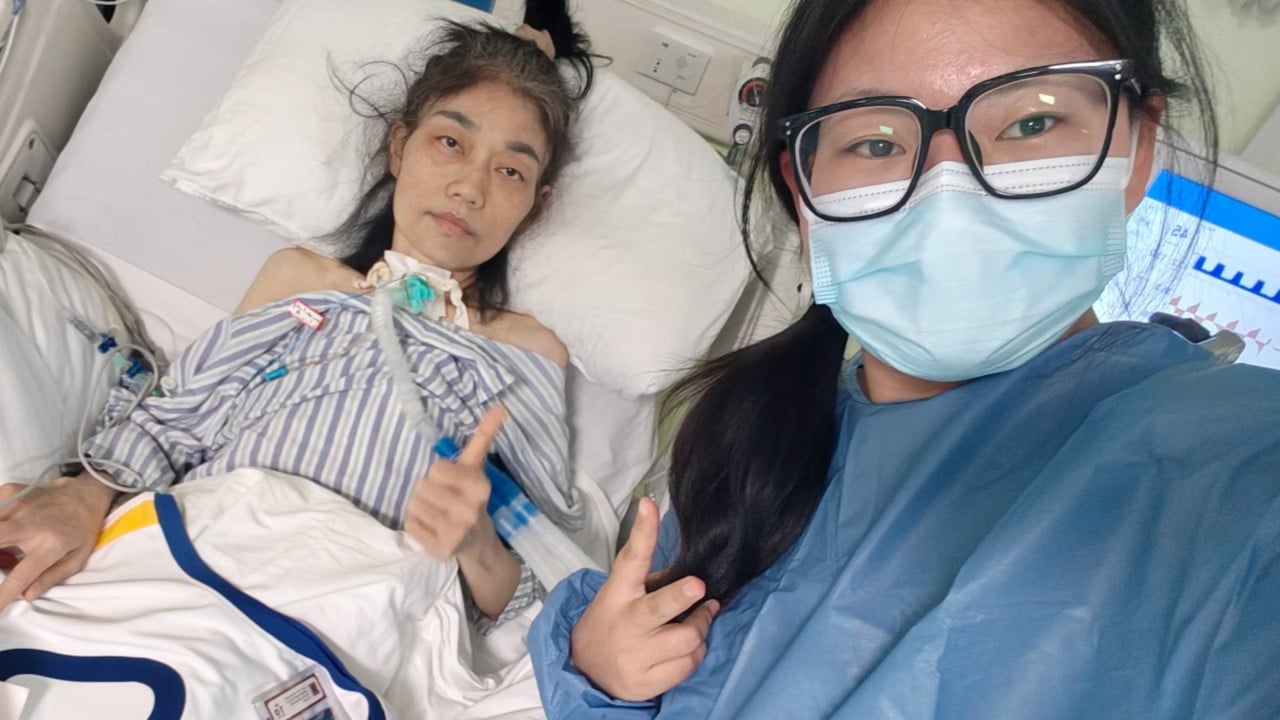
Millions of people cried over a viral story out of China this week. A bright university student dropped out of school, liquidated his future, and moved back home to become a full-time, unpaid nurse for his terminally ill mother. Social media erupted with praise. Commenters called him a modern saint, a paragon of filial piety, and the ultimate example of unconditional love.
They are celebrating a tragedy and calling it virtue.
When a young adult sacrifices their education and economic mobility to perform unskilled medical labor, society has not witnessed a triumph of the human spirit. Society has witnessed a catastrophic failure of public healthcare infrastructure, wrapped in a heartwarming bow so the public will applaud instead of demanding systemic reform.
The Seductive Lie of Performative Martyrdom
Media outlets love these stories because grief sells. It is far easier to write a tear-jerker about a loyal son spoon-feeding soup to his dying mother than it is to investigate why a middle-class or working-class family in the world's second-largest economy cannot afford basic palliative care or a home health aide.
This is the Orphan-Crushing Machine effect in full bloom. Whenever a structural failure forces an individual into an impossible choice, media coverage isolates the individual's heroism while ignoring the machinery creating the crisis. By framing a young man's academic suicide as an inspiring moral benchmark, viral journalism converts a policy failure into a personal virtue test.
If you applaud him, you implicitly accept the premise that children should destroy their own futures when their parents get sick. You normalize the absence of a safety net.
The Brutal Economics of Unskilled Caregiving
Let us strip away the sentimentality and look at the cold mathematics of this decision.
In modern economies—especially hyper-competitive labor markets like China's—dropping out of university does not merely pause a career. It permanently alters an individual's lifetime earnings trajectory. Economists refer to this as human capital depreciation combined with signaling loss. When a student leaves a degree program early, they forfeit the credential that unlocks mid-to-high-tier employment, pushing them into precarious, low-wage service work for decades.
Now look at the other side of the ledger. What does a 20-year-old with zero medical training actually provide as a full-time caregiver?
- Basic hygiene assistance
- Meal preparation
- Medication reminders
- Emotional companionship
These tasks are vital, yet in any functioning market, they represent entry-level care work. Meanwhile, complex medical interventions—managing bedsores, adjusting pain regimens, monitoring vitals, handling acute emergencies—are things an untrained college dropout cannot safely execute.
By leaving school, this young man traded a high-ceiling future for the output of an under-resourced nursing assistant. That is not an efficient allocation of love. It is an economic hemorrhage that leaves two people vulnerable instead of one. When his mother eventually passes, the son will be left without a degree, without savings, and with a multi-year gap on his resume in an economy already grappling with youth unemployment.
Filial Piety Was Never Meant to Be a Suicide Pact
Critics of this perspective immediately reach for cultural relativism. They argue that in East Asian societies, xiao (filial piety) demands total self-sacrifice for one's parents, and viewing this through a cold economic lens misses the moral point.
That argument misunderstands both Confucius and basic family survival strategy.
Classical Confucian thought never advocated for the destruction of the younger generation to briefly prolong the comfort of the older generation. In traditional agrarian and mercantile societies, the primary duty of a son was to secure the family's long-term prosperity, reputation, and lineage. You honored your parents by succeeding, building wealth, and ensuring the survival of the household—not by burning down your own earning potential to provide manual labor that could be hired out if you actually had a career.
I have watched dozens of families across Asia and the West fall into this exact trap during eldercare crises. One sibling—usually the youngest or the one with the lowest current salary—volunteers to quit their job or drop out of school to become the full-time caregiver. Five years later, the parent passes away. The caregiver sibling is now middle-aged, unemployable, financially ruined, and deeply resentful of the siblings who kept their careers intact. The family didn't save money; they simply deferred the financial devastation onto the back of their most vulnerable member.
What People Really Mean When They Ask About Family Sacrifice
When stories like this trend, search engines flood with variations of the same anxious question: Would you quit your job or school to care for a sick parent?
Asking that question in a vacuum is a trap. It forces a false binary between "abandoning your mother" and "ruining your life."
If you are facing a parent's severe illness, asking whether you should drop everything is the wrong question. The right question is: How do I mobilize external resources so I can remain my parent's child instead of becoming their exhausted, unqualified nurse?
| The Viral Fantasy | The Operational Reality |
|---|---|
| One heroic family member does everything out of pure love. | Caregiver burnout hits within 6 months, leading to clinical depression and medical mistakes. |
| Quitting school/work proves true devotion. | Loss of income strips the family of the exact cash needed for better drugs and equipment. |
| Society rewards the sacrifice with respect. | Viral sympathy evaporates in 48 hours; employers still reject resumes with 3-year gaps. |
| The parent feels deeply loved and cared for. | Most terminally ill parents experience agonizing guilt watching their child's future burn. |
Think about that final point. Ask any rational parent facing a terminal diagnosis what they want most in their final months. Almost universally, their greatest source of psychological distress is not physical pain—it is the fear of becoming a burden that destroys their children's lives. Watching a son throw away his university degree does not bring a loving mother peace. It compounds her suffering with unbearable guilt.
The Structural Rot Behind the Heartwarming Headline
To understand why millions of netizens wept over this story, you have to understand the quiet terror gripping China's middle and working classes.
China's demographic crisis is no longer a distant forecast; it is a mathematical certainty colliding with reality right now. Decades of the One-Child Policy produced the 4-2-1 family structure: one young adult responsible for two aging parents and four grandparents.
While China has expanded basic health insurance coverage massively over the past twenty years, out-of-pocket expenses for catastrophic illnesses remain brutal. Furthermore, the country faces a severe shortage of trained geriatric nurses, hospice facilities, and institutionalized long-term care. Professional home nursing in Tier 1 and Tier 2 cities can easily consume an entire household's monthly income.
When the state fails to build adequate long-term care insurance and hospice infrastructure, it outsources eldercare back to the nuclear family. And when the nuclear family consists of a single child, that child becomes the shock absorber for the entire healthcare deficit.
Viral stories praising filial drop-outs serve a convenient political and social function. They shift the burden of responsibility away from hospitals, insurance pools, and municipal budgets, placing it squarely on the shoulders of 20-year-olds. If the public believes that good children quit school to do unpaid nursing, nobody asks why the local hospital doesn't have an affordable palliative ward.
How to Actually Handle a Catastrophic Family Illness
Compassion without strategy is just shared misery. If you find yourself staring down a parent's severe illness while you are still in school or early in your career, reject the romanticism of total self-destruction. Execute a cold, disciplined containment plan instead.
1. Protect Your Credential at All Costs
Never permanently withdraw from a degree program unless every administrative leave mechanism has been exhausted. Universities across the globe—including in China—offer formal academic suspension or medical leave statuses that freeze your enrollment for one to two years without forcing you to reapply or forfeit completed credits. If a student drops out entirely, it is almost always because they lacked administrative guidance or panicked under acute emotional stress. Freeze the timeline; never burn the bridge.
2. Separate Care Coordination from Physical Labor
Your highest value to a sick parent is your brain, your literacy, and your ability to navigate bureaucracy—not your physical back.
- Spend your energy fighting insurance companies for reimbursements.
- Research clinical trials, generic drug alternatives, and charitable medical funds.
- Hire part-time physical care aides for the heavy lifting, bathing, and overnight shifts, even if it requires taking on modest debt or crowdfunding.
Debt can be repaid once you graduate and earn a professional salary. A lost degree and five years of prime career compounding cannot be bought back at any price.
3. Build a Rotating Roster, Not a Solo Martyr
Even in single-child households, isolation is a choice. Extended family, family friends, community volunteers, and church or neighborhood networks often want to help, yet they do nothing because nobody gives them a concrete assignment. Do not ask people to "let me know if you can help." Hand them a calendar and assign specific four-hour blocks for grocery runs, hospital sitting, or laundry.
4. Acknowledge the Downside of the Rational Path
Choosing to stay in school or keep your job while outsourcing physical care carries a heavy emotional tax. You will face judgment from sanctimonious relatives who measure love by visible suffering. You will battle internalized guilt every time you sit in a lecture hall while your parent sits in a clinic. You will miss quiet moments that you can never reclaim.
That pain is real. Accepting it requires emotional maturity that viral social media culture actively discourages. It is far easier to collapse into full-time caregiving and bask in the moral approval of strangers than it is to endure the guilt of maintaining your own life while managing a crisis from a distance.
Stop Applauding the Wreckage
The next time a story crosses your feed about a teenager sleeping on a hospital floor for two years, or a promising student abandoning their education to become an unpaid home nurse, resist the urge to hit the heart button.
Look past the tears. Look at the missing social workers, the absent hospice beds, the predatory out-of-pocket medical bills, and the ruined trajectory of a young life that barely got started.
Love should build a future for the next generation, not consume it for fuel. Until we stop rewarding self-destruction as the highest form of devotion, we will keep manufacturing martyrs out of kids who deserved a chance to grow up.