Every business journalist on the internet just took the bait.
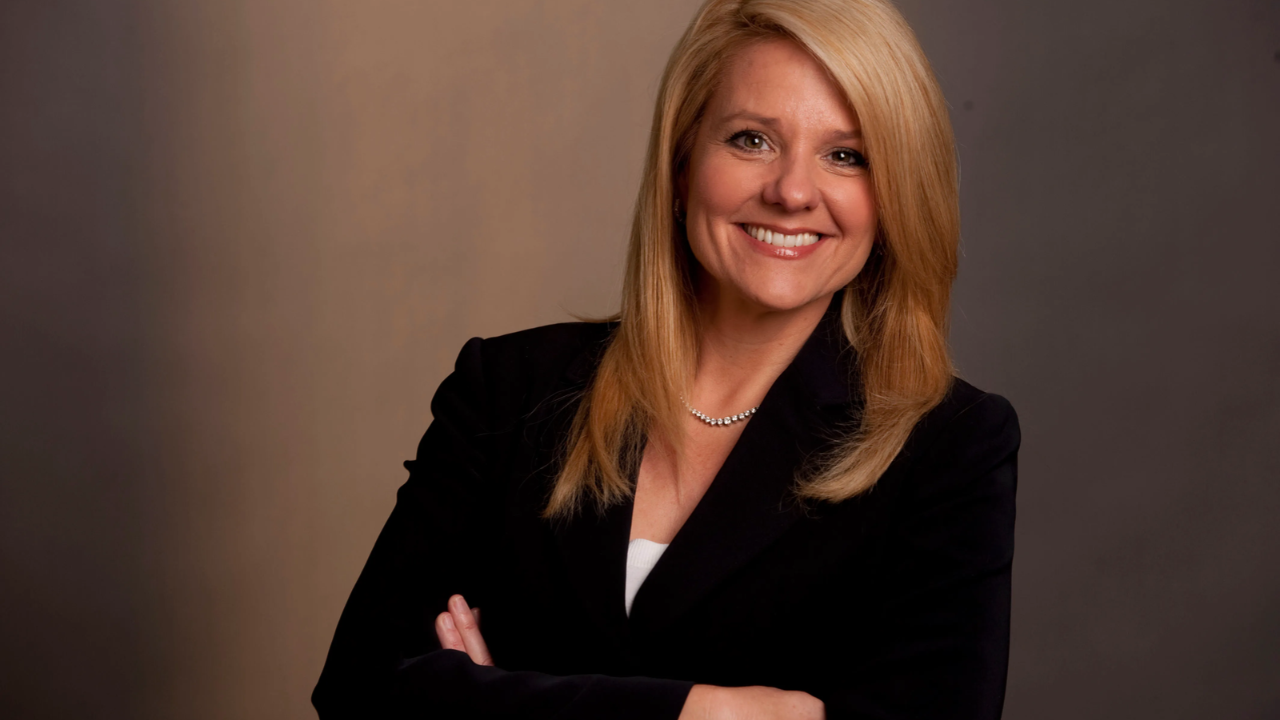
A headline drops claiming SpaceX President Gwynne Shotwell is distributing two million shares of the world’s most valuable private aerospace company to American children. Immediately, the predictable applause begins. Pundits frame it as an unprecedented act of corporate altruism. Financial influencers tell parents to brace for a generational wealth transfer. Tech blogs treat it like a golden ticket straight out of Willy Wonka’s factory. If you enjoyed this piece, you might want to read: this related article.
They are all missing the actual story.
When an executive of Shotwell’s caliber moves two million shares, it is never just a feel-good charity stunt. Gwynne Shotwell is arguably the most ruthlessly competent chief operating officer in modern industrial history. She kept SpaceX solvent when rockets were exploding on the pad, negotiated billions in NASA contracts against entrenched defense contractors, and turned Starlink into a global telecommunications juggernaut. She does not make emotional financial decisions. She makes structural ones. For another perspective on this event, see the recent update from Financial Times.
To understand what is actually happening here, you have to strip away the heartwarming PR narrative and look at the brutal mechanics of private equity, illiquid assets, and tax law.
The Illiquidity Trap Nobody Mentions
If you hand a ten-year-old a share of Apple, they own a liquid asset. They can look up the ticker symbol, see the exact dollar value fluctuate by the second, and sell it on an open exchange with a single tap on a smartphone.
SpaceX is not Apple. SpaceX is a tightly controlled, privately held corporation.
Distributing private shares to millions of retail recipients—especially minors—creates a massive administrative and financial paradox. You cannot sell SpaceX stock on the New York Stock Exchange. You cannot even sell it on secondary private markets like Forge or EquityZen without explicit board approval, right-of-first-refusal clearances, and strict accredited investor verifications.
If you give a child a private share with zero liquidity mechanism, you have not given them cash. You have given them an expensive piece of paper they cannot touch, cannot borrow against, and cannot easily value.
I have spent fifteen years structuring equity compensation and advising on private cap tables. I have seen startups blow millions in legal fees just trying to clean up a messy shareholder list after giving away small blocks of equity to early friends and family. When a private company’s shareholder count crosses certain thresholds—specifically 2,000 accredited investors or 500 unaccredited investors under Section 12(g) of the Securities Exchange Act of 1934—the Securities and Exchange Commission forces that company to start filing public financial disclosures.
SpaceX famously hates public disclosures. Elon Musk and Shotwell have fought tooth and nail for over two decades to keep SpaceX private precisely so Wall Street analysts cannot dictate their quarterly R&D spending on Starship.
So ask yourself the obvious question that mainstream reporters ignored: How do you distribute two million shares to American children without triggering SEC reporting requirements and blowing up your cap table?
You don't give them direct shares. You use a custodial vehicle, a donor-advised structure, or a specialized trust that aggregates those two million shares under a single legal entity, holding the beneficial interest on behalf of the recipients until a specific liquidity event—like a Starlink spin-off or an eventual IPO—occurs.
That distinction changes everything. It turns a simple giveaway into a long-term lock-up mechanism that aligns millions of future voters and consumers with SpaceX’s survival.
The Valuation Illusion and Share Splits
Let’s talk about the number two million. It sounds massive. In the public imagination, two million shares of a company valued in the hundreds of billions translates to instant billionaire status for everyone involved.
Do the math.
SpaceX has executed multiple stock splits over the last decade—most notably a 10-for-1 split in 2022—specifically to keep its per-share price manageable for employee tender offers. When a company splits its stock repeatedly, the raw number of shares becomes an arbitrary metric. Two million shares sounds like a fortune until you divide it by the total outstanding share count, which runs into the hundreds of millions, if not billions, of shares across multiple classes of common and preferred stock.
Furthermore, if two million shares are distributed across a wide pool of American children—say, one or two million recipients—each child receives a fractional interest or a single low-par-value share worth roughly a hundred to a couple hundred dollars at current private tender valuations.
Is a hundred-dollar stake in SpaceX cool? Absolutely. Will it pay for a kid’s college tuition tomorrow? Not a chance.
Even if SpaceX grows tenfold over the next fifteen years—a staggering feat for a company already valued like a top-twenty S&P 500 enterprise—a single share worth $150 today becomes $1,500 by the time a kindergartener graduates high school. That buys a decent used laptop, not a mansion. The media’s framing of this as a massive wealth redistribution event relies entirely on readers failing to do basic division.
Why SpaceX Actually Needs Main Street on the Cap Table
Stop looking at this through the lens of philanthropy and start looking at it through the lens of regulatory warfare.
SpaceX operates in the most heavily regulated, politically sensitive industries on earth. Every rocket launch requires Federal Aviation Administration licensing. Every Starlink satellite requires Federal Communications Commission spectrum allocation. Every lunar lander contract requires Congressional appropriations.
For years, SpaceX’s biggest threats haven't been rival rocket builders like Blue Origin or United Launch Alliance. Their biggest threats have been environmental lawsuits, spectrum disputes with telecom giants, and shifting political winds in Washington.
Imagine a scenario where SpaceX wants to double its launch cadence in Texas or Florida, and a federal agency drags its feet on environmental reviews for eighteen months. When SpaceX is owned exclusively by billionaires, venture capital funds, and elite employees, politicians face zero grassroots pressure to clear the regulatory bottleneck. Nobody marches in the streets to protect a venture capitalist's internal rate of return.
Now change the ownership structure. Imagine millions of ordinary American families across all fifty states holding an equity stake—even a tiny, custodial one—in SpaceX’s success.
Suddenly, blocking a Starship launch isn't just hurting Elon Musk. It is directly suppressing the college fund of a kid in Ohio, a teenager in Pennsylvania, and a toddler in Michigan.
This is the oldest, smartest playbook in corporate statecraft. In the mid-twentieth century, AT&T and General Motors actively cultivated millions of small retail shareholders precisely because widespread public ownership created a political shield against antitrust breakups and punitive regulation. When Main Street owns a piece of the monopoly, Washington thinks twice before attacking it.
Shotwell understands this intuitively. By seeding equity into the hands of American youth, SpaceX is building a generational moat of political goodwill and brand loyalty that no lobbying firm on K Street could ever buy.
Answering the Questions You Should Actually Be Asking
When stories like this break, search engines flood with the wrong questions. People ask how to sign up, whether it’s a scam, or how much money they are going to get. Let’s dismantle the flawed premises behind the most common reactions.
Can parents actually claim these shares directly right now?
No, you cannot simply fill out a web form and have private SpaceX stock deposited into your Robinhood account. Retail brokerages do not support private C-corp equity. Any legitimate distribution of private shares to minors requires strict Know Your Customer (KYC) compliance, custodial documentation under the Uniform Transfers to Minors Act (UTMA), or administration through an accredited institutional intermediary. If you see a link on social media promising instant SpaceX shares in exchange for your Social Security number or a processing fee, close the browser immediately. Scammers thrive on headlines like this.
Does this mean a SpaceX IPO is imminent?
People assume distributing shares to the public is a precursor to ringing the bell on Nasdaq. That is backward. Companies preparing for an immediate IPO tighten their cap tables; they do not complicate them by adding millions of unaccredited retail beneficiaries right before filing an S-1 registration statement. A broad distribution of restricted or custodial shares actually signals the opposite: SpaceX intends to remain private for a very long time, using structured internal tender offers and long-term holding vehicles to manage equity while avoiding the short-term tyranny of quarterly Wall Street earnings calls.
Is private equity actually better for kids than an index fund?
Let’s be brutally honest here. As a financial educator, I have to point out the survivor bias baked into this entire conversation. SpaceX is an outlier—a once-in-a-generation industrial anomaly. If you take the broader universe of private aerospace and deep-tech startups, the overwhelming majority go to zero. Even with a juggernaut like SpaceX, concentrating hope in a single illiquid private asset violates every fundamental rule of prudent wealth building. A kid with $500 invested in a low-cost S&P 500 index fund has guaranteed liquidity, zero custodial lock-up friction, and seventy years of historical compounding behind them. Private shares are a lottery ticket with better branding; broad market equities are an actual financial plan.
The Downside of the Contrarian View
I will give Shotwell and SpaceX credit where it is due, even while tearing apart the media’s naive coverage.
Cynicism has its limits. If you dismiss this move purely as a Machiavellian tax write-off or a political shield, you miss a genuine cultural shift. Financial literacy in the United States is abysmal. Most kids graduate high school knowing how to factor a polynomial equation they will never use, while having zero comprehension of equity, compounding, or ownership.
Giving a young person a tangible stake in an enterprise that builds reusable orbital rockets does something a textbook never can. It forces them to ask what a share actually represents. It connects abstract math to real-world engineering. If even five percent of the recipients of these shares become obsessed with how capital markets work—or better yet, decide to become aerospace engineers because they feel a sense of ownership in space exploration—the net societal return will dwarf the dollar value of the stock itself.
That is the nuance the cheerleaders and the cynics both miss. A corporate maneuver can simultaneously be a brilliant regulatory shield, a tax-efficient estate or philanthropic strategy, and an inspiring educational catalyst.
What You Should Actually Do Instead of Chasing Headlines
Stop waiting for billionaires to hand out fractional shares of private companies to secure your family’s financial future. Whether your kids end up receiving a piece of Shotwell’s two-million-share distribution or not, relying on corporate giveaways is a terrible strategy.
If you want to replicate the actual wealth-building mechanics that billionaires use for their own children, execute these three steps immediately:
- Open a Custodial Brokerage Account (UTMA/UGMA): Stop keeping your kids' birthday money in a traditional savings account earning 0.01% interest while inflation eats it alive. Open a custodial account at a major brokerage and buy broad-market equity index funds. Automate a $25 or $50 monthly contribution. Time in the market beats timing a private IPO every single time.
- Use the Custodial Roth IRA Loophole: The moment your teenager earns a single dollar of legitimate taxable income—mowing lawns, lifeguarding, freelance coding, working at a coffee shop—open a custodial Roth IRA. Match their earnings up to the annual IRS contribution limit. Because their tax bracket is essentially zero, that money goes in virtually tax-free, grows tax-free for fifty years, and comes out completely tax-free in retirement. A few thousand dollars contributed before age eighteen will outperform a handful of locked-up private shares by orders of magnitude.
- Teach Ownership Over Consumption: The real value of Shotwell’s move isn't the dollar amount; it’s the mindset. Show your kids the actual businesses behind the products they use every day. When they ask for a new video game or a pair of sneakers, pull up the parent company’s stock chart and explain what it means to own the producer rather than just being the consumer.
Gwynne Shotwell didn't get to the top of the aerospace industry by handing out free lunches. She got there by playing three-dimensional chess while everyone else was playing checkers. Admire the brilliance of the move, understand the mechanics behind the curtain, and then go build your own cap table.